13 October, 2026 | 3:09 AM


Android race vs industrial robotics | Who leads the future?
16-03-2026 12:00:00 AM
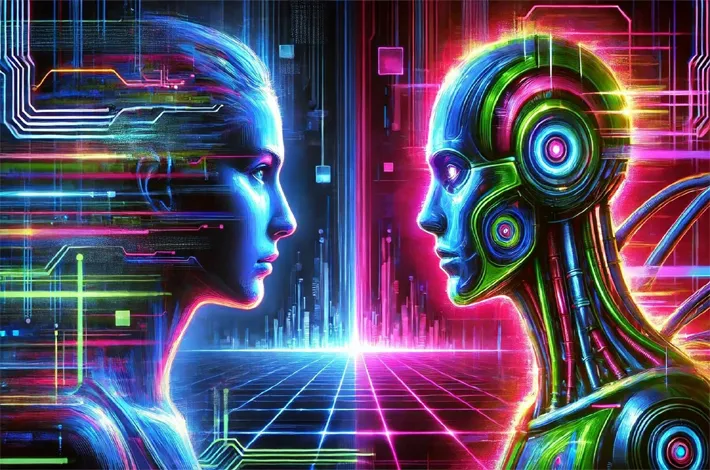
A discussion conducted by a private news channel focused on a timely and provocative topic: the "Android Race" versus industrial robotics. The panel brought together leading voices to explore how AI-driven humanoid robots (often called androids) are challenging the long-established dominance of traditional industrial robotics in manufacturing and beyond. The panel also addressed the rapid evolution of robotics, the shift from structured factory environments to dynamic, real-world applications, and the broader societal implications of these technologies.
CEO of a robotics company emphasizing that change is inevitable and largely positive. Drawing an analogy to the transition from horses to tractors in agriculture, he argued that advanced robots—particularly humanoids—will liberate humans from mundane tasks. "They will walk around and do all the things that we don't want to do," he said, allowing people to focus on what makes us truly human: doubt, creativity, and higher-purpose activities.
He expressed optimism that robots will provide "100% correct" answers based on their programming, while humanity's strength lies in questioning and interpreting those outputs. He urged society not to fear these developments, criticizing politicians for relying on fear to maintain power and slow progress. He cited Denmark's ban on Tesla's Full Self-Driving feature as an example of regulatory overreach, where politicians deem human drivers—with distractions like coffee or yelling at children—superior to vehicles equipped with 18 cameras offering constant 360-degree awareness.
A veteran robotics professor offered a research-oriented perspective. He noted that distinctions between industrial and humanoid (android) robots are relatively recent; earlier work focused on bio-inspired designs like flying, walking, and running machines. HE envisioned a future of collaborative multi-robot systems—groups of aerial, ground-based, and humanoid units interacting intuitively with each other and humans. "I think very soon we [will] have all of these collaborative machines... in and around us," he said, expressing strong optimism about seamless integration. To a direct question about whether robots will ever match human dexterity, intuition, and skill, He affirmed progress toward that goal through combined machine and software intelligence, though he predicted a hybrid future rather than full replacement.
Responding to questions about balancing innovation with concerns like unemployment and ethics, a startup entrepreneur highlighted the transition from confined industrial settings to unstructured environments enabled by large language models (LLMs) and new robotic systems. Safety remains paramount, he stressed. His own company develops the world's largest heavy-lift drones for transporting massive cargo pallets, starting deployments in remote areas to build trust, gather data, and achieve regulatory alignment before scaling to denser urban zones. While acknowledging that intelligent robotic systems will displace some labour, he pointed to emerging opportunities for humans to remain "in the loop" as supervisors, creators, and integrators—suggesting a net positive evolution rather than outright job loss.
A Danish MP who participated in the debate brought a political and regulatory lens to the debate. He criticized Europe's strict frameworks for stifling innovation, contrasting them with California's more collaborative approach—where policymakers consult companies directly to address ethical issues. He argued that politicians often legislate based on outdated problems, creating rules for "the past" in a fast-moving field. He dismissed widespread fears that robots will dominate or destroy humanity. Instead, he called for trust-building partnerships between governments and companies, noting that firms have a strong incentive to ensure public confidence so robots can enter homes and daily life.
The panel addressed barriers to global scaling, with the CEO of the robotics firm viewing regulation as one challenge among many (alongside technology, manufacturing, and supply chains), best tackled through open dialogue and alignment rather than adversarial stances. He rejected alarmist narratives around "evil AI," emphasizing that most developers are well-intentioned humans focused on societal benefits. The professor predicted a collaborative future: humans as leaders and supervisors guiding teams of robots, rather than fully autonomous systems operating independently. The moderator wrapped up by thanking the panel for an illuminating, if brief, exchange.