21 October, 2026 | 11:10 AM


BRS far from finished
14-12-2025 12:00:00 AM
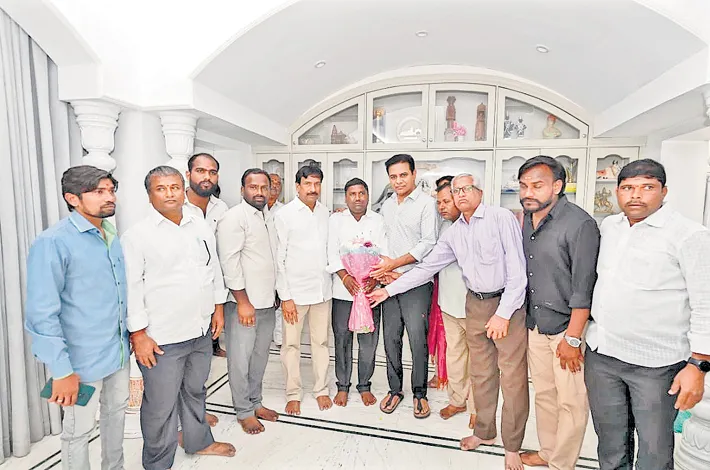
GP Phase-1 results signal resurgence
The first phase of the Gram Panchayat elections in Telangana has sent a clear political signal: the Bharat Rashtra Samithi (BRS) is far from finished and appears to be charting a path of resurgence. After suffering a major setback in the 2023 Assembly elections and drawing a blank in the Lok Sabha polls held six months later, BRS was widely written off as a diminished force. The BJP, buoyed by winning eight Lok Sabha seats—equal to the ruling Congress—claimed the space of the principal opposition and projected itself as the sole alternative to the Congress government. That narrative gained further traction after the BJP won two out of three MLC seats in February 2025.
However, recent electoral trends suggest the political contest in Telangana may not be as binary as projected. The Jubilee Hills by-election marked a turning point in morale for the pink party. Though BRS lost the seat, its candidate finished second with nearly 75,000 votes, firmly ahead of the BJP. BRS Working President K. T. Rama Rao (KTR) said the result “clearly showed that only BRS can be a strong alternative to Congress,” calling it an early indicator of shifting public mood.
That indication has now been reinforced by the Gram Panchayat Phase-1 results. Of the 4,236 panchayats that went to polls (out of over 12,700 state-wide), BRS-backed candidates won 1,162 sarpanch posts—about 27.47%. The ruling Congress secured 2,567 panchayats, but the scale of the BRS performance is significant given that local body polls traditionally favour the party in power. Notably, elections were held in just over 3,800 villages as 390 villages elected sarpanches unanimously.
The results have exposed vulnerabilities within the Congress organisation, especially in segments represented by its own MLAs. BRS-backed candidates performed strongly even in the Chief Minister’s own constituency of Kodangal and nearby areas, a point highlighted by KTR, who remarked that such outcomes reflected “growing public anger against Congress rule and renewed trust in BRS.” He added that despite the Chief Minister personally campaigning, Congress failed to cross even 44% seat share in many contested areas, which he termed a verdict on “administrative failure.”
Senior BRS leader G. Jagdish Reddy struck a confident note, declaring that “the coming days belong to BRS,” and asserting that people have begun to reassess Congress governance while continuing to place faith in K. Chandrashekar Rao’s leadership legacy.
MLC Dr Dasoju Sravan was more pointed, calling the results “the first major warning issued by rural voters to the Revanth Reddy government.” He noted that even in a phase where ruling parties typically enjoy up to 90% advantage, BRS winning over 1,300 sarpanch posts demonstrated deep rural discontent with Congress. He cited defeats of Congress-backed candidates in areas close to the Chief Minister’s village and in constituencies of sitting MLAs as evidence of rising anti-incumbency.
Political analyst Telakapalli Ravi observed that BRS has managed to withstand the Congress onslaught in its traditional rural strongholds. However, he cautioned that the next two phases will be crucial to assess whether this momentum extends beyond its core areas.
Buoyed by Phase-1, the BRS cadre is upbeat and gearing up aggressively for Phases 2 and 3, setting the stage for a sharper multi-cornered political contest in Telangana.