22 September, 2026 | 12:45 AM


Danger Bells for BJP?
24-07-2026 12:00:00 AM
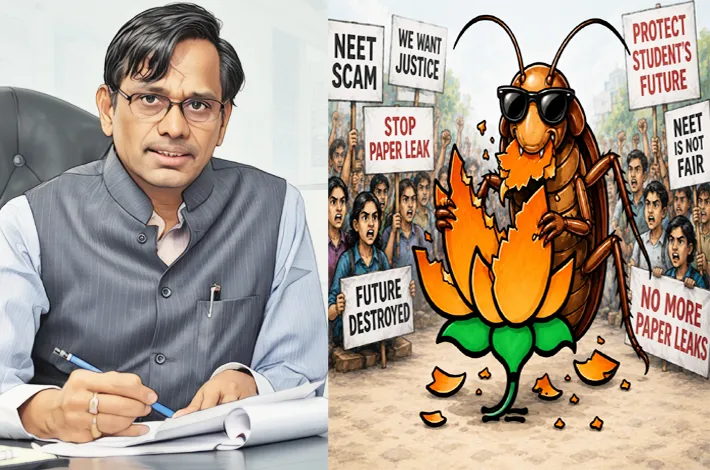
- Delayed action against NEET paper leak
- Gen Z movement a wakeup call
- If remedial measures are not taken, movement may spread like wild fire all over the country
- Several ministers in the past resigned taking accountability
- PM Modi should take stern action
CL Rajam
The controversy surrounding the NEET-UG examination has escalated into a significant political and administrative test for the central government. Allegations of paper leaks, irregularities in scoring, and subsequent protests have mobilized students across the country, disrupted parliamentary proceedings, and drawn opposition criticism. With over 23 lakh candidates appearing for the exam conducted by the National Testing Agency (NTA) on May 5, 2024, the stakes for India's competitive examination system remain exceptionally high.
NEET serves as the gateway for undergraduate medical admissions, determining entry into roughly 108,000 MBBS and BDS seats. In 2024, approximately 24.06 lakh students registered, with 23.33 lakh appearing. Around 13.16 lakh qualified initially, though results underwent revisions following Supreme Court intervention. The scale affects not only aspirants but also their families, representing immense pressure on Gen Z youth pursuing careers in medicine amid limited seats and intense competition. Reports of question paper leaks surfaced shortly after the exam, notably in Bihar and Jharkhand. Bihar police arrested individuals linked to a network that allegedly provided papers in exchange for large sums.
The Central Bureau of Investigation (CBI) later took over, filing charge sheets against dozens, including school officials and "solvers." Investigations identified around 155 direct beneficiaries of the leak, though the Supreme Court ruled on July 23, 2024, that there was no evidence of a systemic nationwide breach warranting a full re-examination. The controversy intensified with results showing an unusually high number of perfect scores—initially 67 students at 720/720, compared to far fewer in prior years. Grace marks awarded to over 1,500 candidates for time loss at certain centers further fueled doubts. Protests erupted in multiple cities, with students demanding cancellations, re-tests, and accountability. Clashes with police involving batons and tear gas occurred, and opposition parties, including Congress, participated in dharnas and raised the issue in Parliament, leading to adjournments. Student distress has been profound.
Multiple reports documented suicides among aspirants linked to uncertainty, financial strain on coaching-dependent families, and dashed hopes. While exact national figures vary, accounts from media outlets highlighted at least a dozen such tragic cases in the weeks following the initial results, underscoring the human cost beyond statistics. The government's response involved handing the probe to CBI, replacing the NTA Director General, announcing a shift toward computer-based testing in future, and enacting the Public Examinations (Prevention of Unfair Means) Act, 2024, which imposes strict penalties for leaks. Education Minister Dharmendra Pradhan acknowledged irregularities at specific centers and took moral responsibility for the broader loss of confidence.
A high-level committee was formed for reforms. Prime Minister Narendra Modi addressed the matter, emphasizing action against culprits. Critics argue the initial handling appeared slow, with early denials of widespread leaks giving way to admissions of issues. They contrast this with historical precedents where leaders accepted responsibility swiftly. In 1956, Railway Minister Lal Bahadur Shastri resigned after major train accidents. Nitish Kumar did the same in 1999 following the Gaisal collision.
During the 2008 Mumbai terror attacks, Union Home Minister Shivraj Patil and Maharashtra Chief Minister Vilasrao Deshmukh stepped down amid accountability demands. Such examples illustrate a tradition of moral accountability in public office, where officials own systemic failures even without direct personal involvement. In the current case, calls persist for ministerial change, compensation to affected families, and a robust high-level inquiry to prevent recurrence.
The Jantar Mantar protests and street agitations signal deeper frustration among youth who view the exam as a merit-based ladder now undermined.From a data perspective, NEET's growth reflects rising aspirations: registrations climbed steadily, reaching record highs. Uttar Pradesh, Maharashtra, and Rajasthan lead in qualified candidates. However, leaks erode trust in an already stressful process where success ratios hover around 1:20-40 for seats.
Previous scandals, such as Vyapam, show recurring vulnerabilities in high-stakes testing. The episode highlights structural pressures on the NTA, which conducts numerous exams annually. Reforms like digitized processes, better center security, and stricter invigilation are under discussion. Parliament's passage of anti-leak legislation marks a legislative step, but implementation and swift justice for those arrested will determine long-term impact. For the ruling dispensation, the matter tests governance narrative around efficiency and youth empowerment. Prolonged unrest risks spill over into other states, amplifying opposition campaigns.
The NDA government led by BJP faces danger bells in this context. Unless it takes cognisance of the public outcry and implements remedial steps, it may lose public support which may lead to the fall of the government. Swift, transparent measures—such as expedited trials, victim support, and visible systemic fixes—could restore confidence. Engagement with student groups without partisan framing remains essential to de-escalate. Broader implications extend to federal relations, as some opposition-ruled states push to scrap NEET in favor of decentralized admissions. The Supreme Court's balanced verdict, rejecting full cancellation while addressing specific beneficiaries, provides legal closure but leaves public perception challenges.
Ultimately, competitive exams like NEET symbolize opportunity in a populous democracy. Restoring their sanctity demands more than probes; it requires cultural shifts toward integrity in education logistics. The coming months will reveal whether this serves as a catalyst for enduring improvements or a recurring vulnerability.
Addressing student agony promptly, through both symbolic accountability and concrete safeguards, stands as the priority to prevent further erosion of institutional faith.