18 November, 2026 | 12:02 AM


Devotion the basis for any spiritual practice
18-11-2026 12:00:00 AM
SOUJANYA SPEAKS :
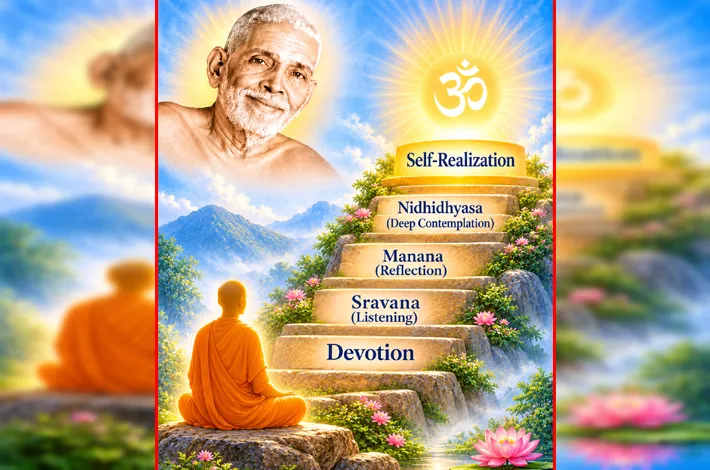
Devotion (bhakti) should be the basis of any sadhana. What is Devotion? It is a love for God. There is a difference between loving God and liking other things. Loving God begins with the belief that God is the remover of all sorrows, and, the thought that, ‘God is the bestower – I am a recipient’ gradually turns into devotion. With this thought, the truth that a ‘supreme power exists which is far greater than me and all of creation’, rises up. In whichever form or name or for whatever reason – selfishness, liking, fear or freedom, we worship God; the underlying thought should always remain as ‘God’s grace – our surrender’. This is devotion.
This seed of devotion is strengthened through listening, reflecting, and one-pointedness (sravana, manana, nidhi dyasa) and gives a complete experience that we are not separate from God. However, if one does not proceed from any of the above, the totality remains unattained. Therefore, the words that give peace of mind must be heard, and reflected upon continuously. These words must be established forever in the heart. To attain that state one must first love God and be devoted to Him. To begin sadhana itself is devotion. It is the foundation of sadhana. Devotion begins with a form of God and ends in attainment of Divinity.
Thoughts arise as a result of the tendencies of past actions (karmas). As devotion increases we become aware of true joy and happiness in our inner being. The Self is a constant state of bliss. We are all aware of the experience of physical pleasure through bodily comfort and the happiness attained through the tranquility of the mind. This happiness and comfort are like the froth on coffee.
The extreme effort and the final step in attaining perpetual joy and happiness is self realization. This is the state of 'Turiya' (the fourth state beyond waking, dream and sleep) realized through the paths of Karma, devotion, Knowledge and Yoga. This bliss can be experienced but cannot be described. The happiness and comforts that we know are mere shadows compared to this Bliss.
On analyzing the mind, its source – the self – becomes known. Therefore it cannot be simply said that the mind and the body are untrue. It needs to be first understood that they are impermanent. This becomes possible because neither of them is experienced during deep sleep.
This implies that the ‘I’ thought doesn’t occur continuously to us. Thus, it is understood that the body and the mind that manifest as ‘I’ are impermanent. By realizing this truth we understand that some intrinsic permanent reality sustains us. That is Prana, Atma or God.
The ultimate purpose of human life is to realize the Self. It is the Ego that obstructs it. Ego is the ‘I am the body; mind’ thought. The body and the mind need not be denied. It is enough if thoughts are given up. The Self is responsible for the movements of the body and the mind. Though the power within us remains unrealized, it is always being experienced.
This Ego gradually vanishes without denying anything externally but by remaining in the ‘I am the Self’ thought as taught by the elders; by constantly observing the traits of the mind and by recognizing the fact that this body is a mere instrument of the mind. To give up Ego is to know the mind completely. To recognize the Truth that ‘the power that operates the creation operates in me too’ and to constantly remember this Truth is real Surrender (saranagathi).
(Soujanya Kolachala is a writer & former principal)