20 October, 2026 | 5:09 PM


Dollar muscle brutally crushes metals, investors seek shelter
25-06-2026 12:00:00 AM
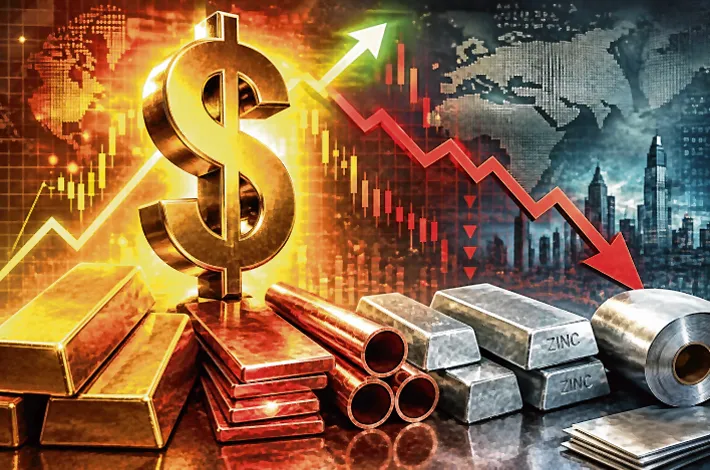
Gold, silver and industrial metals tumble as dollar strength overwhelms fragile global demand
Manoj Yadav
MUMBAI
The shine is fading across global commodity markets. From gold vaults to copper warehouses, a broad sell-off is gathering pace as investors confront a powerful trio of headwinds: a surging US dollar, weakening Chinese demand and stubbornly high American interest rates. Together, they are redrawing the landscape for commodities and sending a warning about the health of the global economy.
Gold, the traditional refuge in uncertain times, has retreated nearly 10% from its recent peak near $3,500 an ounce. Silver, often gold’s more volatile cousin, has endured an even harsher correction, sliding around 15–18% from recent highs. The fall suggests that fear alone is no longer enough to sustain precious-metal rallies when yield-bearing assets are offering increasingly attractive returns.
Industrial metals are flashing similar caution signals. Copper, widely regarded as the metal with a doctorate in economics because of its ability to anticipate global growth trends, has fallen sharply alongside zinc and aluminium.
Several base metals now trade at multi-month lows, reflecting concern over slowing industrial activity across major economies.
China remains central to the story. The country consumes more than half the world's copper and aluminium production, making it the heartbeat of global metals demand. Yet manufacturing activity, construction spending and automobile production have all struggled to regain strong momentum. Without a vigorous Chinese recovery, industrial metals face a difficult path higher.
Meanwhile, the US dollar has reasserted its dominance. The Dollar Index has climbed above 100 after hovering near 97–98 only weeks ago. A stronger dollar raises the cost of commodities for overseas buyers, dampening consumption and intensifying selling pressure across global markets.
The Federal Reserve has amplified the trend. With Treasury yields above 4.4% and policymakers maintaining a hawkish tone, investors are increasingly shifting funds towards bonds and dollar assets. The opportunity cost of holding non-yielding assets such as gold has consequently risen.
Unless China unveils stronger stimulus measures or the Federal Reserve softens its stance, metals may remain trapped in a difficult environment. For now, the message from commodity markets is unmistakable: the dollar is king again, and metals are paying the price.