16 November, 2026 | 3:07 AM


Double-decker buses set for paid re-launch
16-11-2026 12:00:00 AM
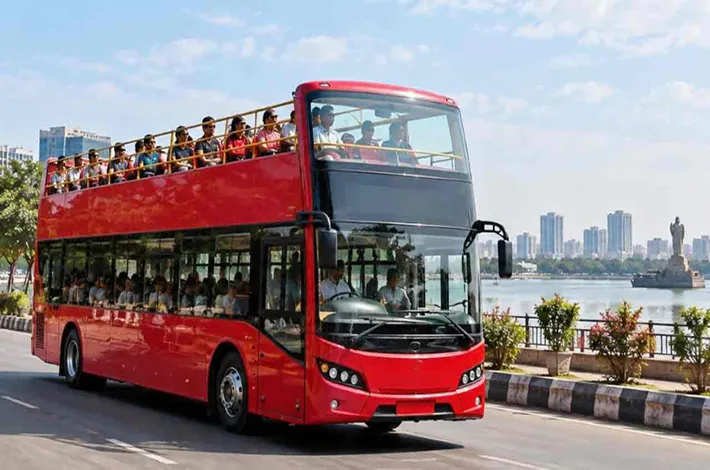
Initially, the buses operated on three routes: Raidurg Metro Station to Wave Rock, Jubilee Bus Station to Salar Jung Museum, and a circuit around Tank Bund.The free service, however, struggled to attract passengers for several reasons
T P Venu I hyderabad
The Hyderabad Metropolitan Development Authority (HMDA)-operated electric air-conditioned double-decker bus services have been temporarily suspended. The long-pending transfer of the fleet of six buses to the Telangana State Tourism Development Corporation (TGTDC) has now been completed. According to reliable sources, the services, which were earlier offered free of charge, are expected to be re-launched with a ticket price of Rs 50 per person.
The buses were inducted in 2023 and launched on February 7 that year, with free boarding aimed at creating awareness about electric vehicles. The six buses were purchased at a total cost of Rs 12 crore, each with a seating capacity of 65 passengers. They can cover 150 km on a single charge and take just 2.5 hours to recharge fully. The 11 bus drivers have meanwhile been given a break. Praveen, a double-decker bus driver, said they were uncertain about their future following the transfer of the fleet to TGTDC. "We are unsure whether we will be taken back as the buses will now be under TGTDC," he said. Praveen is currently working as a Rapido driver to make ends meet. "I have to earn a living, and this is the only job I know," he added.
Initially, the buses operated on three routes: Raidurg Metro Station to Wave Rock, Jubilee Bus Station to Salar Jung Museum, and a circuit around Tank Bund.
The free service, however, struggled to attract passengers for several reasons. Commuters mainly complained about poor frequency and the absence of a fixed schedule. Lack of publicity was another major factor, with many citizens unaware of the service. The buses began operations at 10 a.m., by which time many commuters would already have left for work. Services continued until 2 p.m., after which the buses were deployed around Tank Bund in the evening.
The double-deckers were intended to improve sightseeing opportunities and tourist mobility within the city. However, poor publicity and inadequate scheduling limited their popularity. HMDA's monthly operational expenditure on all six buses was Rs 5,03,585, excluding GST. The buses were manufactured by Switch Mobility.
Hyderabad has a long association with double-decker buses, dating back to 1946, when 30 Albion CX 19 models were brought from England in parts and assembled by Hyderabad Allwyn Metal Works Limited. The Tourism Department now hopes to revive and sustain the city's tryst with double-decker buses.