14 September, 2026 | 8:58 PM


E-waste increases by five times in Telangana
11-04-2026 12:00:00 AM
HEMA SINGULURI | Hyderabad
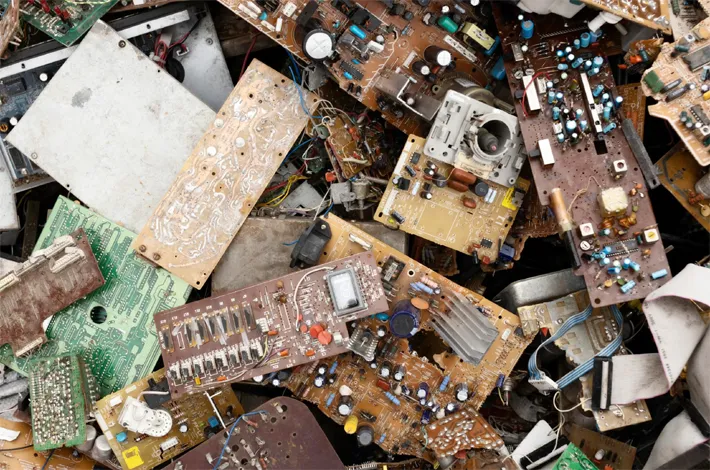
The Telangana State Pollution Control Board (TSPCB) has said that e-waste generation in Telangana has increased almost five times in the last eight years, driven largely by rising gadget usage, rapid urbanization, and the tech boom in Hyderabad. Officials warn that despite the surge, a significant portion of the waste is still not being properly recycled, raising environmental and public health concerns.
The spike is projected to cross 1.6 lakh metric tonnes by 2025–26, highlighting a widening gap between generation and recycling capacity.
According to the Board, although Telangana has 21 authorized recyclers and 2 refurbishers, only a fraction of the collected e-waste is processed due to limited capacity, logistical constraints, and continued reliance on informal recycling systems.
Senior environmentalist K. Purushottam says, “People have no access to the input and outflows of the STPs (Sewage Treatment Plants).” Public health is seriously endangered and calling for third-party audits and transparent reporting of sewage treatment performance.”
Purushottam also highlighted gaps in garbage management, air quality control, and lack of access to civic amenities, including uneven distribution of parks and playgrounds. He urged citizens to treat air quality, waste, hospitals, and education as common issues demanding collective action.
“Citizens should come together and discuss this. Constantly they should give their concerns and feedback”, he added.
According to M. Dayanand, Senior Environmental Engineer at TSPCB, rapid urban expansion and consumption patterns are the key drivers.
He stated that the rise is due to “rapid urbanization, increased consumer dependence on electronic gadgets, and the expansion of the IT sector in Hyderabad, where frequent device upgrades by individuals and bulk disposal by companies significantly add to the volume.” He further explained that despite regulatory frameworks like E-Waste (Management) Rules, 2022 and Extended Producer Responsibility (EPR) guidelines, enforcement and tracking remain challenging. He added that awareness among citizens remains low, and informal recycling still dominates, exposing workers and the environment to hazardous substances like lead and mercury.
Dayanand also shared official data: recyclers procured 65,777.277 MT in 2023–24, increasing to 131,913.9059 MT in 2024–25, while actual processed waste stood at 24,778.21837 MT and 59,288.9086 MT respectively, showing a persistent processing gap.