24 October, 2026 | 11:20 AM


Economy resilient amid crosswinds
09-04-2026 12:00:00 AM
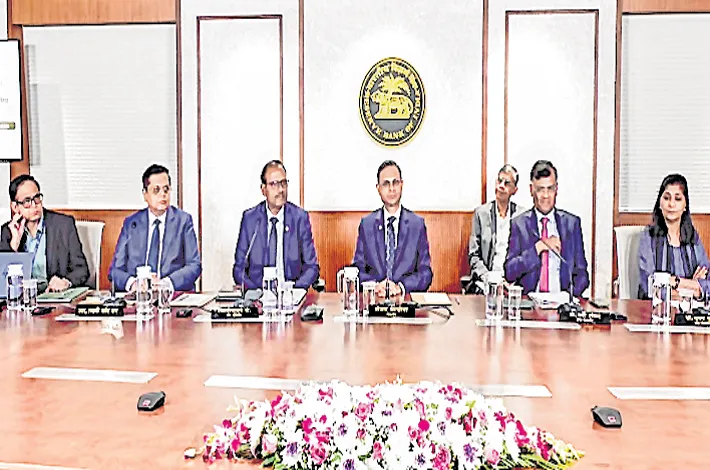
GUARDED MOMENTUM AHEAD | RBI sees FY27 growth at 6.9%, easing from 7.6%, with crude oil volatility
The fragile ceasefire in West Asia has provided temporary relief, but risks remain elevated
mumbai
India’s economic outlook remains broadly stable, yet increasingly tempered by global uncertainties, as the Reserve Bank of India (RBI) projects real GDP growth of 6.9% for FY27, down from an estimated 7.6% in FY26.
The Monetary Policy Committee’s latest assessment reflects a careful calibration between sustaining domestic momentum and guarding against external shocks. While the Indian economy continues to draw strength from consumer demand, infrastructure spending, and a steady expansion in manufacturing, signs of moderation are beginning to emerge.
Quarterly projections suggest a measured trajectory—6.8% in the first quarter, easing slightly to 6.7% in the second, before strengthening to 7.0% and 7.2% in the latter half of the year. This indicates that while the near term may witness softness, underlying growth impulses remain intact.
Consumer confidence, a critical pillar of recent expansion, has held up reasonably well, supported by stable employment trends and improving urban demand. However, persistent inflationary pressures linked to global commodity movements could test household spending patterns going forward.
Industrial growth, particularly in manufacturing, continues to benefit from policy support and improving capacity utilisation. Private investment is gradually gaining traction, though still cautious, reflecting both global uncertainty and evolving domestic demand conditions.
A key concern underscored by the RBI is the trajectory of crude oil prices. The fragile ceasefire in West Asia has provided temporary relief, but risks remain elevated. Any renewed escalation could disrupt supply chains and push energy costs higher, with cascading effects on inflation, production costs, and ultimately consumer demand.
Liquidity conditions, however, remain a source of comfort. The central bank has injected approximately ₹2.9 lakh crore into the system, ensuring adequate funds for lending and financial stability. With an average surplus of around ₹2.3 trillion, the banking system is well-positioned to support credit growth.
Additional measures, including broader participation in the term money market and enhanced borrowing limits for primary dealers, are expected to deepen financial flexibility.
In essence, the RBI’s stance reflects quiet confidence tempered by realism. India’s macroeconomic fundamentals remain robust, yet the path ahead is neither linear nor insulated. Growth endures—but under the long shadow of geopolitics, energy volatility, and an uncertain global order.
As the policy outlook evolves, much will depend on how effectively domestic demand can offset external headwinds. Rural consumption, aided by normal monsoon expectations, could provide an additional buffer, while continued government capex is likely to sustain momentum in core sectors. However, vigilance on inflation, currency movements, and global financial conditions will remain critical.
The RBI’s balanced approach suggests that while risks are rising, India retains sufficient policy space and structural strength to navigate emerging challenges without derailing its medium-term growth trajectory.
RBI maintaining rates highlights external risks while sustaining positive outlook to calm markets, support investor confidence and stabilise rupee. IMC particularly appreciates the RBI’s commitment to maintaining adequate liquidity in the system to safeguard economic stability and ensure smooth credit flow during this period of uncertainty.
Sunita Ramnathkar President, IMC
Policy ensures stability and flexibility while improving regulation, boosting credit flow, enhancing efficiency and strengthening overall financial ecosystem resilience.
V.P. Nandakumar CMD, Manappuram Finance
Policy continuity strengthens demand for flexible workspaces as firms prioritise agility, cost efficiency and expansion across emerging business hubs. Umesh Uttam chandani MD, DevX RBI policy continuity reflects commitment to macroeconomic stability amid global uncertainty while allowing growth impulses to mature steadily.
Dr Manoranjan Sharma Chief Economist, Infomerics Ratings
H1FY27 unlikely to see tightening, though persistent war risks and inflation pressures may warrant future calibrated policy response.
Indranil Pan Chief Economist, YES Bank