9 October, 2026 | 11:35 AM


EV charging to go mandatory in apartments
21-04-2026 12:00:00 AM
HEMA SINGULURI I hyderabad
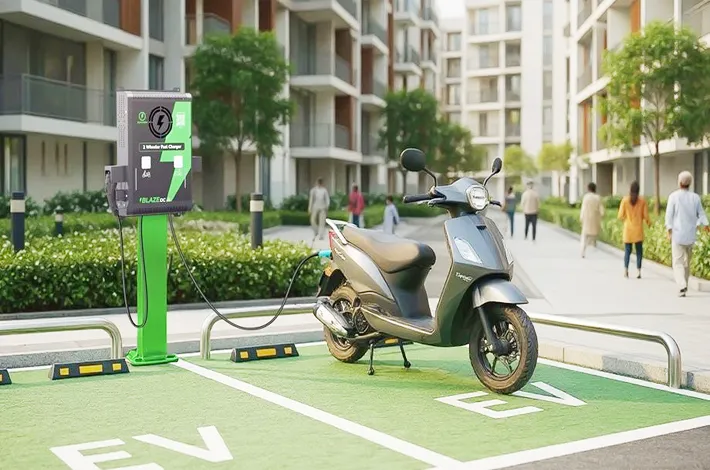
Telangana plans to make EV charging points compulsory in apartment basements, so residents can charge electric vehicles at home more easily.
This is meant to boost EV adoption and is part of a bigger push that also includes expanding charging stations and a real-time monitoring dashboard. The initiative is being positioned as a key step in integrating clean mobility into urban living while preparing the state for rising electric vehicle demand.
The Energy Department is leading the policy, which also brings in Public-Private Partnerships (PPP) to accelerate infrastructure development. Alongside mandatory residential charging, the state is working on expanding public charging stations, with ambitious targets of establishing a station every in cities and every on highways, though exact figures are yet to be formally detailed in the proposal. A centralized real-time digital dashboard is also being developed to map, monitor, and manage charging infrastructure across Telangana.
According to Telangana Renewable Energy Development Corporation (TGREDCO) Manager GSV Prasad, implementation will be flexible, procedural and process-driven, allowing housing associations to initiate requests when needed. “The apartment societies can apply for approvals online, after which they may be granted the necessary Telangana Government NOC, subject to compliance requirements. Depending on the case, additional safety or security verification from the relevant authority may also be required before installation is cleared”, he added.
Prasad also explained that the process is designed to be accessible, with applications handled digitally and approvals issued after proper checks to ensure safety standards are met.
Officials acknowledge that apartments have raised concerns, particularly around safety standards, parking space usage, and shared infrastructure management.
However, the government views EV-ready buildings as essential for future urban planning. The policy is expected to initially apply to new constructions, with encouragement and incentives for retrofitting older apartment complexes.
Power utilities such as the Telangana State Southern Power Distribution Company Limited (TSSPDCL) are assessing grid readiness. Smart charging systems and time-of-day tariffs are being explored to manage peak load demand. Authorities also believe renewable energy integration will gradually power a larger share of EV infrastructure, helping reduce urban pollution.
While installation costs may slightly increase construction expenses, developers are expected to treat EV charging readiness as a value-added feature. Officials also highlight that billing systems, shared usage models, and load balancing mechanisms are being actively planned to avoid future operational issues.
The broader plan, including the real-time dashboard and expanded charging network through PPPs, aims to improve transparency, user convenience, and planning efficiency, positioning Telangana as a growing hub for clean transport infrastructure.