21 November, 2026 | 2:09 AM


Fermentation: Nature’s food preserver
21-11-2026 12:00:00 AM
Science Corner
Preservation of fruits and vegetables is essential for reducing post-harvest losses, improving food security and ensuring a year-round supply of nutritious food. Among the various techniques, fermentation is one of the oldest, simplest and most economical methods. It is a low-cost, energy-efficient process that extends the shelf life of perishable foods while enhancing their flavour, nutritional value and safety.
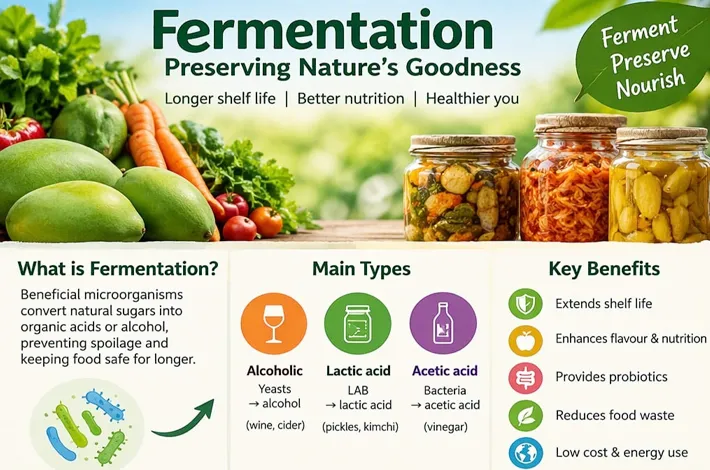
Fermentation occurs when beneficial microorganisms convert natural sugars into organic acids or alcohol. These compounds create conditions that inhibit spoilage organisms and harmful pathogens, allowing food to be stored for longer periods without significant deterioration.
Food fermentation can be broadly classified into three types. Alcoholic fermentation involves yeasts converting sugars into alcohol and carbon dioxide. It is commonly used in producing wine, cider and traditional fruit-based beverages, with alcohol acting as a natural preservative.
Lactic acid fermentation, the most widely used method for preserving fruits and vegetables, involves lactic acid bacteria (LAB) converting sugars into lactic acid. This lowers the pH and prevents the growth of undesirable microorganisms. Sauerkraut, kimchi, fermented cucumbers and traditional vegetable pickles are common examples.
Acetic acid fermentation involves converting alcohol into acetic acid through acetic acid bacteria. This process produces vinegar and vinegar-based pickles with enhanced shelf stability.
Beyond preservation, fermentation improves flavour, aroma and texture, enhances digestibility and increases the availability of certain vitamins and minerals. It also helps reduce food waste and requires considerably less energy and infrastructure than refrigeration or freezing, making it an environmentally sustainable technique. Some fermented foods also contain beneficial probiotic microorganisms that support gut health.
Among fruits, raw mango (Mangifera indica) is particularly suitable for fermentation because of its natural acidity and starch content. Its organic acids, including citric acid, help create favourable conditions for beneficial microbial activity while suppressing undesirable microorganisms. For centuries, raw mango has been used in fermented pickles, chutneys and refreshing beverages across tropical regions.
Lacto-fermentation is the most common method of preserving raw mango. Mango slices are submerged in a 10 per cent brine solution, allowing naturally occurring lactic acid bacteria to convert sugars into lactic acid. This increases acidity, develops the characteristic tangy flavour and complex aroma, improves microbial stability and extends shelf life without artificial preservatives.
Fermentation can also enhance the nutritional quality of raw mango. Studies indicate that lactic acid bacterial fermentation can increase phenolic compounds, antioxidant activity, nutrient bioavailability and other health-promoting bioactive compounds. Higher antioxidant activity may help combat oxidative stress and contribute to overall well-being.
Another important advantage is the probiotic potential of fermented raw mango products. They can provide beneficial microorganisms that support gut microbiota, aid digestion and contribute to immune function. With growing consumer interest in functional and naturally preserved foods, such products offer considerable potential.
Raw mango can be transformed into several fermented products, including traditional pickles, lacto-fermented chutneys, relishes, probiotic drinks and low-alcohol beverages. This versatility makes it suitable for traditional culinary applications as well as evolving consumer preferences for health-oriented foods.
Fermentation, therefore, remains an effective and sustainable method of food preservation. By harnessing beneficial microorganisms, it extends shelf life, enhances food safety, improves nutritional quality and reduces waste. Raw mango exemplifies how a commonly available fruit can be transformed into nutritious, flavourful and value-added products.
As interest in natural preservation methods grows, fermentation will continue to play an important role in strengthening food security, minimising post-harvest losses and promoting healthier diets worldwide.

(Dr Swarnabala Ganti is a seasoned chemist & regulatory affairs specialist. Consultant at Swaram Biochem, AgriLife India & Som Phytopharma)