21 November, 2026 | 2:12 AM


The cost of being cheap
21-11-2026 12:00:00 AM
STARTUPS ON SATURDAY
In the previous column, I ended by saying: the healthiest cheque a business will ever receive is the one written by a happy customer. A natural follow-up question would be-How big should that cheque be? In the early days of a startup, the product consumes all the oxygen in the room. Founders agonise over code, design and features. Then, just before launch, someone in the team raises a question: "How much should we charge?" Most of the time, the result is a number copied from a competitor or a number so deliberately low that there is no resistance to trying the product.
Being cheap is the easiest move for a startup. To undercut the market or give a product away for free is an easy decision. Sequoia Capital, the world’s pre-eminent VC firm, describes pricing not an excel exercise but a judgment rooted in psychology, positioning and perceived value. This week, I am sharing my thoughts on why this is so important for startups and why pricing is hard.
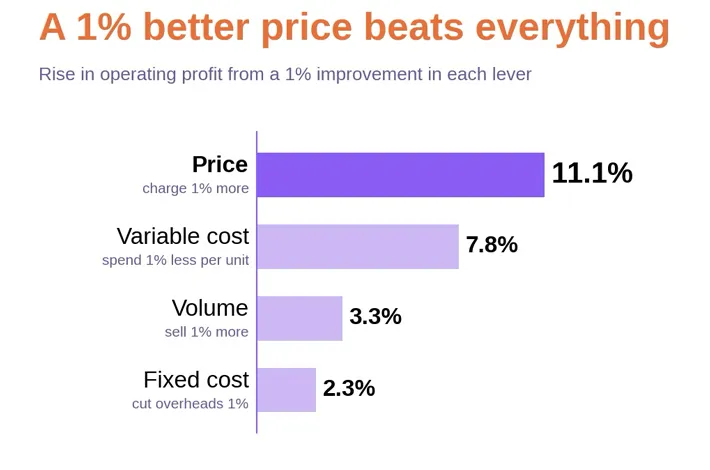
Price is the most powerful lever in business. A McKinsey study of over 2,400 companies found that a 1% improvement in price lifted operating profit by about 11%. Selling 1% more lifted it by just over 3% . Yet most founders spend months on the product and minutes on the price.
Why is pricing so hard? Textbook economics says you find the price where supply meets demand. This works for trading commodities but software does not fit into that mold. The first copy may cost crores to build; the ten-thousandth costs almost nothing. And when a product replaces a spreadsheet or an offline process, customers have no reference point for what it should cost. The CEO of a well-known SaaS company summarized it well “if you picked your price once and never changed it, it is almost certainly wrong”.
Startups need to consider two gaps: The first is between cost and price. This in essence is the meaning of unit economics. The second is between price and perceived value i.e. how much better, faster or safer the customer's life becomes.
There is an interesting anecdote from eBay. It offered sellers the option to add a photo to a listing for 25 cents. Adoption was slow, until eBay showed that listings with photos sold for higher prices. The fee was the same. The perceived value was not. Pricing experts call this the value metric: charge along the axis where the customer wins, and your revenue grows as they grow.
Price also tells a story. When the Nano was launched as the world's cheapest car, it hoped to add millions of customers. But customers did not want to be seen in the cheapest car. A low price can quietly say “poor” or “risky”. Nobody wants the cheapest surgeon, auditor or bank.
Low sales rarely means the price is too high. They usually mean the value has not been made clear. This is not just a startup problem, any business that charges fairly for its value can pay its people fairly and survive a bad year.
Why it matters: Being cheap can win the first few customers. A fair price, anchored in real value, builds a company for decades. Great companies do the hard work of pricing right.

(Ravi Ravulaparthi is the CEO & Cofounder of Qapita)