15 October, 2026 | 12:47 AM


Fraternity is not optional
27-02-2026 12:00:00 AM
The Supreme Court’s reminder therefore comes at an opportune moment. It calls for sobriety in speech, responsibility in politics, and empathy in citizenship. Ambedkar’s triad was never meant to be selectively invoked; it was designed as an indivisible moral architecture
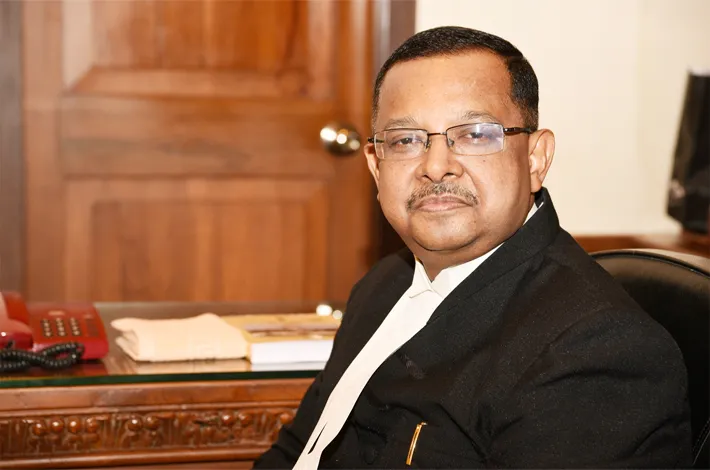
The recent observations of Justice Ujjal Bhuyan in the Ghooskhor Pandat matter deserve close national attention—not for political point-scoring, but for the constitutional clarity they restore. By invoking the vision of B. R. Ambedkar, the Supreme Court has reminded the Republic of a truth we often recite but rarely practice: liberty, equality, and fraternity are inseparable pillars of democracy.
Justice Bhuyan’s emphasis on fraternity as an “attitude of respect and reverence towards fellow human beings” is particularly significant in today’s climate of sharpened social rhetoric.
Too often, public discourse reduces constitutional values to courtroom vocabulary. The Court’s articulation restores fraternity to its rightful place—as a lived civic discipline, not merely an ornamental ideal in the Preamble. Ambedkar was unequivocal on this point. Political democracy, he warned, cannot survive without social democracy. Liberty and equality, if left unaccompanied by fraternity, risk becoming sterile legal promises.
Fraternity is the moral glue that prevents constitutional freedoms from degenerating into social fragmentation. In recalling this foundational insight, the Court has performed a valuable constitutional service. The judgment also carries an implicit caution for contemporary politics. In recent decades, sections of public discourse across the ideological spectrum have sometimes normalized language that caricatures or vilifies entire communities.
Whether such rhetoric emerges from regional movements, national parties, or social media echo chambers, its long-term effect is corrosive. It chips away at the mutual regard that a diverse society like India critically depends upon. Justice Bhuyan’s formulation of fraternity as a “constitutional dharma” is both elegant and culturally resonant. It bridges the perceived gap between constitutional morality and India’s civilizational vocabulary.
The message is clear: constitutional fidelity is not confined to institutions of state; it is a shared civic obligation. Every citizen, every public figure, and every political formation is equally bound by it. Importantly, the Court has not entered the terrain of political adjudication. Nor should it. But by restating first principles, it has provided a constitutional mirror to the nation. Those who see in it a moment for introspection would do well to use it constructively.
Democracies do not weaken overnight; they erode gradually when fraternity is treated as expendable. India’s social complexity is both its strength and its permanent test. Managing diversity requires more than legal safeguards—it demands cultural maturity and rhetorical responsibility. When public narratives harden into mutual suspicion, even robust constitutional frameworks come under strain. Conversely, when fraternity is consciously cultivated, democratic resilience deepens.
The Supreme Court’s reminder therefore comes at an opportune moment. It calls for sobriety in speech, responsibility in politics, and empathy in citizenship. Ambedkar’s triad was never meant to be selectively invoked; it was designed as an indivisible moral architecture. Fraternity, in the final analysis, is not charity. It is constitutional necessity. And the sooner India’s public life fully internalizes this, the stronger the Republic will stand.
This intervention arrives amid a specific controversy: a plea challenging the original title of an upcoming Netflix film, Ghooskhor Pandat, which was seen as potentially denigrating a particular community by associating a caste/community identifier with corruption. The filmmakers withdrew the title and related promotions, allowing the Court to dispose of the petition. Yet Justice Bhuyan, in a detailed separate opinion, deemed it essential to reiterate core principles to prevent misconceptions.
He made clear that vilification or denigration of any community—through speeches, memes, cartoons, visual arts, or any medium—is constitutionally impermissible, whether by state or non-state actors. Particularly noteworthy is his stress on those in high constitutional offices. Having taken an oath to uphold the Constitution, public figures bear an elevated duty to avoid targeting communities based on religion, caste, language, or region.
Such actions violate the Preamble’s promise of fraternity, which assures individual dignity and national unity. In the Indian context, unlike Western interpretations, fraternity serves as a dynamic tool for achieving equality and harmonizing diverse groups—aligning directly with Ambedkar’s lifelong fight against caste discrimination and his vision of inclusive social justice. The opinion balances this with robust protection for free expression under Article 19(1)(a). Artistic works, satire, cinema, and even stand-up comedy enrich democratic discourse and cannot be stifled merely because they offend.
The line lies at vilification that undermines fraternity, not at discomfort or critique. By drawing this distinction, the Court safeguards both dignity and liberty. In an era of polarized narratives and rapid digital amplification, these words serve as a timely corrective. They urge a recommitment to civic virtues that transcend electoral cycles or cultural flashpoints. When leaders and citizens alike embrace fraternity as dharma—rather than dismissing it as idealism—the Republic’s plural fabric gains tensile strength. Ultimately, the judgment is less about one film title and more about sustaining the ethical foundation Ambedkar laid for a nation that aspires to be both democratic and just. Internalizing this lesson will determine whether India’s diversity remains a source of vitality or vulnerability.
- CS Rangarajan BE. LLM.