15 October, 2026 | 9:10 PM


Metro exit: L&T going scot free
27-02-2026 12:00:00 AM
Metro India News | Hyderabad
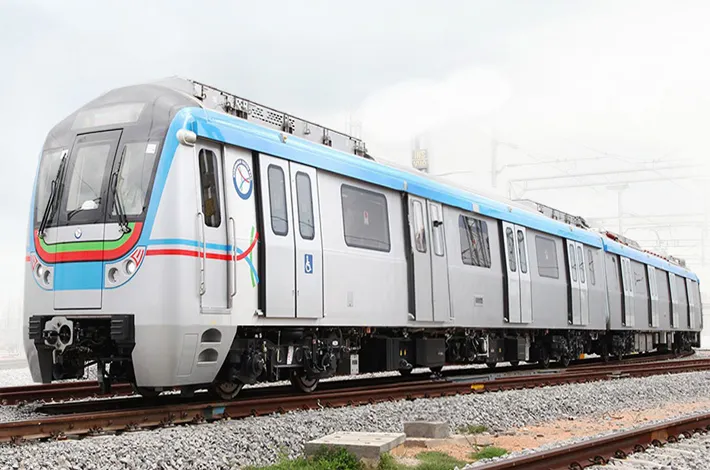
The Telangana government’s reported move to take over the Hyderabad Metro Rail project from Larsen & Toubro (L&T) has sparked intense debate. L&T has indicated that the metro venture has become financially unviable and expressed its intent to exit the transport business. Instead of invoking stringent provisions under the Concession Agreement, the State government is understood to be opting for an equity buyout route — a decision that could transfer the entire debt burden onto the public exchequer.
Critics argue that while profits remained with the private operator during better phases, losses are now effectively being shifted to taxpayers. The key contention is whether the government is overlooking legally available safeguards that could significantly reduce the financial burden on the State.
What the Agreement says
The Concession Agreement between the government and L&T clearly defines the consequences of project abandonment. Under Article 37.1.1(d), if the concessionaire abandons or expresses intent to abandon the project without prior written approval, it constitutes a Concessionaire Default.
Further, Article 37.3.1 specifies that in the event of termination due to such default, the government is required to pay only 90% of the “Debt Due” (after insurance adjustments). Crucially, no compensation is payable toward the equity invested by L&T.
Additionally, Article 39.2.1 empowers the government to retain 5% of the previous year’s revenue in an escrow account for 120 days after handover to address any asset deficiencies. These provisions, experts note, were designed to protect public interest in case of private operator failure.
Financial implications
As per Article 48.1, the total project cost was estimated at Rs 12,132 crore, while under Article 25.1.1, the government committed RS 1,458 crore as Viability Gap Funding (VGF). Currently, L&T’s outstanding bank debt is estimated at around Rs 12,000 crore.
If the government were to invoke termination under Concessionaire Default, it would need to pay only 90% of the Rs 12,000 crore debt — approximately Rs 10,800 crore — leaving about Rs 1,200 crore to be borne by L&T. Moreover, the company’s entire equity investment would stand forfeited.
However, by choosing an equity buyout instead of declaring default, the government is reportedly preparing to assume 100% of the debt burden. Financing mechanisms could involve institutions such as Indian Railway Finance Corporation (IRFC), effectively transferring the full liability to the State.
Public concerns
The decision has raised critical questions. Why should the State forgo a potential RS 1,200 crore saving available under the agreement? Why compensate equity when the contract allows forfeiture under default conditions? And is the move aimed at avoiding arbitration disputes or facilitating approvals for the Phase-II expansion?
While the government may argue that an amicable takeover will prevent prolonged legal battles and ensure smoother future expansion, critics maintain that the financial consequences ultimately fall on taxpayers. The debate now centers on whether the chosen route prioritizes administrative convenience over fiscal prudence and whether the public is being made to underwrite a private operator’s commercial setback.
Shivendra Pratap appointed JMD of Metro Rail
Shivendra Pratap formally assumed charge as the Joint Managing Director (JMD) of Hyderabad Metro Rail Limited (HMRL) at Metro Rail Bhavan on Thursday. Prior to this appointment, Shivendra Pratap served as the Additional Collector of Mahabubnagar district. On assuming office, he called on the Managing Director of HMRL, Sarfaraz Ahmad.