17 September, 2026 | 3:33 PM


Give Temples autonomy
09-12-2025 12:00:00 AM
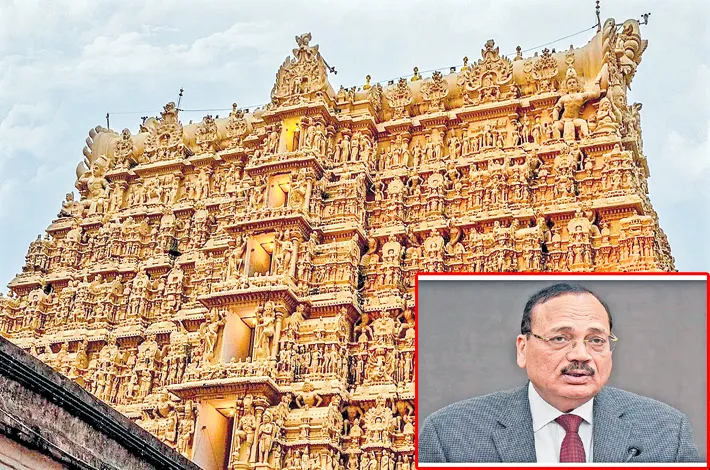
In India, where over 400,000 Hindu temples are managed by government bodies under laws like the Hindu Religious and Charitable Endowments Act, calls to "free temples" from such control have grown louder
The recent observations by Chief Justice of India Surya Kant on December 5, 2025, during a Supreme Court hearing have reignited the longstanding debate over government control of Hindu temples. Emphasizing that temple wealth "belongs to the deity" and must be protected from misuse, Justice Kant's remarks underscored the sacred nature of these funds, drawing a "Lakshman Rekha" against their diversion for secular purposes. This case, involving the transfer of deposits from Kerala's Thirunelli Temple to nationalized banks, highlights broader concerns about state oversight of religious institutions.
In India, where over 400,000 Hindu temples are managed by government bodies under laws like the Hindu Religious and Charitable Endowments Act, calls to "free temples" from such control have grown louder. Proponents argue it restores autonomy and equality, while critics warn of potential chaos. This article explores the merits and demerits of this demand, incorporating viewpoints from activists, politicians, religious leaders, and scholars.
One of the primary merits of freeing temples is the prevention of alleged mismanagement and corruption under government administration. Critics contend that state control often leads to the siphoning of temple revenues for non-religious purposes, such as funding government schemes or even salaries for clergy of other faiths. For instance, in states like Tamil Nadu and Andhra Pradesh, temple funds have reportedly been diverted to secular projects, eroding the sanctity of offerings made by devotees.
Subramanian Swamy, a prominent BJP leader and economist, has long advocated for liberation, arguing that government interference violates Article 26 of the Indian Constitution, which guarantees religious denominations the right to manage their own affairs. Another key advantage is the promotion of equality among religions in a secular democracy. Why, ask proponents, are Hindu temples singled out for state control while churches, mosques, and gurdwaras operate autonomously?
This disparity is seen as discriminatory and a remnant of historical biases against Hinduism. Sadhguru, the founder of the Isha Foundation, has spearheaded campaigns like #FreeTNTemples, emphasizing that freeing temples would empower devotees to manage resources for community welfare, such as education and healthcare aligned with Hindu values.
In a 2024 interview, Sadhguru stated, "Temples were centres of learning and culture; government control has turned them into revenue machines." This view resonates with many, as it could unlock temples' potential for social good without bureaucratic red tape. Furthermore, autonomy could enhance cultural preservation. Under government oversight, traditional rituals and temple lands have faced encroachment or commercialization.
Yashwant Deshmukh, a pollster, questioned in a viral post, "Why should Hindu Temples be owned and run by Government trusts which in turn have non-Hindu non-believers as administrators?" He argued that no other faith tolerates such interference, advocating for parity. This could foster innovation, with temples investing in sustainable practices or digital outreach, as seen in independently managed sites like the Akshardham Temple.
However, the demerits of freeing temples cannot be overlooked, as critics fear it could lead to privatization and exclusion. Without government oversight, temples might fall into the hands of wealthy elites or upper-caste groups, denying equal access to all devotees. Journalist DP Satish, in an X post, relayed priests' concerns that privatization would erode hereditary rights and turn temples into "private enterprises," potentially discriminating based on caste or social status.
Another drawback is the risk of mismanagement in the absence of regulatory checks. Historical examples show that private trusts can lead to corruption or neglect, especially in smaller temples lacking funds.Critics also argue that freeing temples could exacerbate financial inequalities. Many rural temples rely on government subsidies for maintenance; without them, they might crumble. From a legal standpoint, opponents point out that state control protects temples from external threats, such as land grabs, ensuring public interest.
There is also a section of opinions which highlighted potential consequences like erased traditions and judiciary-executive conflicts if control shifts without safeguards. Scholars provide a balanced view. In an article, it was argued that government control is a "bad idea" due to historical mismanagement but suggested community-elected boards as an alternative.
Merits like reduced corruption and equality are compelling, yet demerits such as potential exclusion and mismanagement warrant caution. Diverse voices—from Swamy's constitutional arguments to priests' fears of privatization—illustrate the complexity. A middle path, perhaps through independent Hindu boards with minimal oversight, could reconcile these views, ensuring temples serve devotees without becoming pawns in political games.