16 October, 2026 | 1:50 PM


Global conflicts spark freight spike, steel sector under severe pressure
22-05-2026 12:00:00 AM
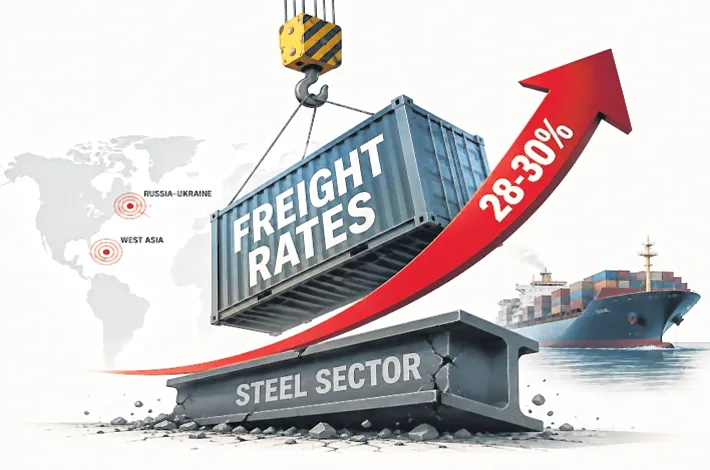
Tata Steel’s Sundara Ramam warns 30% freight surge is sharply raising steel sector logistics costs
Commodity Desk MUMBAI
A sharp rise in global freight costs due to geopolitical tensions in West Asia and the prolonged Russia-Ukraine conflict is emerging as a major challenge for India’s steel industry, according to a senior Tata Steel executive.
The increase in shipping costs is significantly impacting logistics expenses for steelmakers dependent on imported raw materials, particularly coking coal.
Tata Steel Vice-President (Corporate Services) D B Sundara Ramam said freight rates have surged nearly 28-30%, creating a cascading impact across countries and industries.
He noted that the Russia-Ukraine war first disrupted shipping economics, while the worsening situation in West Asia has further intensified pressure on global trade routes and freight movement. The steel sector has so far managed to maintain stable production despite external disruptions.
However, rising transportation and logistics costs are steadily increasing input expenses for manufacturers. Tata Steel imports nearly 78% of its coking coal requirement, equivalent to around 12-13 million tonnes annually, mainly from Australia.
The remaining requirement is sourced domestically from mines in West Bokaro and Jharia. Ramam said coal supplies from Australia and Indonesia continue to remain operationally stable, but elevated freight charges are directly affecting costs for the entire steel industry. While tensions surrounding the Strait of Hormuz have not severely impacted overall raw material security, recent disruptions in limestone imports from Gulf countries have forced companies to diversify sourcing strategies.
He stressed that the recent supply-chain disruptions underline the importance of greater domestic mineral self-reliance. According to him, India has sufficient limestone resources, though technological upgrades are required to make them more suitable for steelmaking operations.
India’s steel sector has remained relatively insulated from global turbulence due to strong domestic demand and lower dependence on imported finished steel. Ramam said the country became a net steel exporter during FY26, with exports exceeding imports by around 5-6 million tonnes. Domestic steel consumption increased around 8% in FY26, supported by robust infrastructure spending, manufacturing expansion, railway projects and sustained automobile demand.
Consumption of finished steel rose to nearly 164 million tonnes during the fiscal year, while crude steel production grew over 10.7% to around 168.4 million tonnes.
Tata Steel India reported production of 23.4 million tonnes during FY26, with deliveries of 22.5 million tonnes despite global volatility. However, company executives cautioned that geopolitical tensions, supply-chain disruptions and shipping uncertainties could create greater pressure on exports and raw material sourcing in FY27 if the current global situation persists..