12 October, 2026 | 8:20 AM


Goonda Durbar!
13-11-2025 12:00:00 AM
metro india news I hyderabad
In the rural Nalgonda district, Yadagiri Goud has spent two decades chasing shadows. His 20 acres and 3 guntas of fertile land once the lifeblood of his family's modest harvests—were swallowed whole by a voracious land grab in 2005. The culprit? Narasimha Patel, a portly real estate baron whose empire of concrete sprawls from Hyderabad's tech parks to rural ghost towns, greased by whispers of political patronage and judicial nods.
Yadagiri, a weathered 62-year-old with calluses etched like ancient runes on his palms, first turned to the tehsildar's office. Petitions piled up like monsoon silt, dismissed on technicalities or lost in bureaucratic black holes. Local courts fared no better; Patel's lawyers, schooled in the arcane arts of delay, spun webs of appeals that stretched years into oblivion. "I sold my tractor, mortgaged my wife's gold, even begged at the collector's feet," Yadagiri recalls, his voice a gravelly lament under the neem tree where villagers gather for evening chai. "But justice? It was like watering a stone—nothing grew."
Desperation, that great equalizer, led him to Mallesh Yadav. The 45-year-old goonda, with a scorpion tattoo snaking up his forearm and a reputation for "settling scores" sharper than a toddy tapper's knife, operates from a nondescript paan shop on the district's fringes. No suit, no summons—just a nod from a local sarpanch, and Yadagiri was in. "Fifteen days," Mallesh grunted during their clandestine meet, eyes scanning the horizon for rivals. "But my cut: 10% of the land and a lakh in cash."
True to his word, Mallesh summoned Patel to a moonlit clearing, flanked by a cadre of tattooed enforcers. Whispers of "accidental" bulldozer mishaps at Patel's sites and veiled threats to his "connected friends" did the rest. By fortnight's end, Yadagiri reclaimed 18 acres—minus Mallesh's slice—and a grudging payout from Patel. "He took from both of us, like a taxman with fists," Yadagiri admits, a wry smile cracking his sun-beaten face. "But at least I sleep on my own soil now."
Yadagiri's tale is no outlier in this land where the law's long arm often shrinks to a limp wrist. Across the state, in the sweltering lanes of Warangal, Pochavva, a 55-year-old widow with eyes hollowed by grief, echoes the refrain. Her daughter, Lakshmi, wed into a family whose greed outstripped their affections. The harassment began weeks after the 2023 nuptials: demands for another 5 lakhs in dowry, plus Lakshmi's rightful share in Pochavva's modest 2-acre plot. Beatings followed, veiled as "family matters," until Lakshmi fled home, bruises blooming like marigolds on her arms.
Six visits to the local thana yielded nothing but chai-stained FIRs and sympathetic shrugs. "Log kya kahenge," the station house officer muttered each time, invoking the ghost of village honor over handcuffs. Enter Chota Phahalwan, the pint-sized 38-year-old don whose moniker belies a physique forged in underground wrestling pits. Known for his "family councils"—impromptu durbars under banyan trees—Phahalwan charges a "settlement shukriya" of 50,000 rupees.
A month after Pochavva's plea, delivered via a trembling intermediary, the families converged in a godown reeking of jaggery and menace. Phahalwan, perched on a charpoy like a village head dispensed verdicts with theatrical flair. The in-laws, cowed by tales of Phahalwan's "visits" to uncooperative kin, coughed up the dowry refund and waived property claims. Lakshmi returned, tentatively, with a truce sealed over shared biryani. "The police promised the moon; he delivered a sliver," Pochavva says, clutching a faded photo of her daughter. "We paid, but peace has a price cheaper than endless tears."
Even the mighty bend in this shadow judiciary. In Hyderabad's leafy Banjara Hills, retired IAS officer KSR—once a sentinel of probity, overseeing anti-corruption drives—found himself ensnared in his own web. During his 30-year tenure, Rao had siphoned crores into black coffers, parking a tidy 2 crore with his old college chum, a shadowy financier named Ravi Kumar. Retirement in 2024 brought not laurels, but betrayal: Kumar feigned amnesia, claiming "investments gone sour."
Since he could ill afford to reach police or courts, Rao swallowed pride and dialed a number from his "emergency contacts." The local strongman, a beefy ex-rowdy named Bokka Raju, listened over filter coffee at a nondescript Irani café. "One week," Raju promised, pocketing 20% as "recovery commission." Menacing couriers, anonymous calls laced with "reminders" of Kumar's family vulnerabilities, and a midnight vault raid later, Rao's stash resurfaced—minus Raju's tithe.
These vignettes paint a damning portrait: India's administrative edifice—bureaucracy, police, judiciary, even the somnolent media—crumbling under inertia, corruption, and caseload avalanches. The Lok Ayukta, that vigilant ombudsman, offers glimmers: last year, it probed 1,200 graft cases in Telangana, recovering 15 crores. But delays plague it too—averaging 18 months for verdicts, years for enforcement. "People wait lifetimes for scraps," says Lakshmi Devi, a Hyderabad-based legal scholar. "When the state abdicates, the street fills the void."
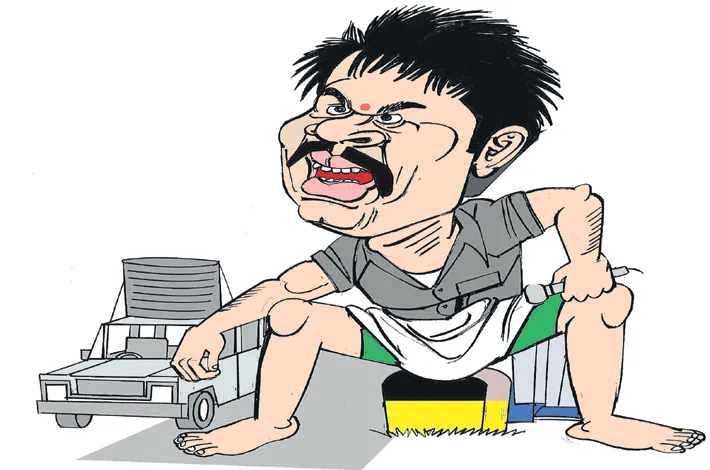
Villagers and elites alike now flock to these "goonda durbars," impromptu tribunals where muscle enforces equity. Access is effortless—a whispered name, a modest offering—and resolution swift, albeit extortionate. It's a Faustian bargain: justice unbundled, unjudicial, but unyielding. In jest, a Warangal auto-rickshaw driver quips, "Why not legalize it? Call them Goonda Adalats, slot them beside Lok Adalats. At least they'd clear backlogs before Diwali."
As Yadagiri tills his reclaimed earth, Pochavva mends her daughter's sari, and Rao counts his tainted rupees, the question lingers: In a democracy's cradle, must the aggrieved outsource their rights to rogues? Reforms beckon—digitized courts, empowered ombudsmen, a media that bites. Until then, in India's underbelly, the gavel falls not with wood's crack, but flesh's thud. And the people, weary pilgrims, pay homage where they must.