24 September, 2026 | 12:03 AM


Justice Bhuyan flags deep social fault lines
26-02-2026 12:00:00 AM
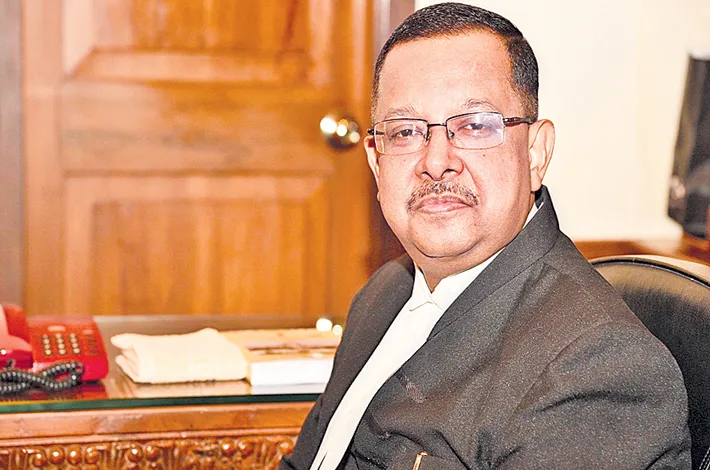
Justice Ujjal Bhuyan of the Supreme Court on Wednesday said the country remains far from the benchmark of constitutional morality, and cited the example of his daughter’s Muslim friend being denied accommodation because of her religious identity.
Justice Bhuyan, speaking at a seminar organised by the Telangana Judges’ Association and the Telangana State Judicial Academy, said constitutional morality must outweigh public morality, “even if it is the majoritarian view.”
He also noted that although legal costs in India are relatively low compared to other countries, associated expenses, including lawyers’ fees, make it nearly impossible for ordinary citizens in remote areas to approach courts. He said constitutional morality is the benchmark the statute expects citizens to adhere to, adding that the Constitution’s objective is fraternity and brotherhood.
“The emphasis on constitutional morality is grounded in the premise that the morality we practise at home or within communities may fall short of, or differ from, the morality the Constitution expects us to uphold,” he said. Such differences are particularly visible in matters of marriage and renting out premises, he added.
He cited the example of his daughter’s friend, a PhD scholar, who was denied accommodation by a landlady running a working women’s hostel in Delhi because of her Muslim identity.
Referring to media reports, Justice Bhuyan cited another instance of parents protesting aggressively against a Dalit cook preparing food under the mid-day meal scheme.
“These are just random examples—only the tip of the iceberg. They reveal how deep our societal fault lines run and show how far we still are from the benchmark of constitutional morality, even 75 years into our Republic,” he said.
Referring to the Delhi High Court’s judgment in the Naz Foundation case, he noted that the court held that popular morality and public disapproval are not valid grounds to restrict fundamental rights under Article 21.
He said popular morality is distinct from constitutional morality, as the latter is rooted in constitutional values. “In our scheme of things, constitutional morality must outweigh public morality, even if it reflects the majoritarian view,” he said. On gender representation in the judiciary, Justice Bhuyan said the entry of women into judicial service has gained momentum across the country in recent years. He added that Telangana has taken the lead in improving gender representation within the judiciary.
On the representation of marginalised communities in Telangana’s judiciary, he said there are 76 SC judicial officers across three cadres, 46 ST judicial officers, and 25 officers from minority communities.
While there is scope for further improvement in representation, including that of minorities, he said the current figures reflect Telangana’s vibrant democracy and inclusive culture. “It is also heartening to note that there are five judicial officers in the state who have overcome physical disabilities,” he added.