21 October, 2026 | 4:32 AM


Gulf crisis tests corporate boards
07-04-2026 12:00:00 AM
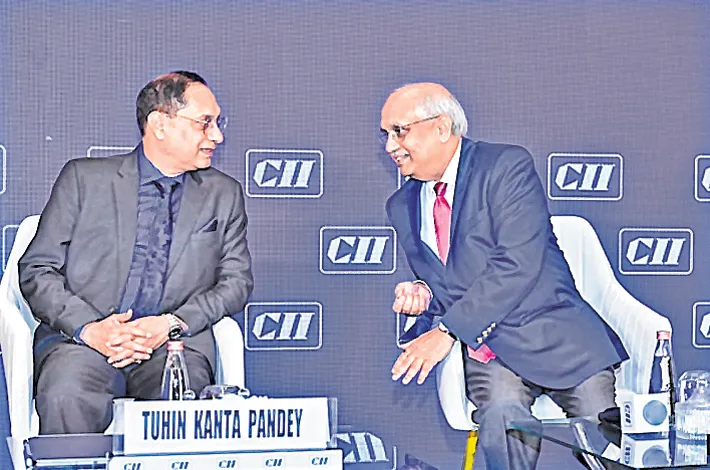
CREDIBILITY. OVERSIGHT. NERVE | Sebi chief Tuhin Pandey presses directors to move beyond compliance, deepen scrutiny, and safeguard market stability
Palazhi Ashok Kumar mumbai
With war in West Asia rattling energy supplies and sending tremors through global markets, Tuhin Kanta Pandey has issued a sharp warning to corporate India: the real fault lines of the economy may lie inside its boardrooms.
Speaking at the CII 19th Corporate Governance Summit on Monday, the chairman of Securities and Exchange Board of India made it clear that while businesses can withstand financial shocks, markets show little mercy when governance falters. In a decade shaped by pandemic aftershocks, geopolitical conflict and technological upheaval, he said, the burden on directors has never been heavier—or more exposed. Governance, he argued, is not decoration but defence. It is the unseen system that determines whether companies anticipate risk or stumble into it. India may have constructed a formidable regulatory edifice—tightened disclosures, sharper oversight, stronger compliance—but the real weakness now lies in execution.
The concern is no longer absence of rules, but dilution of rigour. Boards meet, but do not always challenge. Data is presented, but not always dissected. Independence is declared, but not always demonstrated. The result is a dangerous illusion of strength—organisations that appear stable, yet respond slowly when pressure builds.
At the heart of this reckoning stands the independent director. Entrusted with protecting minority shareholders and preserving enterprise value, their mandate extends far beyond procedural oversight. They must question, probe and, when necessary, resist. Yet many remain constrained—shaped by limited access, filtered information, and over-reliance on management narratives.
Tuhin Kanta Pandey signalled a decisive shift: the next phase of governance will not be built on additional regulation, but on sharper thinking inside existing structures. Boardrooms must evolve—from passive review to active interpretation, from polite agreement to constructive dissent, and from periodic supervision to continuous vigilance.
For investors, the message is stark. Markets tolerate volatility, but punish ambiguity in conduct. Trust, once shaken, is costly to rebuild.
To address this, Securities and Exchange Board of India will pursue large-scale capacity building for independent directors, working with industry and academic institutions to strengthen boardroom capability. The aim is clear: not more compliance, but better judgment.
“Expecting directors to possess all perspectives or rely on one-time training is unrealistic. Continuous, structured learning is essential, including domain-specific orientation and peer exchange to strengthen board understanding, judgement, and governance effectiveness,” Pandey added.
In the end, governance will not be defined by the thickness of rulebooks, but by the courage within the room—the questions asked, the silences broken, and the decisions taken.