20 September, 2026 | 4:17 AM


Visionary leader’s unfinished agenda still relevant
23-05-2026 12:00:00 AM
metro india news I hyderabad
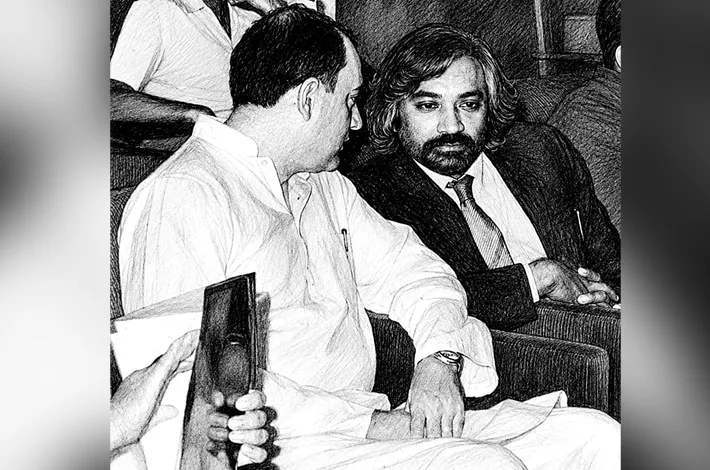
In a heartfelt remembrance shared on social media on May 22, Sam Pitroda, the veteran technocrat, entrepreneur, and former advisor to Prime Minister Rajiv Gandhi, highlighted the enduring legacy of the late leader. Pitroda described Rajiv Gandhi as "a visionary leader who believed in technology for people and democracy for people," underscoring themes that defined Gandhi's tenure and continue to resonate in contemporary India's push for digital empowerment and grassroots governance.
Pitroda, who worked closely with Gandhi in the 1980s as chairman of the Telecom Commission, recalled how the former Prime Minister dreamed of connecting India, empowering the marginalized, strengthening local democracy, and leveraging technology for equality, education, health, and overall development. "To me, he was a great hero and a great son of India," Pitroda wrote. "His unfinished agenda remains our responsibility."
Rajiv Gandhi, was often called the "Computer Raj" or the architect of modern India's technological awakening. At a time when India had fewer than 3 million telephone connections for a population exceeding 750 million, Gandhi's administration, with Pitroda's pivotal involvement, launched ambitious technology missions. These initiatives laid the foundation for the telecommunications revolution that would later explode in the 1990s and 2000s, transforming India into a global IT powerhouse.
Pitroda, an Indian-American innovator with a background in telecommunications, was brought into the government to drive these changes. Under Gandhi's leadership, initiatives like the National Technology Missions focused on water, immunization, oilseeds, literacy, and crucially, telecommunications. The duo's collaboration introduced public call offices (PCOs), expanded STD/ISD services, and promoted computerization—steps that democratized access to communication and information. Pitroda's tribute echoes this partnership, framing technology not as an elite tool but as an instrument for social justice.
Empowering the Last Mile
Central to Gandhi's vision, as articulated by Pitroda, was the idea of reaching "the last person." This philosophy manifested in efforts to decentralize power through the Panchayati Raj system. Gandhi championed the 73rd and 74th Constitutional Amendments, which gave constitutional status to local self-governance bodies, aiming to strengthen democracy at the village and municipal levels. Though fully realized later, these reforms reflected his belief in participatory governance.
Pitroda's message revives this agenda amid today's India, where digital public infrastructure like Aadhaar, UPI, and ONDC seeks to achieve similar empowerment. Initiatives such as Digital India, launched years after Gandhi's time, build directly on the foundations he envisioned. However, challenges persist: rural digital divides, uneven access to quality education and healthcare via technology, and the need for inclusive growth in an era of AI and automation.
Pitroda's call to complete the "unfinished agenda" carries weight given his own career trajectory. After Gandhi's assassination in 1991, Pitroda continued his work in public policy, heading commissions under subsequent governments and advocating for knowledge-based development. His recent roles, including with the Indian Overseas Congress, have kept him engaged in debates on India's global positioning and domestic reforms.
A Leader Ahead of His Time
Rajiv Gandhi's premiership was marked by bold foreign policy shifts, economic opening, and a scientific temper. He pushed for environmental awareness, anti-deforestation drives, and modernization of the armed forces. His tragic death at the hands of LTTE militants in Sriperumbudur cut short a tenure filled with promise and controversy alike—from the Shah Bano case and Bofors allegations to pioneering steps in economic liberalization that paved the way for 1991 reforms.
In Pitroda's view, Gandhi embodied a rare blend of idealism and pragmatism. "His dream was to connect India," the tribute notes. This connectivity went beyond wires and signals; it was about bridging social, economic, and cultural divides. In the video accompanying the post (based on the context of Pitroda's reflective style in past tributes), one can imagine him recounting personal anecdotes—Gandhi's hands-on interest in technology, his insistence on results, and his faith in young professionals like Pitroda.
Political observers note that such tributes from Gandhi family associates often serve dual purposes: honoring the past while subtly signaling continuity in the Congress party's vision under Rahul Gandhi. Pitroda has frequently drawn parallels between Rajiv's forward-looking approach and current challenges, advocating for consensus-building, education investment, and sustainable development.
As India reflects on Rajiv Gandhi’s era, his push for technology-driven equity appears increasingly prophetic. India now boasts a booming digital economy, over a billion smartphone users, and a thriving startup culture. Yet challenges such as data privacy, automation-led job losses, and digital literacy gaps remain. Sam Pitroda’s remarks come amid debates on Viksit Bharat by 2047, where inclusive growth and tech-driven governance dominate policy discussions.
The Human Element
Sam Pitroda's video tribute serves as both a nostalgic reflection and a forward-looking manifesto. Sam Pitroda described Rajiv Gandhi as a modern leader who valued innovation and expert-driven governance.