7 September, 2026 | 2:06 AM


Heart surgery without the big scar
17-07-2026 12:00:00 AM

Robotic and minimally invasive heart surgery is changing cardiac care
For decades, the thought of heart surgery brought images of a large chest incision, a divided breastbone, and months of cautious recovery. But advances in minimally invasive and robotic-assisted techniques are changing that perception, allowing selected patients to undergo complex cardiac procedures through smaller openings with reduced surgical trauma and faster recovery.
“The biggest change in cardiac surgery is not just about using advanced technology—it is about reducing surgical trauma while maintaining the same standards of safety and effectiveness,” said Dr. K. V. Rajasekhara Rao, Senior Consultant Cardiothoracic & Vascular Surgeon, Renova Century Hospitals, Hyderabad.
Traditional open-heart surgery, involving a median sternotomy where the breastbone is separated to access the heart, remains the established approach for many complex conditions. However, modern cardiac care has expanded treatment options for carefully selected patients. Surgeons can now perform several procedures through small incisions between the ribs, avoiding complete division of the breastbone.
Robotic-assisted cardiac surgery has taken this evolution further. Using a computer-controlled console, surgeons operate specialized instruments while viewing the heart through high-definition, three-dimensional imaging. The robotic system enhances precision, improves visualization and allows delicate movements in confined spaces that can be challenging during conventional surgery.
“Robotic technology does not replace the surgeon. Every movement is controlled by the surgeon, while the platform improves precision, flexibility and accuracy,” Dr. Rao explained.
The robotic instruments replicate wrist-like movements and reduce the impact of natural hand tremors, helping surgeons perform intricate procedures with greater control. Despite growing awareness, experts emphasize that robots do not operate independently, and clinical expertise remains central to every decision.
Minimal access and robotic cardiac surgery may benefit selected patients requiring procedures such as mitral and tricuspid valve surgery, closure of atrial septal defects, selected coronary artery bypass procedures, removal of certain benign heart tumours and treatment of some rhythm disorders, including atrial fibrillation.
However, robotic surgery is not suitable for every patient. The final decision depends on factors including age, overall health, heart anatomy, previous surgeries and disease complexity. Patients with extensive coronary disease, severe calcification, multiple complicated conditions or emergency cardiac problems may still achieve better outcomes through conventional surgery.
Experts say the advantages of smaller incisions extend beyond cosmetic benefits. Preserving the breastbone can result in less pain, reduced blood loss, lower infection risks and shorter hospital stays. Many patients can walk earlier, return to daily activities sooner and resume professional responsibilities faster.
“The best operation is not necessarily the one with the smallest incision. It is the one that provides the safest procedure, durable results and the best quality of life for that individual patient,” Dr. Rao said.
With advances in robotics, artificial intelligence, imaging, and recovery protocols, the future of cardiac surgery is expected to become increasingly precise and personalized. At Renova Century Hospitals, the SSI MANTRA Robotic Surgical System represents this shift by supporting selected complex procedures with enhanced precision and three-dimensional visualization.
The message for patients is clear: the future of heart surgery is not about replacing traditional methods with machines. It is about choosing the safest and most effective treatment for everyone.
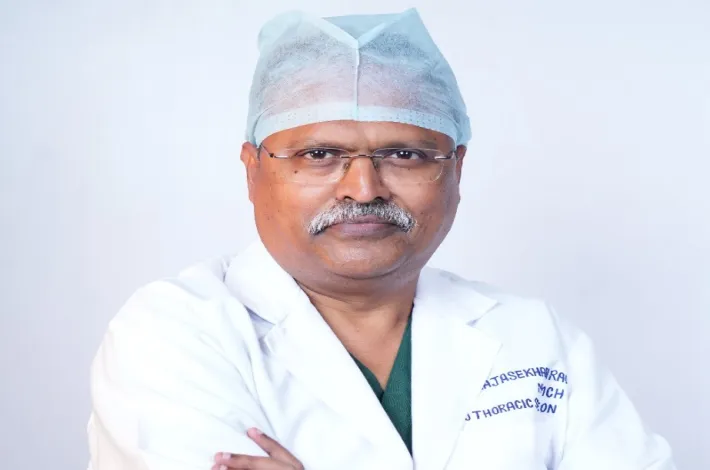
(Dr. K. V. Rajasekhara Rao, MS, M.Ch, FIACS Chairman & Head, Department of Cardiothoracic and Heart Transplant Surgery Renova Century Hospitals Road No. 12, Banjara Hills, Hyderabad.)