19 October, 2026 | 12:40 AM


Hyderabad rediscovers traces of 1908 Musi flood
19-10-2026 12:00:00 AM
T P Venu | Hyderabad
The great Musi flood of September 28, 1908, remains one of the worst disasters in Hyderabad’s history. The devastating deluge claimed nearly 15,000 lives and left more than 80,000 people homeless, leaving an indelible mark on the city’s collective memory.
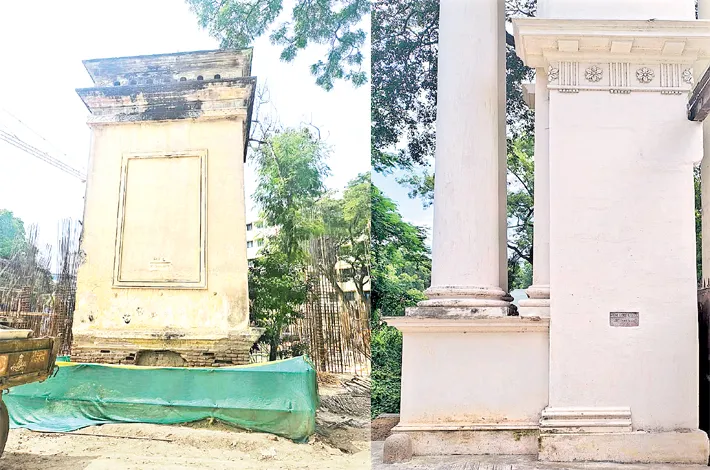
More than a century later, new discoveries of High Flood Level (HFL) markers are helping preserve the physical evidence of the catastrophe. Heritage enthusiast Inayat Farooqui has traced and documented 17 markers associated with the 1908 Musi flood across Hyderabad, including several within the historic British Residency, which now forms part of Veeranari Chakali Ilamma Women’s University.
Mohammed Safiullah, managing trustee of the Deccan Heritage Trust, said the existence of only one or two markers at the British Residency was previously known to us. “It is commendable that Inayat Farooqui has photographed and documented 17 High Flood Level markers related to the Musi flood,” he said, highlighting the importance of recording these historical traces for future generations.
Access to several parts of the British Residency remains restricted because of ongoing construction and restoration work, as well as the presence of the women’s college. Farooqui said he carried out the photographic documentation with permission and in the presence of an official.
During his exploration of the historic complex, he identified five markers, while a sixth had been completely demolished. The discoveries have brought renewed attention to the flood’s impact on buildings and locations that witnessed the disaster.
Among the significant locations are Pigeon House and Empress Gate, where markers indicate the highest flood levels reached during the calamity. These inscriptions provide tangible evidence of the extraordinary height of the floodwaters and the scale of the devastation that engulfed parts of the city.
“So far, I have discovered and documented 17 HFL markers from the 1908 flood across Hyderabad, preserving vital evidence of one of the greatest tragedies in the city’s history,” Farooqui said. The documentation of these markers is an important step towards safeguarding Hyderabad’s heritage. Each marker offers a glimpse into the magnitude of the disaster and serves as a reminder of the lives lost and communities displaced. Preserving these traces can help future generations understand the city’s history beyond written accounts.