21 October, 2026 | 12:11 PM


India, Canada seal uranium pact, target $50 bn trade by 2030
03-03-2026 12:00:00 AM
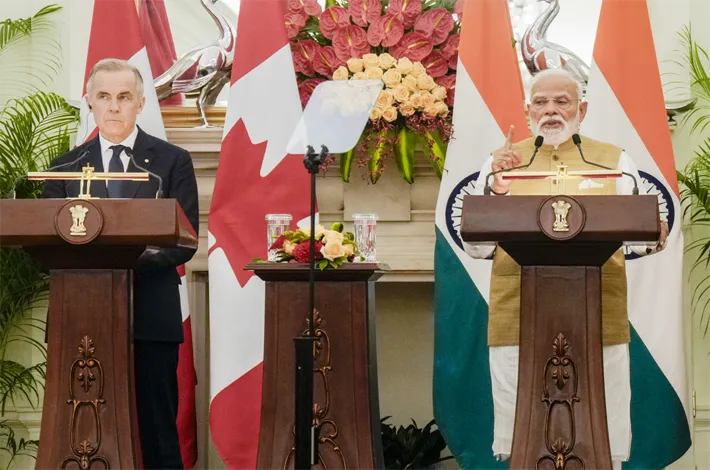
Under a USD 2.6 billion agreement, Canada will support India’s civil nuclear energy sector through long-term uranium supplies. The two sides also agreed to collaborate on small modular reactors and advanced nuclear technologies, reflecting a shared commitment to clean and reliable energy.
Metro India News | new delhi
India and Canada on Monday signed a landmark uranium supply agreement and key pacts on critical minerals, setting an ambitious target to expand bilateral trade to USD 50 billion by 2030. Prime Minister Narendra Modi and his Canadian counterpart Mark Carney finalised a new framework to reset and strengthen ties after a period of diplomatic strain.
Under a USD 2.6 billion agreement, Canada will support India’s civil nuclear energy sector through long-term uranium supplies. The two sides also agreed to collaborate on small modular reactors and advanced nuclear technologies, reflecting a shared commitment to clean and reliable energy.
Expanding economic cooperation emerged as a key priority during the wide-ranging talks. Both leaders decided to expedite the Comprehensive Economic Partnership Agreement to unlock investment and employment opportunities. Bilateral trade currently stands at around USD 13 billion, and the new target aims to nearly quadruple it within five years. Modi noted that Canadian pension funds have already invested nearly USD 100 billion in India, underlining confidence in India’s growth prospects.
A Memorandum of Understanding on critical minerals was also signed to strengthen resilient supply chains. Canada, known for its vast reserves of rare earths and other critical minerals, will partner with India in development, processing and secure supply chains, particularly for clean energy, electric vehicles and advanced manufacturing.
The leaders launched a strategic energy partnership covering hydrocarbons, renewable energy, green hydrogen and energy storage. Cooperation will also expand in wind and solar sectors. In defence and security, both sides agreed to establish an India-Canada defence dialogue and enhance collaboration in defence industries, maritime domain awareness and military exchanges.
Education and innovation featured prominently in the discussions. New partnerships between universities in artificial intelligence, healthcare, agriculture and innovation were announced, alongside plans for Canadian universities to open campuses in India.
Addressing global concerns, Modi said terrorism, extremism and radicalisation remain common challenges requiring close cooperation. The leaders also discussed the security situation in West Asia, with India reiterating support for resolving conflicts through dialogue and diplomacy.
The renewed engagement follows efforts to repair ties strained since 2023. Carney’s election victory last year paved the way for restoring diplomatic engagement, with both countries now posting high commissioners in each other’s capitals. The latest agreements signal a fresh chapter focused on trade, clean energy and strategic cooperation.