12 October, 2026 | 11:24 PM


‘India eyes leadership in electric mobility’
11-02-2026 12:00:00 AM
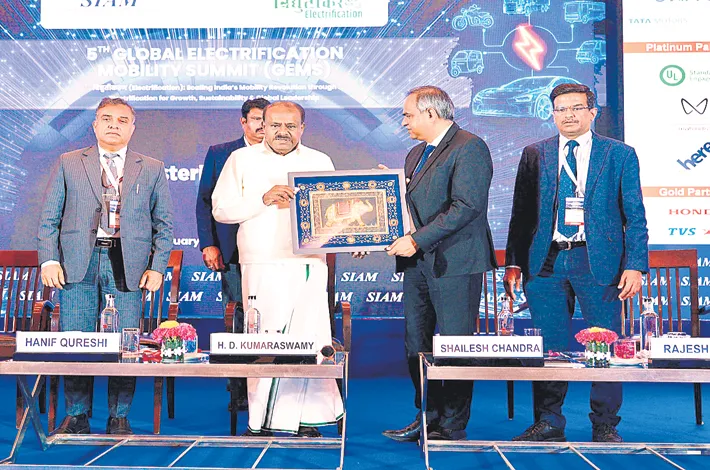
India aims to transition from being an adopter to a global leader in electric mobility, setting international benchmarks and shaping the future of the electric vehicle (EV) ecosystem, Union Minister for Heavy Industries and Steel H D Kumaraswamy said on Tuesday.
Addressing the 5th Global Electrification Mobility Summit in the national capital, Kumaraswamy said India’s electric mobility vision goes beyond scaling up adoption and focuses on influencing global standards, strengthening domestic capabilities, and creating sustainable livelihoods for the youth. He said the country is moving from participation to leadership and from scale to strategic depth in its EV journey.
Referring to a NITI Aayog report, the minister said the transition to electric mobility is not only an environmental necessity but also a multi-million-dollar economic opportunity. He noted that electric mobility will significantly transform service delivery through connected vehicles, data-driven fleet management, intelligent transport systems, and innovative ownership models.
Kumaraswamy highlighted that India’s strong digital ecosystem and vibrant startup community place the country in a favourable position to lead innovation in the EV sector. He added that India’s shift to electric mobility has moved decisively from intent to implementation, a trend reflected in the latest Economic Survey.
According to the minister, the electric vehicle market recorded a compound annual growth rate of over 60 per cent in the 2024–25 financial year, with EV registrations nearing two million units. He said electric mobility will play a crucial role in helping India achieve its long-term goal of net-zero emissions by 2070, while also supporting cleaner growth, energy security, and industrial transformation.
Outlining government support, Kumaraswamy said the Ministry of Heavy Industries has allocated Rs 2,000 crore under the PM E-DRIVE scheme to establish more than 70,000 electric vehicle charging stations across the country. He also pointed out that the Union Budget has provided a boost to domestic manufacturing by exempting capital goods used in critical minerals manufacturing from basic customs duty.
Meanwhile, SIAM President Shailesh Chandra stressed the importance of policy consistency and faster infrastructure development to accelerate electric mobility. He said a coordinated approach involving the government, industry, and academia is essential to build a globally competitive EV ecosystem. Chandra added that charging infrastructure remains the biggest challenge and requires strong government-led coordination among stakeholders.