2 October, 2026 | 7:37 PM


Indiramma insulted
02-04-2026 12:00:00 AM
EKALAVYA MALLEPALLI I hyderabad
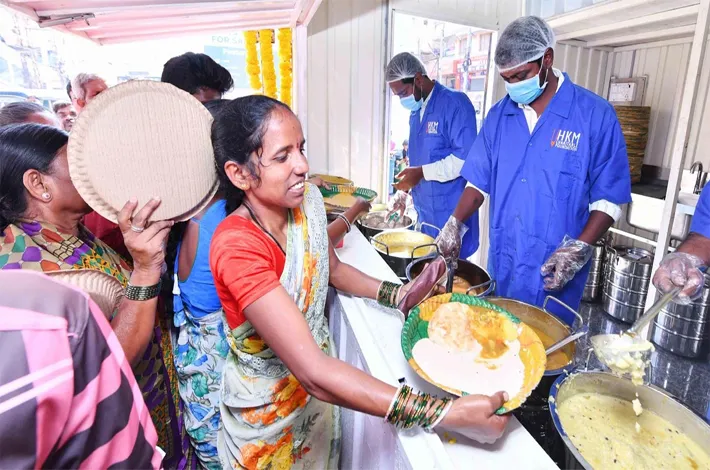
A welfare scheme meant to provide dignified and affordable food to the urban poor is facing serious questions, as a detailed ground-level study exposes major gaps in the functioning of Indiramma Canteens. While the Rs 5 meal programme continues to attract thousands, the latest findings suggest that affordability is its only strong pillar, with quality and infrastructure falling far behind.
A survey conducted by People’s Pulse Research Organisation under the guidance of Director R. Dileep Reddy assessed 4,000 beneficiaries across 150 canteens between February 23 and March 30, 2026. Researchers G. Murali Krishna, Akhila, and Pradeep visited 75 locations, collecting 45 to 55 responses per site through direct observation, structured interviews, and user feedback.
The findings reveal deep concerns about food quality. Nearly 70% of respondents rated lunch as bad, while breakfast too received poor feedback, with 40% calling it bad and 44% average. Freshness remains a major issue, with 83% stating that food is rarely served hot and fresh. The quality of curries, dal, and chutney is also under scrutiny, with 82% rating them as bad. Menu adherence is weak, as 81% reported that the prescribed menu is not followed.
Nutritional value appears to be largely neglected. Around 60% of users said they are unsure whether the food is healthy, while 35% believe it is unhealthy. Only 1% rated the food as very healthy, and just 7% reported any improvement in their nutritional intake, raising concerns about long-term health impact.
Infrastructure deficiencies further worsen the situation. As many as 98% reported non-functional wash basins, while 100% said RO drinking water systems are not working. Around 79% flagged inadequate water availability. Cleanliness is also a concern, with 40% rating it as poor. Basic amenities such as fans, lighting, and seating are either inadequate or missing in several locations, forcing many to eat in unhygienic conditions.
Operational issues add to the problem. About 67% of users said canteens do not function as per schedule, and 95% reported no inspections by GHMC officials, indicating weak monitoring. At the same time, 74% of respondents said they visit only because of affordability, while just 4% cited food quality, clearly showing lack of satisfaction.
Despite these challenges, dependence on the scheme remains high. Around 36% of users rely on it daily, and 62% save between Rs 500 and Rs 750 per month, making it a crucial financial support system for low-income groups such as daily wage workers, auto drivers, and small traders.
Experts say the scheme requires urgent corrective measures to sustain its impact. They suggest strict enforcement of food quality standards, better monitoring mechanisms, and adherence to a fixed menu. Improving infrastructure, ensuring clean drinking water, and maintaining hygiene are also seen as critical steps. Nutritionists recommend introducing balanced meals, including options like curd rice, vegetable rice, and millets, to improve dietary value.