27 July, 2026 | 11:31 AM


Is CM forgetting the State’s painful past?
20-01-2026 12:00:00 AM
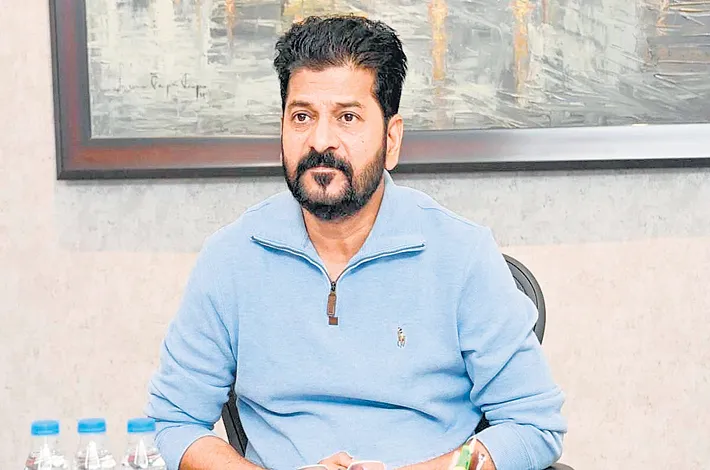
Revanth Reddy’s remarks ignite a Telangana Identity Storm
Questions the people are asking
- Why praise leaders who opposed Telangana’s formation?
- Why remain silent on their role in suppressing the movement?
- Is this not an insult to those who sacrificed their lives?
- What message does this send to future generations about the Telangana struggle?
- Is political convenience being placed above historical truth?
Fresh statements by Telangana Chief Minister Revanth Reddy have triggered a deep political and emotional churn across the state. His praise for leaders associated with the undivided Andhra Pradesh, combined with an aggressive call to politically uproot the Bharat Rashtra Samithi, has reopened old wounds linked to Telangana’s long struggle for statehood.
The comments, delivered at a public meeting in Khammam, have gone beyond routine political rhetoric. They have raised serious questions about historical memory, democratic language, and the message being conveyed by a Chief Minister governing a state born out of sacrifice.
Telangana’s formation was not a political favour or an administrative adjustment. It was the outcome of decades of resistance against regional discrimination in the united state. Thousands of students, employees, farmers, and workers participated in sustained protests. Hundreds lost their lives, and countless others faced arrests, police action, and repression.
Movements such as Sakala Janula Samme, Million March, and Sagara Haaram reflected a collective uprising that transcended party lines. For the people of Telangana, statehood symbolises dignity, self-respect, and historical justice—values that remain deeply ingrained in public consciousness.
Praising the Past that opposed Telangana
Against this backdrop, Revanth Reddy’s repeated praise for Chandrababu Naidu and Y. S. Rajasekhara Reddy as welfare icons has sparked sharp criticism. Chandrababu Naidu had openly opposed the creation of Telangana, warning that a separate state would face shortages of power, water, and employment.
During YSR’s tenure, the Telangana movement was actively suppressed, with cases filed against activists, mass arrests, and police crackdowns. Several youths lost their lives, leaving families with irreversible trauma.
For many Telangana citizens, praising these leaders without acknowledging their role in opposing or suppressing the movement amounts to rewriting or whitewashing history.
Khammam Speech and the Language of Confrontation
The controversy intensified after the Chief Minister’s Khammam speech, where he urged TDP supporters to ensure that the BRS is “buried politically,” using phrases that included pulling down party flagpoles and removing the BRS from villages.
Opposition parties and civil rights groups argue that while political rivalry is a democratic norm, language that appears to endorse vandalism or intimidation crosses a dangerous line. They warn that such rhetoric risks escalating political tensions and undermining democratic culture in the state.
Despite achieving statehood, Telangana continues to face unresolved challenges—equitable distribution of water and power, fair access to jobs, regional balance in development, and transparent use of resources. These issues make historical clarity and moral consistency even more crucial for those in power.
Critics argue that at such a juncture, the Chief Minister’s role should be to protect Telangana’s distinct identity and the legitimacy of its struggle, rather than blur historical truths for short-term political alignments.
At the heart of the debate lies a larger question of legacy. As Chief Minister of Telangana, where does Revanth Reddy truly stand—on the side of the people’s movement that created the state, or with political narratives that dilute its painful yet proud history?
For Telangana, memory is not optional. The land remembers its struggles, the people remember their martyrs, and history will remember who stood with that truth—and who chose to overlook it.