19 September, 2026 | 11:57 AM


25 years, Rs 3,500 Crores, Zero Water
21-05-2026 12:00:00 AM
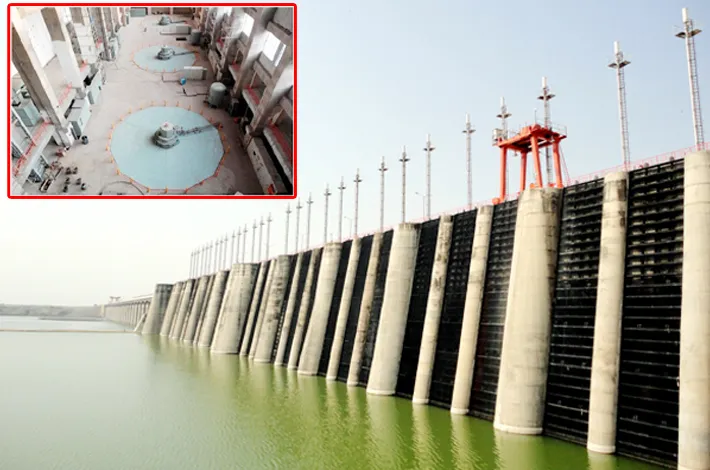
MAHESHWAR HYDRO ELECTRIC PROJECT
metro india news I indore
The Maheshwar Hydro Electric Project (MHEP), a 400 MW initiative on the Narmada River in Madhya Pradesh, stands as a symbol of prolonged delays in India's infrastructure development. Designed to generate electricity for the state and supply drinking water to Indore, the project has consumed more than Rs 3,500 crore in public funds over 25 years without delivering a single unit of power or a drop of water to intended beneficiaries.
Construction on the project began in the late 1990s. Work received fresh momentum in mid-2005 through financial backing from public sector institutions under the Government of India. By 2010, authorities had directed substantial resources toward both civil construction and rehabilitation and resettlement (R&R) efforts for project-affected families. Photographs from that period show significant progress on the dam structure and associated facilities.
In early 2010, the Ministry of Environment and Forests issued a stop-work order. This directive came even as the Government of Madhya Pradesh continued R&R activities under the oversight of a monitoring committee established by the ministry. A subsequent detailed review uncovered no irregularities in the handling of rehabilitation processes. On the strength of those findings, officials withdrew the stop-work order. Generation clearance followed in May 2012.
Despite the clearance, no fresh funding arrived to finish construction and commission the facilities. Multiple revival proposals surfaced in the following years, but none advanced to implementation. Legal proceedings unfolded across forums including the National Company Law Tribunal (NCLT), the National Company Law Appellate Tribunal (NCLAT), and the Supreme Court of India. Courts offered observations and directions that held potential to unlock progress, still concerned parties failed to translate those inputs into concrete action.
The project now sits idle. With substantial physical work already completed, the absence of power generation and water supply represents a clear case of underutilized public assets. Liquidation would impose heavy losses on lenders, shareholders, employees, and the public exchequer. Such an outcome would also eliminate the chance to fulfill the project's core goals of supporting Madhya Pradesh's energy needs and addressing Indore's water requirements.
Litigation has entangled numerous stakeholders. Private promoters, the Madhya Pradesh state government, the state electricity board, central government agencies, major contractors, lenders, banks, and the Power Finance Corporation all feature in the disputes. This complex web of interests has prevented resolution despite repeated attempts at negotiation.
A high-level Task Force brought together representatives from the Madhya Pradesh government, financial institutions, technical experts, and the project promoter.
The group examined several revival options but could not identify a practical and implementable path forward. Responsibility now appears to rest heavily with the state government to break the impasse.
Officials in Bhopal hold key levers. Completing any remaining R&R work falls within the state's domain. Coordination with Bharat Heavy Electricals Limited (BHEL) and the main civil contractor could accelerate the final stages of installation and testing. Swift action on these fronts would align with the broader public interest in realizing returns on the Rs 3,500 crore already spent.
The situation raises larger questions about accountability in long-gestation infrastructure projects. Public money has financed a facility that exists in near-ready condition. Families displaced during construction completed their relocation processes years ago, according to official reviews. Technical components procured through public sector channels await installation. The gap between current status and operational readiness appears bridgeable through administrative and financial decisions rather than fresh technological hurdles.
Power sector experts note that Madhya Pradesh continues to face energy demand pressures, particularly during peak seasons. Indore's growing urban population adds urgency to reliable drinking water sources. The Maheshwar project, once commissioned, could contribute meaningfully on both fronts. Its 400 MW capacity would feed into the state grid, while dedicated water allocation would strengthen urban supply infrastructure.
Delays have compounded financial costs. Interest on loans, idle contractor liabilities, and maintenance of completed structures add to the burden. Stakeholders warn that further inaction risks deterioration of already-built assets, which would necessitate even higher expenditure later.
The central government, state authorities, and financial institutions share interest in an amicable resolution. Past court directions emphasized revival over dissolution. Implementation of those suggestions could involve restructuring of debt, fresh equity infusion, or a special purpose vehicle managed with stronger government oversight.
As matters stand, the project offers a test case for country’s ability to complete stalled infrastructure initiatives. With substantial investment locked in and physical progress achieved, the focus has shifted from construction to governance and coordination. Madhya Pradesh authorities face increasing calls to lead efforts, engage all parties, and set a firm timeline for commissioning.
Communities along the Narmada and residents of Indore continue to wait for benefits promised decades ago. The Maheshwar Hydro Electric Project demonstrates how legal complexities and coordination gaps can stall even well-advanced public initiatives. Resolution would not only unlock power and water but also restore confidence in the system's capacity to deliver on large infrastructure commitments.