22 September, 2026 | 10:32 AM


Menstrual Health now a Fundamental Right
04-02-2026 12:00:00 AM
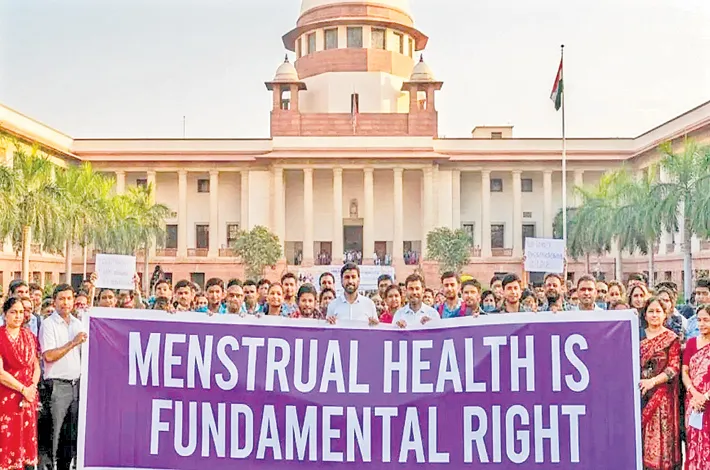
The Supreme Court of India has delivered a landmark judgment that could significantly change the everyday reality of millions of schoolgirls by formally recognising menstrual health as a fundamental right under Article 21 of the Constitution. The ruling places menstrual dignity within the broader right to life, bodily autonomy and personal dignity.
The bench of Justices J.B. Pardiwala and R. Mahadevan directed all States and Union Territories to ensure the availability of free biodegradable sanitary pads, gender-segregated toilets, menstrual hygiene management corners and safe disposal facilities in every school. The order is widely viewed as a major step for gender justice and public health, directly linking menstrual hygiene with the Right to Education and acknowledging that the lack of basic facilities has long contributed to absenteeism and dropouts, particularly in rural and low-income communities. Governments and educational institutions have been given three months to comply.
The Court emphasised that the right to menstrual health is inseparable from the right to life under Article 21, stating that dignity and access to hygiene cannot be treated as optional benefits. It also clarified that parental consent or the private status of school management cannot be cited as grounds to deny such facilities.
Beyond menstrual products, the judgment mandates separate toilets for boys and girls, along with disabled-friendly toilets in all schools, recognising the intersection of gender, disability and access to education. Schools must also establish hygiene management corners and environmentally safe disposal systems to address both health and ecological concerns. The bench indicated that governments would be held accountable for non-compliance and may be required to submit progress reports.
Public health experts have welcomed the decision, noting that menstrual-related absenteeism remains a significant barrier to girls’ education. Women’s rights groups described the ruling as a shift from welfare to enforceable rights, stressing that menstrual care is now a constitutional obligation rather than charity. As states move toward implementation, the judgment reinforces that dignity in education begins with dignity in basic care.