15 September, 2026 | 1:18 AM


TSRTC EV push sparks job fears
25-05-2026 12:00:00 AM
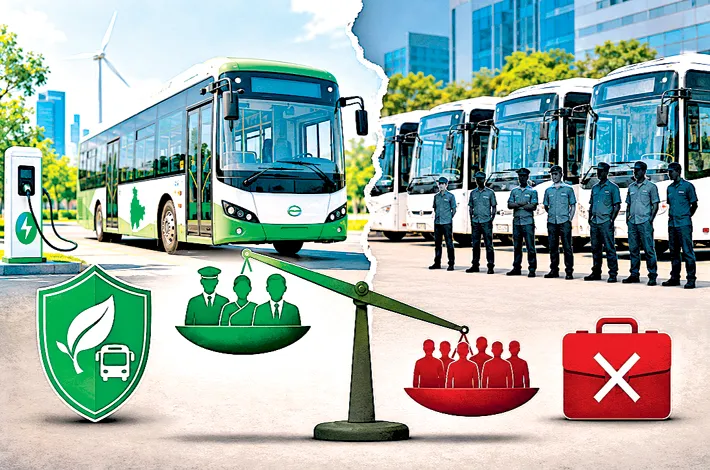
UNIONS STRONGLY CRITICIZE THIS MODEL, SUSPECTING IT IS A DELIBERATE STEP TOWARDS THE EVENTUAL PRIVATIZATION OF TSRTC
metro india news I hyderabad
The Telangana State Road Transport Corporation (TSRTC) has declared that electric buses will determine the future of the organization, emphasizing their importance in protecting the environment. According to TSRTC, nearly 80 lakh to 1 crore passengers travel daily on its services. The corporation maintains that electric buses represent the way forward. While the introduction of electric vehicles (EVs) is being welcomed by many, including some RTC employees, trade unions have raised serious concerns that this shift is coming at the cost of permanent government jobs.
The corporation has already introduced around 500 electric buses. The government has announced plans to introduce another 2,000 electric buses soon. Traditionally, the addition of each new bus in RTC creates employment for approximately 4 to 5 people. With electric buses, this number was expected to be even higher. This has already created jobs for over 2,000 private workers for the existing 500 buses.
Yet, despite the induction of 500 EV buses, not a single permanent RTC employee has been added. However, unions claim this will bring in an additional 8,000 to 10,000 private employees. If the current trend continues, out of the approximately 40,000 employees in TSRTC in the coming years, more than 25 percent (over 10,000) could be private contract workers.
Sharp decline in RTC workforce
When Telangana state was formed in 2014, TSRTC had around 58,000 employees. Over the past 12 years, the workforce has shrunk significantly due to retirements, voluntary retirements on health grounds, and a near-total absence of fresh recruitment. The unions state that nearly 18,000 posts have been lost during this period, even as the number of buses has increased. They allege that instead of recruiting new staff to match the growing fleet and filling vacancies caused by retirements, the management is adjusting existing employees across depots.
Unions and analysts claim that the root cause of this situation is the agreements the government has signed with private corporate companies for electric buses. These buses are supplied and maintained by private firms, and RTC only pays rent (wet lease model). Since they are hired buses, regular RTC employees are not deployed on them. Private companies appoint their own drivers, conductors, mechanics, supervisors, and managers. Unions strongly criticize this model, suspecting it is a deliberate step towards the eventual privatization of TSRTC.
Union leaders fear that eventually private players who supply and operate the electric buses may even take over the corporation itself, as they will possess both the buses and the experienced manpower. They have strongly appealed to the government to reconsider this policy, conduct fresh recruitment, and ensure that the future of TSRTC remains in the hands of its permanent employees rather than private corporations.