29 November, 2026 | 12:01 AM


Metro’s crowding, delays persist
29-11-2026 12:00:00 AM
Hyderabad Metro completes nine years: 94.2 cr rid
metro india news I hyderabad
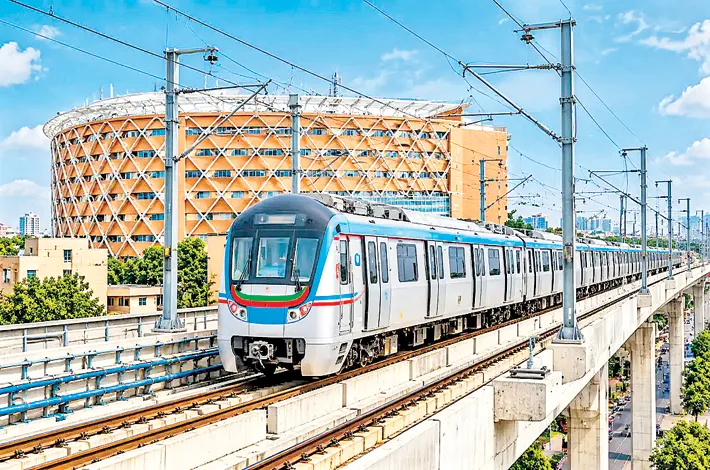
The Hyderabad Metro Rail marked nine years of operations on Friday, having ferried 94.2 crore passengers since its launch on November 28, 2017. The network has eased traffic congestion, cut travel times and contributed to environmental protection. Yet core passenger grievances—overcrowding in three-coach trains, longer waits during peak hours and slow network expansion—remain unresolved even as the state government prepares to take over operations from L&T amid a heavy financial burden.
The metro has become a vital part of the city’s public transport. It has helped reduce road congestion and travel time while supporting cleaner air. Officials credit it with preventing 629 million kg of carbon dioxide emissions so far. Solar plants with 12.4 MW capacity meet about 15 per cent of its power needs, and regenerative braking recovers 40 per cent of traction energy. Punctuality and reliability stand at 99.9 per cent. Despite these achievements, daily ridership has slipped from a peak of 5.5 lakh to around 4.7 lakh—a drop of nearly 80,000 passengers. Post-Covid changes in travel habits, work-from-home trends, weak last-mile connectivity and competition from other modes are cited as reasons.
Crowding remains the biggest complaint. All 57 trains currently run with only three coaches. During peak hours, the Miyapur–Red Line and Nagole–Blue Line operate at roughly four-minute intervals, while the Green Line runs every 12 minutes. Off-peak gaps stretch from five to 12 minutes depending on the corridor. Delays can push waits longer; passengers at Raidurgam station in the IT corridor report waiting up to eight minutes in the evenings. With trains already packed, longer headways worsen the discomfort. Metro officials have examined proposals for four- and six-coach trains and floated tenders for 60 additional coaches. The government has allocated ₹125 crore for operations and expansion. New coaches, however, will take time for manufacturing, delivery, testing and signalling upgrades. Six-coach services are unlikely before two years. Last-mile links continue to lag. Passengers struggle to reach stations or complete their journeys from them.
Better integration with RTC feeder buses, shuttle services, autos and pedestrian pathways is essential. The introduction of a common metro pass is a positive step, but ground-level connectivity must improve to win back riders.
Phase-2 expansion is keenly awaited. The government aims to add new corridors to serve more parts of the growing city. Central clearances, funding and the project’s financial model remain critical hurdles. The delay in completing the takeover of Phase-1 from
L&T is also affecting future plans. One corridor generating high local expectations is the 7.5 km Old City line from MGBS to Chandrayangutta. Land acquisition is 95 per cent complete; once operational, it is expected to improve transport for residents of the old city and boost commercial and tourism activity. Construction and funding, however, need to gather pace.
The biggest institutional shift is the state’s decision to take over metro operations from L&T. A share purchase agreement was signed on April 29, 2026, for 100 per cent equity valued at Rs 1,461.47 crore. The state must also refinance L&T Metro’s debt of Rs 13,538.53 crore under government guarantee. Loan disbursement of about Rs 13,600 crore from IRFC has been delayed, creating uncertainty.
L&T informed stock exchanges that the takeover deadline has been extended to December. Talks with the Centre continue, and alternative financing is under review.
Direct control would allow better coordination between phases, faster decisions on new lines, coach procurement and integration with RTC. At the same time, the large debt, interest payments, operating costs and future capital needs pose a major fiscal challenge. Balancing revenue, expenses and service quality will test the government.
Nine years and 94.2 crore journeys demonstrate public trust in the metro. Falling daily ridership, packed three-coach trains and the long wait for longer consists and new corridors show that trust alone is not enough. Taking over from L&T is an administrative step; delivering real relief to passengers—shorter waits, more capacity and better connectivity—will determine whether the metro can truly shape Hyderabad’s transport future.