20 October, 2026 | 2:05 PM


Moody’s cuts India growth outlook to 6% on escalating West Asia risks
06-04-2026 12:00:00 AM
Business Desk MUMBAI
Moody’s Ratings has lowered India’s GDP growth forecast for FY27 to 6% from 6.8%, citing escalating geopolitical tensions that threaten to disrupt energy supplies, fuel inflation and weaken domestic demand.
According to the agency’s latest credit opinion report, the ongoing conflict could significantly impact India’s economy through supply-side shocks, particularly in liquefied petroleum gas (LPG) and crude oil.
The region accounts for nearly 55% of India’s crude imports and over 90% of LPG supplies, making the country highly vulnerable to disruptions.
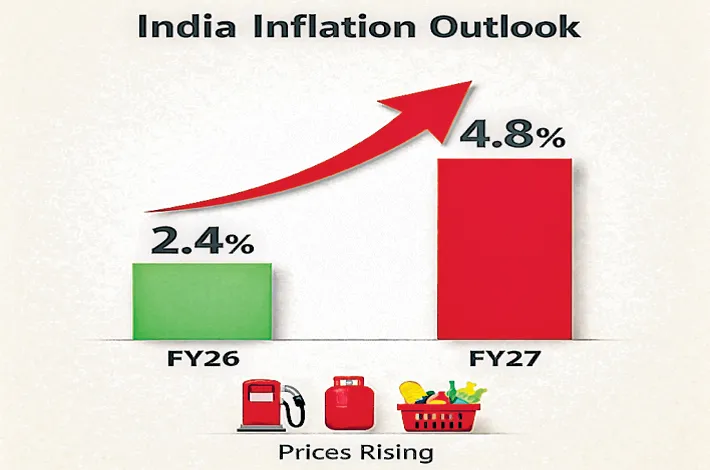
Moody’s warned that prolonged supply constraints could lead to household shortages, higher transportation costs and cascading effects on food inflation, especially due to India’s dependence on imported fertilisers. Inflation is projected to rise to an average of 4.8% in FY27, compared to 2.4% in FY26, signalling renewed price pressures.
The report noted that elevated energy costs and geopolitical uncertainty are likely to dampen private consumption, soften industrial activity and slow capital investment momentum.
As a result, overall growth is expected to moderate despite India’s strong economic fundamentals. Policy responses may also tighten. Moody’s indicated that interest rates could remain elevated or see gradual increases depending on how inflationary pressures evolve.
At the same time, higher subsidies on fuel and fertilisers, combined with reduced tax revenues from excise duty cuts, may strain government finances and delay fiscal consolidation.
Global crude oil prices have surged nearly 50% since late February following military escalations involving the US, Israel and Iran, intensifying risks for energy-importing economies like India.
Despite these headwinds, India’s economy remains relatively resilient, supported by infrastructure spending and stable external balances. However, risks to growth, inflation and fiscal health remain closely tied to the duration and intensity of the West Asia conflict.