1 September, 2026 | 2:54 AM


Moody’s cuts India’s FY27 growth forecast to 6% on higher oil prices
22-04-2026 12:00:00 AM
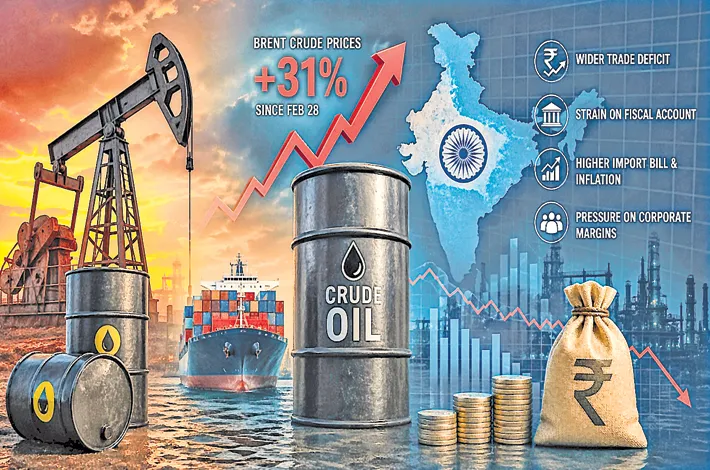
Energy shock | Crude surge pressures inflation and fiscal balance
mumbai
A prolonged disruption in energy supply can widen India's trade deficit and strain the fiscal account of the world's fastest-growing major economy, according to rating agency Moody's. Brent Crude prices have shot up 31% since the U.S.-Israeli war on Iran began on February 28 and have been see-sawing with each development, while prospects of peace fuelled a recovery in stock markets globally, Reuters reported.
India is the world's third-largest crude importer, and higher prices tend to increase its import bill, inflation, and impact corporate margins. As a result, foreign investors offloaded Indian shares worth $18.6 billion so far in 2026—March logged a record $12.7 billion worth of net outflows.
"Given lingering risks and because some production operations in the Middle East and logistical assets will take time to restart and reposition, risk premia and key commodity prices will likely remain structurally higher for some time," Moody's Ratings said in a report on Monday.
The rating agency currently has "Baa3" rating on India with a "stable" outlook. It had trimmed its growth forecast for India's real gross domestic product to 6% for fiscal 2027 from 6.8% earlier, factoring in the impact of the Iran war. "A prolonged disruption would pose more material challenges, potentially entrenching inflation, straining fiscal and monetary policy flexibility and testing external investor confidence," Moody's said.
The impact of higher crude oil on companies will be uneven, the report noted, with oil marketing companies (OMCs) and fuel-dependent sectors such as cement and chemicals likely bearing the brunt of the price shock.
"Cost hikes associated with inland transportation have been contained for now through fuel subsidies borne by state-owned OMCs, but this has shifted cost pressures onto their balance sheets in a manner we view as unsustainable," Moody's added.
India to grow 6.4% in 2026: UN
India's economy is projected to expand by 6.4% in 2026 and 6.6% in 2027, according to a new UN report. The report from the United Nations Economic and Social Commission for Asia and the Pacific said that economies in South and South-West Asia grew 5.4% in 2025, up from 5.2% in 2024. This was driven largely by India's strong growth of 7.4% in 2025. The report further stated that robust rural consumption, goods and services tax cuts and export front-loading ahead of US’ tariffs supported India's strong growth, IANS reported.