20 October, 2026 | 3:50 PM


Oil futures fall 5%, risk premium unwinds
16-06-2026 12:00:00 AM
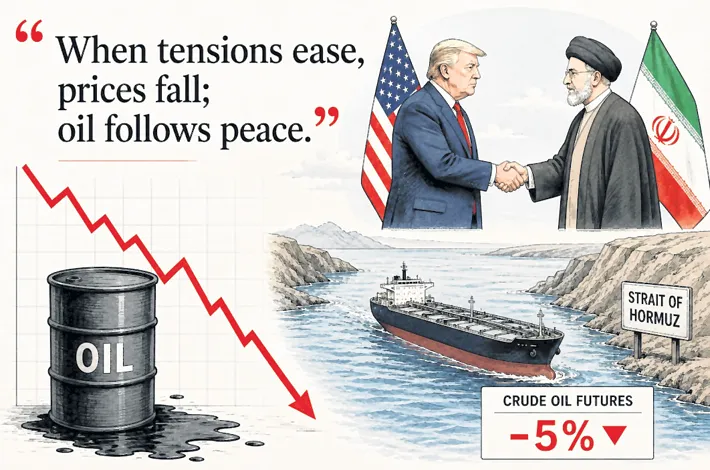
Easing West Asia tensions boost supply expectations, driving sharp energy market correction amid calmer routes
Commodity Desk MUMBAI
Crude oil futures witnessed a sharp decline on Monday, falling more than 5% to their lowest level in over three months as expectations of improved global oil supplies triggered heavy selling across energy markets.
Traders reacted to reports that the United States and Iran had reached a preliminary understanding aimed at reducing tensions and restoring normal shipping activity in the Strait of Hormuz, a key route for global crude transportation.
The June crude oil contract fell ₹449, or 5.56%, to ₹7,624 per barrel, while the July contract dropped ₹422, or 5.3%, to ₹7,546 per barrel. The latest fall comes after a steep 6.3% decline recorded last week, extending the correction that began as geopolitical concerns started easing. Market participants aggressively unwound positions built during months of uncertainty in West Asia. The decline pushed domestic crude prices close to levels last seen in early March, reflecting a sharp reduction in the geopolitical risk premium that had supported oil prices during the conflict.
The market's focus has shifted from supply disruption concerns to the possibility of additional oil entering the global market. According to Kaveri More of Choice Broking, crude oil remains under pressure as traders increasingly factor in the prospect of higher energy exports and improved supply conditions if diplomatic efforts between the US and Iran progress further. Global benchmark prices also came under significant pressure. Brent crude futures for August delivery fell 4.36% to $83.52 per barrel, while US West Texas Intermediate crude for July delivery declined 4.9% to $80.72 per barrel.
The broad-based sell-off reflected growing confidence that global oil flows may normalise sooner than previously expected. Reports suggest the proposed framework could include sanctions relief for Iran, restrictions on its nuclear programme and measures to facilitate the return of Iranian crude exports.
The potential reopening of the Strait of Hormuz has further strengthened expectations of smoother energy supplies. The strategic waterway handles nearly one-fifth of global oil and fuel consumption, making any disruption or reopening highly significant for energy markets.
Despite the optimism, analysts cautioned that the agreement has not yet been formally signed and implementation risks remain.
Any delay, disagreement or setback could quickly revive volatility in oil markets.Rajesh Palviya, Head of Research at Axis Direct, said lower crude prices are a positive development for India as they could help ease inflationary pressures and reduce the country's import bill.