13 September, 2026 | 9:38 PM


Parents Bet Big on CBSE Advantage
18-01-2026 12:36:18 AM
State Board losing ground
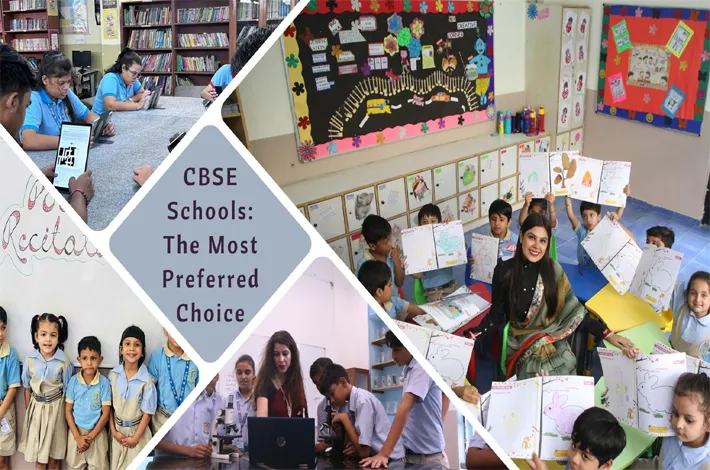
The craze for CBSE education is steadily rising among parents, with many firmly believing that the curriculum offers a stronger foundation for national-level competitive exams. As a result, the number of CBSE-affiliated schools is increasing every year across Telangana, while interest in State Board schools is gradually declining. Parents are increasingly opting for CBSE schools, leading to intense competition for admissions and full demand for seats, especially in Hyderabad.
Parents feel that the CBSE syllabus follows a more practical and concept-based learning approach, with higher academic standards compared to the State syllabus. The curriculum is closely aligned with national competitive examinations such as JEE and NEET, which are largely based on NCERT textbooks.
With a clear focus on conceptual clarity from the school level itself, parents believe that students studying under the CBSE system are better prepared for higher education and national entrance tests. There is a growing perception that students from State Board schools face difficulties in cracking competitive exams like JEE and NEET. Many parents feel that choosing the State syllabus limits students largely to state-level entrance tests such as EAPCET. In such cases, students are required to shift to intensive coaching only after completing Class 10, which often puts them under severe academic pressure during intermediate education. To avoid this burden later, parents prefer enrolling their children in CBSE schools from an early stage.
This mindset has directly contributed to a steady rise in the number of CBSE schools, not just in Telangana but across the country. Nationally, the total number of CBSE-affiliated schools has increased significantly over the past five years. In 2020, there were around 22,560 CBSE schools, and by 2025, the number rose sharply to nearly 31,210. Telangana has also witnessed consistent growth. In 2021, the state had around 353 CBSE schools. This number increased to 365 in 2022, 415 in 2023, 457 in 2024, and reached 468 by 2025, marking an addition of about 115 schools within five years.
Most of these schools initially operate under the State Board and later shift to CBSE affiliation in response to growing parental demand. School managements also find CBSE affiliation more flexible, as State Board regulatory control is relatively less once they move to the CBSE system. This transition has become a common trend among private schools.
Another strong belief among parents is that studying under the CBSE syllabus almost guarantees a competitive edge in exams like JEE and NEET. Since these exams are primarily based on NCERT content, CBSE students are seen as having a natural advantage. The system emphasizes concept-based learning rather than rote memorization, which is considered crucial for competitive success.
CBSE schools also attract parents by offering exposure beyond academics. Along with English and Hindi, many schools teach foreign languages such as French, German, and Spanish, helping students develop strong language skills. Equal importance is given to sports and extracurricular activities. Infrastructure also plays a key role, as CBSE norms require schools to have at least one acre of land in urban areas and two acres in rural regions, along with spacious buildings, playgrounds, and modern facilities. These factors further boost demand, making admissions extremely competitive, with seats hard to secure even through recommendations in some schools.
Parents are willing to spend heavily on their children’s education, prioritizing a strong academic foundation from the school level. Many are even prepared to take loans to enroll their children in CBSE schools. However, since not all families can afford the high fees, there is a growing demand from parents and education experts to upgrade the State Board syllabus.
Experts argue that merely revising the syllabus is not enough. Comprehensive reforms are needed, including special teacher training and recruitment of qualified educators. The number of students from the State Board securing seats in JEE and NEET remains relatively low, with only a few achieving success through intensive coaching at the intermediate level. This has led to a strong demand for bringing the State syllabus on par with CBSE standards, so students from all backgrounds can compete equally at the national level.