14 October, 2026 | 3:49 PM


SIR: Form-7 misuse rock poll body
03-03-2026 12:00:00 AM
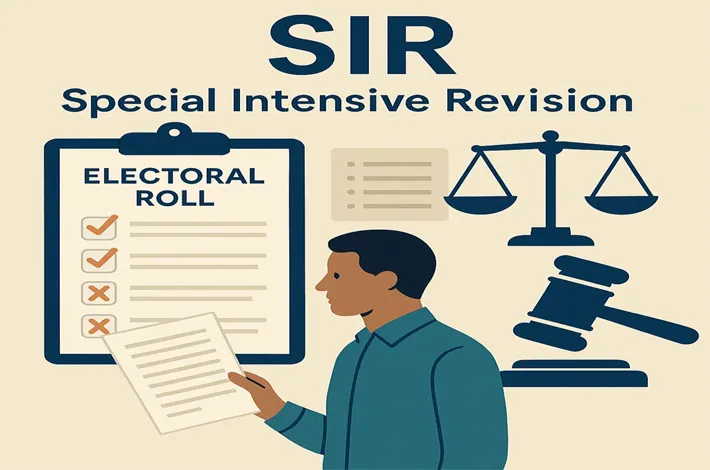
The ongoing Special Intensive Revision (SIR) of electoral rolls by India's Election Commission has sparked widespread controversy, with allegations of irregularities, mass deletions, and misuse of deletion forms potentially undermining voter confidence ahead of key 2026 assembly elections. In a recent interview to a news channel, a former Election Commission official sharply criticized the SIR process. He described the exercise as "totally unnecessary" and potentially the "biggest problem" for electoral integrity.
He noted that after three decades of efforts, India's voter rolls had achieved 99% accuracy, with only about 1% defects addressed through routine summary revisions involving door-to-door checks by Booth Level Officers (BLOs). He argued that the sudden decision to discard existing digitized rolls—used successfully in recent general and state elections—and restart from scratch in a compressed timeframe (often weeks or months instead of years) defies logic. He highlighted that summary revisions already involve household visits to verify details, add new voters (via Form 6), or remove those who have migrated, died, or are ineligible (via Form 7).
A major concern raised in the discussion was the alleged misuse of Form 7, the application for objecting to or seeking deletion of names from voter lists. Reports from states including Gujarat, Assam, Rajasthan (e.g., Barmer), and West Bengal indicate bulk submissions of Form 7s, often using fake or "ghost" details—such as non-existent names, phone numbers, or signatories from other communities targeting Muslim voters. In some cases, BLOs or political workers (including BJP affiliates) faced accusations of submitting dozens or hundreds of such forms without consent, leading to deletions without proper verification.
The retired official emphasized that Form 7 should require the objector to be a resident of the same constituency, provide proof, and ensure the affected voter receives notice and a hearing—safeguards that appear inadequately enforced amid the scale of submissions. The former CEC questioned the burden placed on voters to prove their eligibility despite possessing voter IDs, Aadhaar, passports, or other documents. He called the process an inversion of responsibility, where genuine citizens must run around to defend their inclusion rather than the objector proving claims (e.g., that someone is a "foreigner" or non-resident).
He cited Bihar's earlier SIR, where millions were surveyed to identify illegal migrants, yet only a few hundred (mostly Nepali brides or similar cases) were found—hardly justifying the disruption of crores of voters.Allegations suggest the exercise has shifted from inclusion and purification to exclusion, with lakhs (and in some reports, crores) of deletions reported across states. Opposition parties, including Congress and Trinamool Congress, have accused the process of targeting minorities and being politically motivated, especially in poll-bound states like West Bengal, Assam and others facing 2026 elections.
Some BJP leaders reportedly encouraged workers to file maximum Form 7s against "illegal voters."He expressed deep concern over the Election Commission's credibility, noting that even Supreme Court interventions—such as deploying judicial officers for hearings in West Bengal due to the ECI's inability to handle the volume—have not fully addressed the chaos. He criticized involving the judiciary in administrative tasks as unreasonable and warned that rushed hearings (sometimes minutes per case) risk errors, harassment (e.g., summoning distant family members), and disenfranchisement of legitimate voters.
The veteran election official stressed that free and fair elections rest on trust in the electoral process. If voters lose faith—believing their votes could be "stolen" through manipulated rolls—the foundation of democracy weakens. He lamented a lack of accountability, with no effective resistance or remedies in sight despite protests, and predicted lingering issues like bogus additions in some households or deletions in others. As final voter lists roll out in phases (with some already published amid ongoing adjudications), he urged greater transparency, audits, and adherence to established procedures to restore integrity.
He called on citizens, opposition parties, and all stakeholders to demand answers from the Election Commission on whether the claimed "purity" has been achieved or if the process has instead sown division and doubt.