15 October, 2026 | 6:18 AM


Sonia Trusted PV On Economic Policy
28-06-2026 12:00:00 AM
Venkat Parsa I hyderabad :
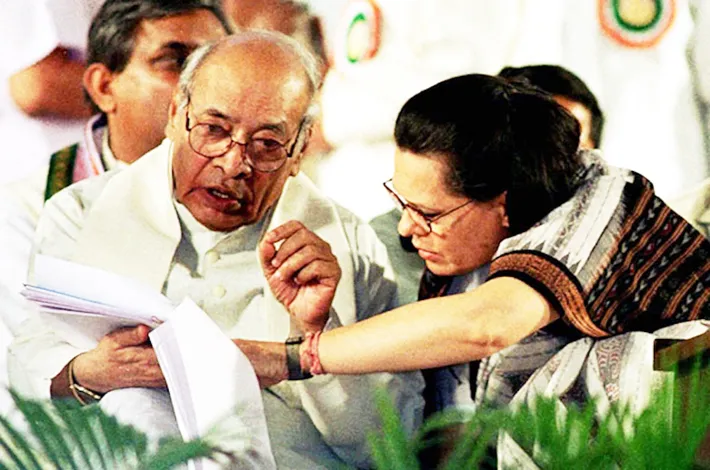
A popular myth is the rift between Sonia Gandhi and former Prime Minister P V Narasimha Rao. Nothing is further from reality. Long after he demitted office in May 1996, P V Narasimha Rao was specially invited for the AICC Plenar.y Session in Bengaluru in March 2001. It was at this plenary that Sonia Gandhi assumed charge as Congress President after defeating Jitendra Prasad.
Between 1998 and 2004, Dr Manmohan Singh functioned as Leader of Opposition in Rajya Sabha and Chairman of the AICC Economic Affairs Department, with Jairam Ramesh as Secretary. However, for Sonia Gandhi, the key pointsperson on economic policy was P V Narasimha Rao. Her personal regard for him was evident when, at the end of the Bengaluru plenary, she ensured that PV’s carcade was brought in first, despite hers being the official one as Congress President. She also directed SPG security to withdraw her carcade and allow PV’s vehicle first. After seeing him off, she left the venue.
Sonia Gandhi also chose PV for drafting the AICC Economic Resolution, crucial for the party’s response to the Vajpayee government’s disinvestment policy under Arun Shourie. Under PV’s guidance, the resolution strongly criticised the sale of public sector undertakings, describing it as “selling family silver to pay grocer’s bills,” referring to public assets built over decades being sold at throwaway prices.
Major controversies included disinvestment of BALCO, Centaur Hotel in Juhu, Centaur Airport Hotel in Mumbai, Lakshmi Vilas Palace Hotel in Udaipur, and shares in 18 government-owned hotels. Attempts to sell The Ashok were also opposed. The Congress demanded a comprehensive disinvestment policy ensuring the government retains 51 per cent stake in all public enterprises.
At the 2001 AICC plenary in Bengaluru, PV circulated a 10-page note titled Liberalization and the Public Sector, arguing that the Vajpayee government, lacking a parliamentary majority, had no mandate to permanently sell public assets worth nearly Rs 2 lakh crore. He also opposed the proposed sale of Air India and Indian Airlines, saying it was unacceptable for India to sell its national carriers that represent the national flag. He distinguished Congress policy of partial disinvestment with government control from outright privatisation.
PV had earlier played a key role in India’s economic reforms after becoming Prime Minister on June 21, 1991. The reforms were implemented through the Union Budget presented by Finance Minister Dr Manmohan Singh on July 24, 1991, along with a new Industrial Policy. He also addressed India’s limited access to concessional development aid and the need for economic restructuring.
Disinvestment, as designed by PV, was meant as partial equity dilution for resource mobilisation to support welfare schemes for weaker sections, not privatisation. It remained aligned with the Nehruvian model of development. Sonia Gandhi later followed similar principles in launching schemes like MGNREGA, Food Security, and the Right to Education.
The disinvestment model had three components: selling shares to nationalised banks, to PSU workers under participation schemes inspired by the Indira Gandhi 20-point programme, and to the public, while ensuring government retains at least 51 per cent control. Loss-making units were not automatically eligible, and restructuring through modern management was emphasised.
Sonia Gandhi is also said to have played a role in choosing PV as Prime Minister and supported him throughout his tenure despite political differences. When Arjun Singh led a revolt in 1994, she did not support it, and the attempt collapsed.
To mark Rajiv Gandhi’s birth anniversary on August 20, 1994, PV organised a special AICC session at Talkatora Stadium. Sonia Gandhi, not yet a Congress member, was seated in a specially created enclosure and later invited to the Congress President’s camp office. PV described himself as a legatee of Rajiv Gandhi, stating that his policies reflected Rajiv’s vision.
The only occasion Sonia Gandhi expressed strong concern was over the delay in punishment for Rajiv Gandhi’s assassins. Following this, PV entrusted supervision of the assassination trial in Chennai to Union Minister P Chidambaram. The investigation led by D R Karthikeyan uncovered the LTTE conspiracy, including key evidence from Haribabu’s surviving camera and the RDX suicide bombing by Dhanu.
PV resisted repealing TADA despite criticism, arguing its necessity in this case for securing convictions. The accused were ultimately awarded capital punishment. However, delays and subsequent developments created controversy over enforcement of the Supreme Court’s verdict.
After the Cold War ended in 1991, PV reshaped India’s foreign policy through the Look East policy, aiming to integrate India economically with East Asia and revive historical and cultural links. Engagement with Japan and Southeast Asia also strengthened infrastructure and industrial cooperation.
PV also established full diplomatic relations with Israel on January 29, 1992, after consulting Palestinian leader Yasser Arafat, who welcomed the move and said India could contribute to the Palestinian cause while maintaining relations with Israel.