14 October, 2026 | 8:14 AM


Study Flags Gap in India's Music Research
08-07-2026 12:00:00 AM
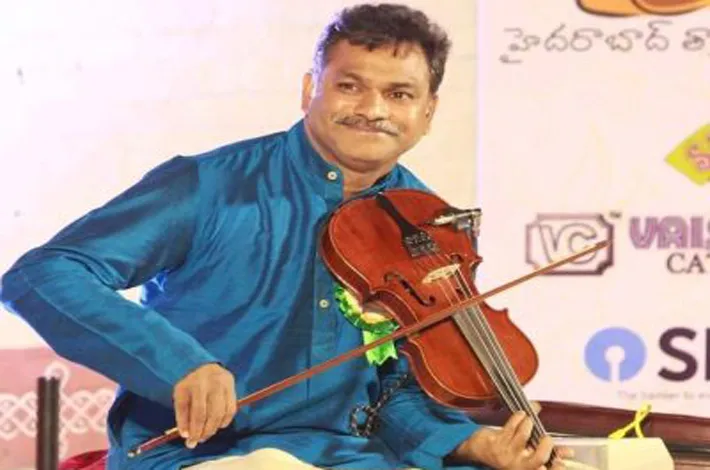
India's rich musical heritage enjoys global acclaim, but its contribution to academic music research remains limited due to weak institutional support, according to a new study by Dr. D.V.K. Vasudevan of the Campus School, University of Hyderabad.
Published in the peer-reviewed journal Swar Sindhu, the study, The Silent Score: A Comparative Analysis of the Music Research Ecosystem in India and the West, examines how India and Western countries have developed music research ecosystems.
Building on his doctoral research, Dr. Vasudevan analysed developments between 2018 and 2025 in four areas: dedicated research centres, publications in high-impact journals, participation in international conferences, and academic publishing. The study draws on data from Scopus, Web of Science, university records, conference proceedings and journal indexing platforms.
The findings reveal a stark imbalance. Despite having one of the world's oldest musical traditions and over 17% of the global population, India has only one specialised research centre in the Sound and Music Computing ecosystem, compared with 72 in Europe and 11 in the United States.
The study argues that India's challenge is not a lack of musicians or scholars, but inadequate institutional infrastructure. It identifies a "Two-Culture Chasm," where technology institutions focus on music through artificial intelligence and signal processing, while traditional musicology remains confined to humanities departments, limiting interdisciplinary collaboration. Dr. Vasudevan recommends launching a National Mission for Music Research and Technology, establishing three to five national music research centres, strengthening academic publishing and creating internationally recognised journals.
He concludes that India need not choose between the traditional guru-shishya system and modern research. Instead, stronger institutions should integrate both approaches to ensure India's musical knowledge contributes more meaningfully to global scholarship.