13 October, 2026 | 9:31 AM


Supreme allows passive euthanasia: The implications
13-03-2026 12:00:00 AM
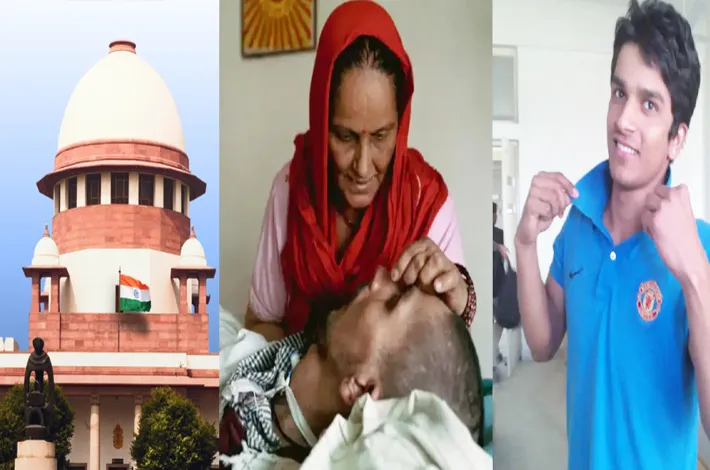
In a landmark development on March 11, 2026, the Supreme Court of India authorized the withdrawal of life support for a 32-year-old man who had been in an irreversible permanent vegetative state for 13 years following a tragic fall from a building. This marked the first practical implementation of passive euthanasia under judicial supervision in the country, bringing to life the legal framework established in earlier judgments.
The decision, delivered by a bench comprising Justices J.B. Pardiwala and K.V. Viswanathan, reinforced the fundamental right to die with dignity under Article 21 of the Constitution. The case involved Harish Rana, who suffered severe head injuries in 2013, resulting in a persistent vegetative state (PVS) and 100% quadriplegia. He had required continuous medical intervention, including clinically administered nutrition through PEG tubes, with no prospect of recovery according to medical assessments.
The Supreme Court's order permitted the discontinuation of these life-sustaining measures, directing institutions like AIIMS to facilitate the process humanely and without treating it as an act of abandonment. Director of Critical Care at a top hospital in Delhi explained euthanasia in medical terms as a practice aimed at ending a patient's suffering within legal boundaries.
He distinguished between active euthanasia—which involves direct intervention to end life and remains highly controversial and illegal in India—and passive euthanasia, which entails withdrawing or withholding life-prolonging treatments and is permitted with safeguards. The doctor highlighted that passive euthanasia aligns with end-of-life care advocated by bodies like the Indian Society of Critical Care Medicine for over 15 years.
He described the ruling as a positive step, noting the long-standing need for clear guidelines amid challenges like prolonged suffering, financial and emotional strain on families, and frustration among medical professionals unable to restore meaningful life. In cases of persistent vegetative state, recovery is deemed impossible through thorough clinical evaluation, including imaging (CT/MRI), EEG for brain activity, and systemic examinations.
Doctors consider whether the patient would have wanted to continue in such a dependent, bedridden condition if able to decide. On the legal front, a senior advocate traced the evolution of passive euthanasia jurisprudence. The conversation began with the landmark Aruna Shanbaug case (2011), where the Supreme Court rejected euthanasia for the petitioner but established initial guidelines for passive euthanasia in exceptional circumstances, while prohibiting active euthanasia.
The pivotal Common Cause judgment (2018) expanded this by recognizing that the right to life under Article 21 includes the right to die with dignity. It distinguished passive euthanasia (stopping prolonged life support) from active forms and introduced provisions for advance directives or living wills. Although the 2018 guidelines (modified in 2023) provided a framework, implementation faced hurdles.
The recent ruling in the Rana case refined and operationalized these guidelines, emphasizing decisions in the patient's best interest, determined collaboratively by family and medical teams. It expanded the scope of passive euthanasia to include withholding clinically administered nutrition and hydration as forms of medical treatment. The court stressed safeguards, such as multi-tier medical board reviews (hospital-level and district-level), family consent, and potential high court oversight to prevent misuse.
Another senior doctor elaborated on current safeguards: A primary medical team conducts detailed assessments, discusses prognosis with families (often involving psychologists or social workers), and forms a hospital board with specialists like neurologists and intensivists. Recommendations go to a district collector-formed independent board, with final high court approval in many scenarios.
Family consent remains paramount. However, he noted ongoing concerns, including ambiguities in definitions of qualifying conditions, time-consuming bureaucratic processes, and litigation risks (e.g., family disputes post-decision). He referenced draft norms from the Union Ministry of Health and Family Welfare around 2024, which drew criticism from medical bodies like the Indian Medical Association for lacking clarity and adequate legal protections for doctors.
The advocate underscored the ruling's significance in advancing the right to die with dignity, simplifying procedures while retaining guardrails like best-interest evaluations, consideration of prior patient wishes (if expressed), and multi-stakeholder involvement. The court clarified that decisions could even apply outside hospitals (e.g., home care) with treating doctors and swift high court recourse. She emphasized that this does not open floodgates but streamlines processes for dire cases, reducing burdens on families and medical teams.
This ruling represents a compassionate yet cautious advancement in end-of-life care, balancing the duty to preserve life with respect for human dignity in hopeless situations. As India evolves its framework, the hope is for streamlined, fear-free implementation that prioritizes patient welfare.