13 October, 2026 | 8:48 AM


Declining standards of public healthcare-Why this plight?
13-03-2026 12:00:00 AM
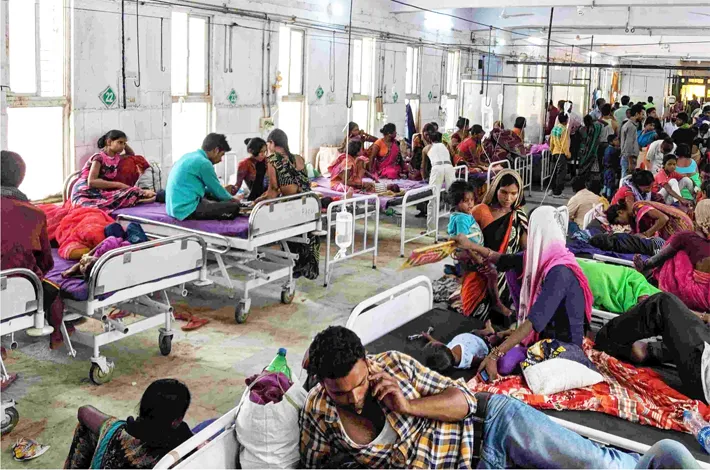
The healthcare system in India, often revered through ancient sayings like "Vaidyo Narayana Hari" (the physician is Lord Vishnu, or Hari), faces a profound crisis that betrays this sacred ideal. What should be a noble profession dedicated to healing has, in many cases, devolved into a profit-driven enterprise where human lives and suffering fuel massive financial gains. This transformation raises serious questions about accountability and shared responsibility among those in power.
Unethical practices permeate the system, involving not only individual actors but entire institutions. Rulers and policymakers bear primary blame for allowing commercialization to overshadow merit and ethics. Regulatory bodies, once the Medical Council of India (now the National Medical Commission), have faced repeated allegations of corruption, including bribery scandals involving approvals for substandard private colleges.
Professional associations and even some doctors contribute through lax standards, inadequate qualifications, or complicity in profit-oriented behaviors. Pharma companies, diagnostic firms, and media outlets collude via paid promotions and kickbacks, creating a web where everyone profits from patients' distress—essentially "feeding on blood" through unnecessary interventions and inflated bills.
Society at large shares this burden. The judiciary, civil society, and younger generations often remain silent observers, allowing these issues to persist unchecked. This collective indifference perpetuates a "great sin" (Mahapapam) that endangers public health and erodes trust in medicine. A core problem lies in the crisis of competence within the medical workforce. Commercialization has flooded the system with underqualified practitioners.
Private medical colleges have long sold MBBS and postgraduate seats for crores of rupees, often operating with minimal infrastructure—mere sheds lacking proper faculty, equipment, patient exposure, or regulatory compliance. Graduates from such institutions frequently lack basic skills, such as accurately checking a pulse or understanding human anatomy. If an impartial competency exam were administered today to all registered doctors, a staggering number—potentially around 90% in some estimates—might fail to meet standards, highlighting a pandemic of incompetence .
In public healthcare, the rot deepens through politicization. Government medical colleges and hospitals apply reservations not just to admissions but to promotions, prioritizing caste, community, or regional affiliations over qualifications and experience. This breeds casteism, religious distortions, regional biases, violence, and even proselytization, turning these institutions into dangerous environments rather than centers of healing.
The rise of corporate hospitals presents a facade of sophistication—luxurious facilities resembling malls or clubs—but often masks questionable standards. Many doctors in these settings face daily and monthly revenue targets, pressuring them to admit patients unnecessarily, order excessive tests, prescribe polypharmacy (resembling grocery lists), admit to ICUs without need, or perform surgeries that could be avoided.
Reports and whistleblowers have highlighted how such targets lead to unethical practices, including inconsistent diagnostic reports from potentially unqualified radiologists or technicians, and kickbacks from tied-up labs. Healthy individuals entering these hospitals sometimes emerge worse off—or not at all—fostering widespread fear that a routine visit could turn fatal.
The ownership pattern exacerbates these issues. A significant portion of private medical colleges has historically been linked to politicians, MPs, or their families, especially in certain regions like the Telugu states. Regulators have been accused of acting as puppets, granting approvals through manipulated inspections, fake faculty listings, and bribes—patterns exposed in recent CBI probes and scandals involving the NMC and health ministry officials.
This nexus turns medical education into a business empire, where merit gives way to money and political influence. In stark contrast, government hospitals often resemble grim underworlds, with overburdened staff and poor conditions leading many to view them as places of last resort. The disparity is glaring: private facilities prioritize profit, while public ones struggle with neglect, leaving ordinary citizens with little reliable protection beyond divine intervention.
Ultimately, the state of India's medical field mirrors broader governance failures. As the ancient saying goes, "Yatha Raja, Tatha Praja" (as is the king, so are the people)—or in a related proverb, "Yatha Raja Tatha Dalari" (as is the king, so is the middleman). Corruption, ethical erosion, and prioritization of power over public welfare at the top trickle down, infecting administration, institutions, and society.
True reform demands dismantling this nexus, restoring merit-based education, enforcing strict oversight, and holding all stakeholders accountable. Until then, the physician's divine role remains tragically undermined, and patients bear the heaviest cost.
- Suvera (S Venkateshwar Rao is a political analyst)