19 October, 2026 | 3:32 AM


Supreme Court delivers key relief in West Bengal voter roll row
05-02-2026 12:00:00 AM
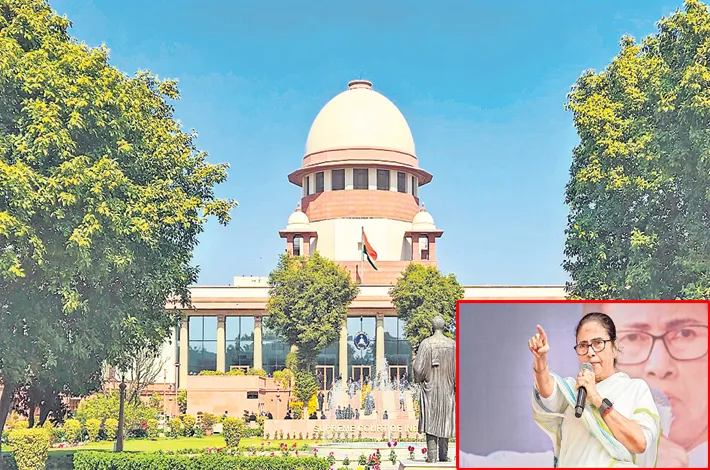
Mamata Banerjee Claims Major VictoryNew Delhi, February 4, 2026 – In a significant development ahead of the 2026 West Bengal Assembly elections, the Supreme Court on Wednesday addressed long-standing concerns over the Election Commission of India's (ECI) Special Intensive Revision (SIR) of electoral rolls in the state. Chief Minister Mamata Banerjee personally appeared before a bench headed by Chief Justice of India Surya Kant, arguing that the process was arbitrary, biased, and targeted at disenfranchising voters in Bengal.
TMC leaders hailed the hearing as a "big win" for Banerjee, pointing to judicial observations emphasizing sensitivity, logical application, and safeguards against minor errors. The SIR exercise, launched on November 4, 2025, aimed to verify and revise voter lists amid allegations of inflated rolls. The draft electoral roll was published on December 16, 2025, with claims and objections accepted until January 19, 2026 (later extended). Hearings are ongoing until February 7, with final rolls expected by February 14, though deadlines may shift due to litigation. Data from the ECI showed over 1.36 crore voters—nearly 20% of West Bengal's electorate—flagged for "logical discrepancies," including age gaps between family members, unusual progeny numbers, and name variations.
In its January 19, 2026 order, the Supreme Court had already flagged the "stress and strain" on ordinary citizens caused by mass notices and directed greater transparency. The bench, comprising Justices Joymalya Bagchi and others, ordered the ECI to publish names of approximately 1.25 crore voters under the "logical discrepancies" category at gram panchayat bhavans, block offices, and ward offices. It extended objection periods by 10 days, mandated official circulars instead of WhatsApp instructions, required receipts for submitted documents, and allowed booth-level agents and authorized representatives at hearings.
The court accepted statutory proofs like school admit cards and questioned the logic behind flagging minor age gaps (e.g., 15 years between parent and child), noting realities like child marriage in India. During Wednesday's hearing, Banerjee sought permission to argue in person, emphasizing ground realities and alleging the ECI sidelined local Electoral Registration Officers (EROs) in favor of around 8,100 "micro-observers" deployed exclusively in West Bengal.
She claimed these observers, drawn from BJP-ruled states, lacked statutory backing under the Representation of the People Act or related rules, effectively allowing unauthorized interference in verification and deletions. Banerjee argued this amounted to an unconstitutional method targeting Bengal, as no similar micro-observers were appointed in other SIR-implementing states like Assam. She alleged over 58 lakh names deleted in the first phase and accused the ECI of operating as a "WhatsApp Commission" to bulldoze voters.
The bench appeared receptive to concerns about fairness. CJI Surya Kant observed that name discrepancies often stem from local language pronunciation issues and stressed the need to protect genuine voters. Senior advocate Shyam Divan, representing Banerjee, noted the ECI's solemn assurance that such spelling or minor variations would not lead to exclusion from voter lists. The court reiterated that no innocent person should be disenfranchised, urging logical and sensitive handling without bias. While no final order was pronounced on micro-observers, the hearing underscored the judiciary's insistence on uniform, transparent processes free from perceived targeting.
TMC spokespersons described the proceedings as a major victory, arguing the court's focus on sensitivity, logic, and non-discrimination vindicated their claims. Banerjee, who has written multiple letters to CEC Gyanesh Kumar, maintained the SIR risked mass disenfranchisement ahead of polls. Opposition voices, including Suvendu Adhikari, countered that delays could disrupt timely elections. The ECI has defended the SIR as essential for clean rolls but faced criticism for implementation.
The bench reserved aspects of the case while directing continued verification without undue hardship. With elections looming, the ruling reinforces safeguards for voters, ensuring discrepancies—especially minor spelling ones—do not result in deletions without due process.The outcome highlights the Supreme Court's role in balancing electoral integrity with fundamental rights, offering relief to millions flagged in the exercise. Further hearings may clarify micro-observer roles and final roll publication.