27 October, 2026 | 4:10 AM


TTD launches India’s first AI-powered temple command centre at Tirumala
06-02-2026 12:00:00 AM
Metro India News | Tirupati
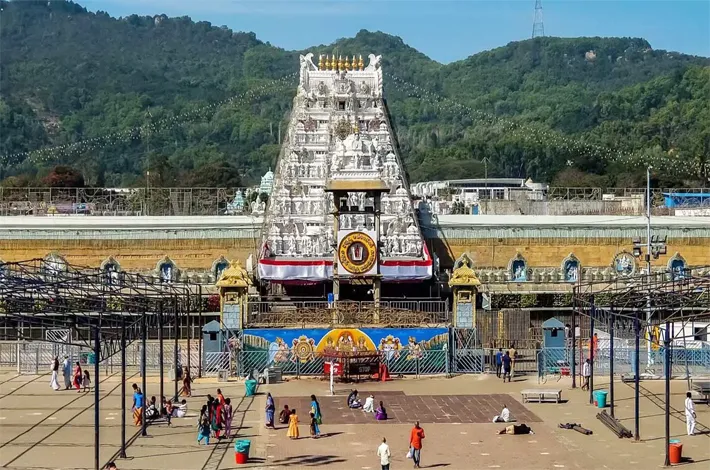
The Integrated Command Control Center (ICCC) at Tirumala, established by the Tirumala Tirupati Devasthanams (TTD), has enhanced pilgrim comfort, strengthened safety measures and created what the temple body describes as India’s first AI-powered temple governance reference model. Realised within 16 days of its conception, the ICCC marks a significant shift in temple administration through the use of artificial intelligence, real-time analytics and operational intelligence, according to a TTD press release issued on Thursday.
The idea for the centre emerged during a Silicon Valley interaction involving Andhra Pradesh IT Minister Nara Lokesh on smart cities and integrated command systems. Given the complexity of managing a vast and living pilgrimage ecosystem such as Tirumala, TTD Executive Officer Venkaiah Chowdary contributed extensive operational, cultural and procedural insights to ensure that the AI systems respected agama traditions and ritual sanctity.
The ICCC enables AI-based headcounts and real-time crowd-density estimation, supported by centralised dashboards, automated alerts and round-the-clock control-room operations. Chowdary said the system’s multiple features have streamlined pilgrim management and significantly reduced waiting time in queue lines over the past three months.
Developed with participation from NRI donors in the US, India and Singapore, the initiative represents a blend of technology, philanthropy and public good. Its scope covers darshan management with real-time throughput visibility and slot optimisation, queue balancing with waiting-time prediction, and crowd control using density heat maps and surge alerts. It also extends to accommodation availability tracking, laddu production and inventory monitoring, and traffic and pedestrian flow management.
Equipped with a 10-metre video wall, the ICCC provides a unified live visual command view of temple operations and complies with STQC and Ministry of Electronics and Information Technology guidelines. The recent Brahmotsavams served as a pilot to validate dashboards and alert thresholds, while Vaikunta Ekadasi marked full-scale implementation. TTD reported that additional darshan hours were enabled without congestion and camera-based headcounts, including children below token age, were introduced for the first time.
Officials said the AI-enabled system allows tracing of missing pilgrims, supports hourly decision-making instead of post-event reviews, and shifts administration from reactive to predictive governance. It also helps frame standard operating procedures for future mega events.
TTD states that the ICCC has improved darshan throughput without adding infrastructure stress, enhanced safety and situational awareness, and enabled transparent, data-backed decisions. Now positioned as a national reference architecture for sacred institution governance, the model may be extended to other pilgrimage centres. Future phases aim to deepen predictive AI capabilities and integrate pilgrim feedback, positioning the Tirumala ICCC as a global case study in governance at sacred scale.