3 November, 2026 | 1:03 AM


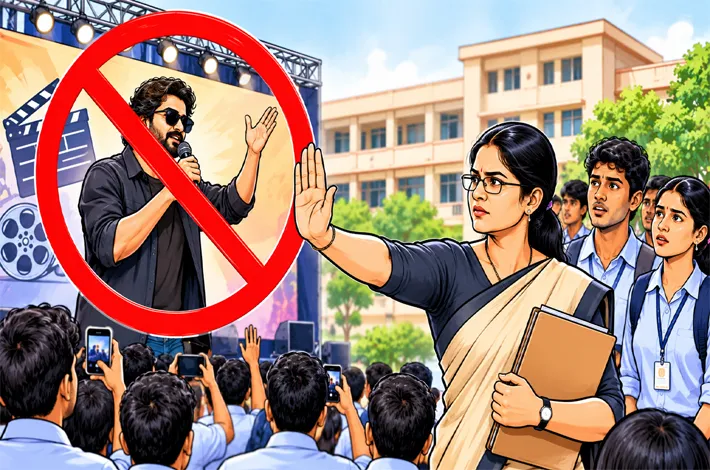
Telangana Government to ban film promotions
03-11-2026 12:00:00 AM
* Educational institutions turn into movie promo hubs as research takes a back seat; n Telangana mulls special safety law after campus mishaps
* At Malla Reddy University, high-mounted sound boxes collapsed onto students during a film promotion event, causing injuries. Around the same time, a lighting pole fell on participants during a Dandiya event at MVSR College in Nadergul, killing one student and injuring several others. These back-to-back accidents have prompted the government to examine the larger issue of student safety on campuses that host high-profile, high-attendance programmes.
metro india news I hyderabad : Educational institutions that were once centres of innovation and research are increasingly doubling up as venues for film promotions, raising serious questions about the direction of higher education. Colleges and universities across the region are cancelling classes, herding students onto grounds and even declaring holidays so that stars can promote their films. The trend has drawn sharp criticism from parents, student groups and educationists, especially after recent accidents at two prominent campuses left students injured and one dead.
What was once unthinkable has become routine. Managements that once disciplined students for bunking classes to watch movies now announce holidays specifically for film outings or on-campus promotional events. When actors arrive for promotions, lectures are suspended and the entire student body is assembled. Teachers, instead of delivering academic lessons, are sometimes seen facilitating the recitation of film dialogues. Large crowds are packed into limited spaces, creating conditions ripe for mishaps.
Two recent incidents have forced the authorities to take notice. At Malla Reddy University, high-mounted sound boxes collapsed onto students during a film promotion event, causing injuries. Around the same time, a lighting pole fell on participants during a Dandiya event at MVSR College in Nadergul, killing one student and injuring several others. These back-to-back accidents have prompted the government to examine the larger issue of student safety on campuses that host high-profile, high-attendance programmes.
Parents and student organisations argue that while cultural activities have a legitimate place in college life, events that put young lives at risk are unacceptable. Many believe the promotions are driven by a desire for publicity that helps institutions attract higher fees. “Teachers who should be telling students to focus on studies are instead insisting everyone attend the next film function and promising holidays for movie-watching,” student leaders have pointed out. The real losers, they say, are the students themselves.
Parents pay lakhs in fees for engineering and degree courses, yet many graduates leave without adequate laboratory skills or industry-relevant competencies. What they do acquire is detailed knowledge of release dates of new films.
Educationists lament that research output is suffering. Campuses that should be producing patents and research papers are instead flooded with photographs from film events. The decline in India’s innovation metrics, some argue, is partly linked to this cultural shift. World university rankings reflect the problem: institutions that neglect original research continue to lag far behind global peers. Malla Reddy University has come under particular scrutiny. Critics say it has become a preferred “care-of” address for major film promotions.
Events such as the 2023 pre-release function of Animal, the August 2026 promotion of Toxic, and the recent trailer launch of Adarsha Kutumbam all generated controversy, reinforcing the perception that academic priorities have been sidelined. In response to the growing concern, the Telangana Higher Education Council has recommended a dedicated law to protect student safety in professional colleges and universities. It has prepared a draft “Telangana Events Facilitation and Safety” bill and submitted it to the government. The proposed legislation would impose strict norms for organising events on campuses.
Key provisions include mandatory risk assessment based on expected crowd size, venue capacity and the nature of the programme; enforceable safety standards; the creation of institutional safety committees; inter-agency coordination among police, fire services and health departments; regular training and mock drills; and compulsory registration of events. The council acted after the MVSR tragedy and formal complaints from student unions about repeated promotional events at Malla Reddy University. Notices were already issued to the institutions involved. Officials note that the frequency of large campus events in recent years made a systematic safety framework necessary.
Student organisations, however, want stronger action. Several have demanded a complete ban on film promotions inside educational institutions and the withdrawal of recognition from colleges that prioritise such events over academics. They have also urged the government to take concrete steps that foster scientific temper and genuine research interest among students.
As the draft bill awaits government consideration, the fundamental question remains: will campuses reclaim their role as centres of learning and discovery, or will the allure of celebrity and publicity continue to overshadow education?