20 October, 2026 | 11:39 AM


‘Telangana must lead in numismatics, heritage studies’
12-12-2025 12:00:00 AM
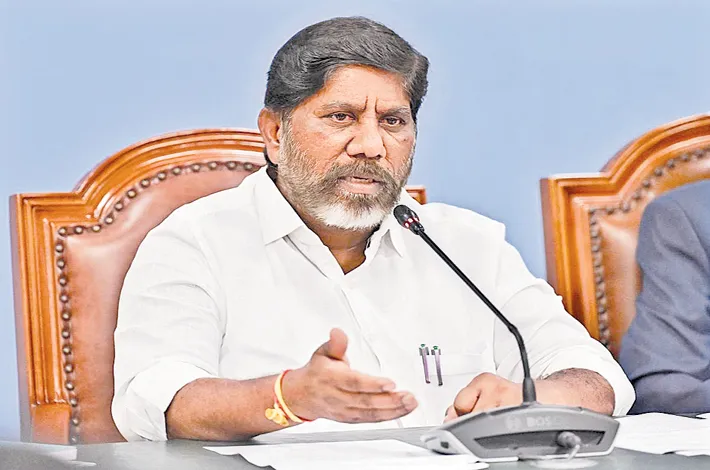
Deputy Chief Minister Bhatti Vikramarka said Telangana should emerge as a frontrunner in the fields of numismatics (the study of coins) and heritage studies. Speaking at the national seminar organised by the Numismatics Society on the theme “Coinage and Economy of Southern India” at the Marri Channa Reddy Human Resource Development Institute on Thursday, the Deputy Chief Minister hoped that this seminar, which is being held over two days, will not remain just an academic event but will serve as a spark—an intellectual lightning bolt—igniting new ideas. Cooperation among various institutions must increase, young researchers should focus on interdisciplinary studies, and Telangana should be at the forefront of numismatics and heritage research, he said.
The Deputy Chief Minister stated that the government is fully committed to heritage-based research. Under the leadership of Tourism and Excise Minister Jupally Krishna Rao, the state government is determined to develop Telangana into a central hub of scientific study, cultural preservation, and knowledge production.
He noted that South India has one of the richest coinage traditions in the world. From the Satavahanas and Ikshvakus, who expanded their trade networks through their coinage, to the artistic splendour of the Kakatiyas and the grandeur of the Vijayanagara Empire, the coins of this region stand as symbols of innovation, craftsmanship, and sophisticated statecraft, Bhatti Vikramarka said.
Calling the seminar historically significant in itself, he appreciated the Heritage department for organising, for the first time in its 114-year history as the Archaeology & Museums department, a comprehensive national seminar exclusively on coins. Bhatti Vikramarka said it is a remarkable milestone for a department that has witnessed the rise and fall of empires. This seminar, he added, is a matter of pride not only for Telangana but for both Telugu States.
Numismatics may appear to be the study of small metal pieces one can hold in the hand, but when one looks closely, each coin reveals an entire miniature world, he said.
Bhatti Vikramarka often thinks of coins as ancient “compressed data.” Within a few grams of metal lie the economic system of an era, the aspirations of a king, technological knowledge, trade routes, religious symbols, and diplomatic ties.
“If archaeologists had discovered ZIP files in ancient times, they would probably have named them ‘coins’,” he joked.
In an age when India leads the world in digital payments and fintech innovation—when we see more QR codes than paise—this moment reminds us how far our economic journey has travelled. Heritage, he said, is not merely about looking back but about understanding the vast web of ideas that continue to shape us today. Studying coins is not studying metal, but studying thought.
Referring to the discoveries in Telangana, he said even a single coin can reveal immense history. In Koti Lingala, archaeologists found a remarkable Satavahana lead coin. Though it looked simple at first glance, it was extraordinary upon closer study. One side bore the Ujjain symbol—four small circles arranged in a cross, an emblem widely used in ancient Indian trade networks to represent cosmic order and continuity.