14 October, 2026 | 7:49 AM


Tensions in Indian Ocean-Is US crossing its limits?
07-03-2026 12:00:00 AM
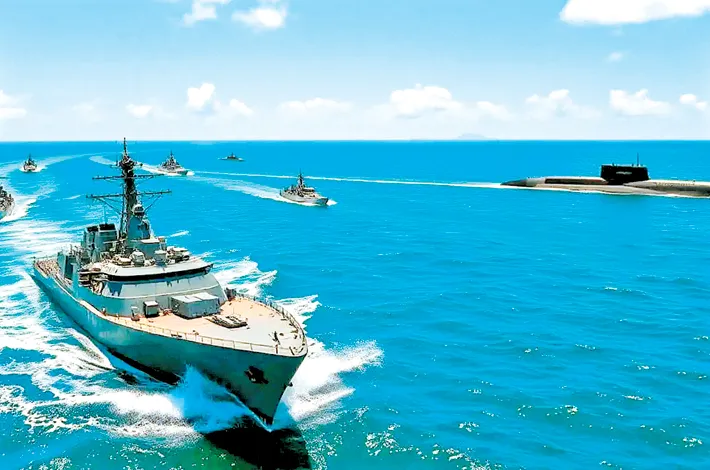
The recent sinking of the Iranian frigate IRIS Dena by a U.S. submarine in the Indian Ocean off the coast of Sri Lanka has thrust India into an unexpected geopolitical spotlight. Occurring on March 4, 2026, the attack marked the first time since World War II that a U.S. submarine has sunk an enemy warship with a torpedo. The incident, part of the escalating U.S.-Israel conflict with Iran, has raised profound questions about maritime security, India's role as a net security provider in the Indian Ocean, and the delicate balance of its relations with both the United States and Iran.
The IRIS Dena, a Moudge-class frigate with around 180 crew members, had recently participated in India's MILAN multinational naval exercises and the International Fleet Review in Visakhapatnam. It was en route back to Iran when it was struck in international waters, approximately 20 nautical miles off Sri Lanka's southern coast near Galle. U.S. defence Secretary Pete Hegseth described the vessel as a "prize ship" that met a "quiet death" from a torpedo, with the Pentagon releasing footage of the strike. Sri Lankan authorities reported recovering 87 bodies and rescuing 32 survivors, highlighting the human cost of the rapidly expanding war.
In response to a distress call from the sinking ship, the Indian Navy acted swiftly. It deployed assets including a long-range maritime patrol aircraft by 10:00 AM on March 4, another aircraft on standby with air-droppable life rafts, the training sail ship INS Tarangini (which provided immediate assistance with lifeboats and vests), and the INS Ishak sailing from Kochi to augment search and rescue efforts. These operations supported those led by the Sri Lankan Navy, with one Indian vessel reportedly remaining in the area to search for any remaining survivors or remains. The Indian Navy issued a statement nearly two days later detailing its humanitarian response, prompting debate over the timing and visibility of such announcements.
The delay in the Indian Navy's public statement has fuelled speculation. Critics question why details of India's involvement in the rescue were not shared sooner, especially given the ship's recent presence as a guest in Indian waters. Some suggest the government may have been assessing the sensitive diplomatic landscape, involving a U.S. partner under President Trump on one side and Iran on the other. Iran has emphasized the ship's status as a "guest of the Indian Navy," adding an emotive layer to the discourse.
Experts, including former Chief of Naval Staff Admiral Arun Prakash, have described the U.S. action as "senseless and inflammatory," particularly for occurring so close to India's shores. While acknowledging India's strategic partnership with the U.S., Admiral Prakash expressed disappointment that the attack happened virtually at India's doorstep, without apparent prior coordination or notification. He argued it sends mixed messages—potentially to Iran about reach and to China about presence—while raising concerns about undetected U.S. submarine activity in the region. However, he emphasized that India's "net security provider" role applies primarily to humanitarian and disaster scenarios, not rivalling U.S. naval dominance or extending protection in conflicts.
A retired Vice Admiral lamented the US's failure to inform India of expanded operations, given close ties through Quad, Malabar exercises, and 2+2 dialogues. He argued this was crucial for safety, as a misfire could hit Indian merchant or naval ships. Emotionally, he agreed the guest status stings, but legally, India bears no responsibility once in international waters. A former ambassador echoed this, separating emotional ties from legal realities, and focused on protecting non-combatants amid the Gulf blockade's economic fallout—rising oil prices and disrupted supplies affecting India.
The incident does not appear to undermine India's regional authority significantly. India is not in direct competition with the U.S. Navy, and its maritime security role focuses on assisting neighbours in peacetime or crises. Legally, once the Iranian ship left Indian waters, India bore no responsibility for its safety. Emotionally, the hospitality extended days earlier creates understandable unease among naval personnel and observers, but responsibility lies with the attackers.
A follow-up development added complexity: another Iranian warship sought to dock in Colombo, Sri Lanka, for safety, prompting Sri Lankan officials to refuse entry amid threats from Iran's enemies (implied to be the U.S. and Israel). This raised questions about whether India, as the region's dominant maritime power, should offer sanctuary on humanitarian grounds—saving lives without endorsing sides. Such a move would be delicate, risking perceptions of aiding a combatant, but could align with India's tradition of humanitarian assistance.
Ultimately, India has maintained a pragmatic stance: responding professionally to the humanitarian crisis while avoiding entanglement in the conflict. As Admiral Prakash and others suggest, New Delhi should use its good relations with the U.S., Israel, and Iran to urge de-escalation and a return to negotiations. In a region where old rules of international order seem eroded, India's careful navigation—prioritizing humanitarian duty, strategic autonomy, and regional stability—will define its response to this unfolding crisis.