11 November, 2026 | 3:17 AM


The remarkable rise of the barefoot movement
11-11-2026 12:00:00 AM
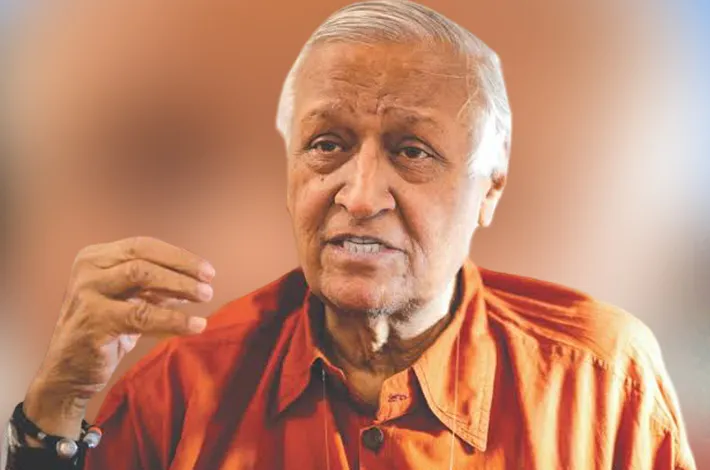
Redefining Expertise
In an era dominated by hyper-specialization, formal degrees, and corporate credentials, a quiet revolution in the heart of Rajasthan has spent decades proving that true community development requires something entirely different. Founded by social activist Bunker Roy, the Barefoot College operates on a radical premise: that formal literacy is not a prerequisite for wisdom, competence, or profound technological innovation
Roy’s vision emerged from a profound national crisis. In 1965, as a young man from a privileged background, he witnessed the devastating Bihar famine, confronting him with widespread starvation and death. The experience triggered a crisis of conscience about the relevance of his elite urban education. He subsequently immersed himself in rural India, discovering a wealth of traditional knowledge among villagers living in extreme poverty.
Recognising the failure of top-down development models imposed by urban elites, Roy envisioned an institution rooted in local realities. This vision culminated in the establishment of Barefoot College in Tilonia, Rajasthan, in 1986. Built entirely by villagers without formal architectural training, the campus embodied self-reliance. The institution challenged conventional hierarchies, championing the belief that rural communities themselves possess the knowledge and ability to develop solutions to their problems.
Harnessing local genius
The core philosophy of the Barefoot College challenges conventional definitions of a "professional." While modern society often measures capability through paper qualifications, Roy argues that competence is rooted in practical experience, resilience, and deep-seated community trust. At Tilonia, illiterate and semi-literate grandmothers, farmers, and artisans are trained to become fully functional solar engineers, architects, water diviners, and educators.
The results have been transformative. The Barefoot College campus is entirely powered by solar energy, utilizing photovoltaic panels installed and maintained by local residents who cannot read or write in a conventional sense. Solar cookers fabricated with precise parabolic geometry are built by women who have never stepped inside a high school classroom. Furthermore, sophisticated rainwater harvesting systems collect millions of litres of water, ensuring community survival even through severe droughts.
Empowering women as global catalysts
A cornerstone of the movement's enduring success is its deliberate focus on training women, particularly older women and grandmothers, rather than young men. Organizers observed a recurring pattern: when young men receive formal technical training, they frequently demand certification, migrate to urban centers in search of corporate employment, and leave their rural communities behind.
In contrast, grandmothers are anchored to their homes and families. When trained as solar engineers, they return directly to their villages with a fierce commitment to uplift their communities. This decentralized model has expanded far beyond India's borders, taking root across remote villages in Afghanistan, Sierra Leone, Gambia, and dozens of other developing nations. In many cases, these grandmothers have successfully electrified hundreds of isolated villages, challenging entrenched patriarchal norms and proving that technical mastery transcends formal education.
A lesson for modern development
The Barefoot Movement offers a sharp critique of contemporary global development paradigms. By demonstrating that ordinary people possess the ingenuity to solve complex infrastructural challenges without external oversight, Roy's initiative calls for a fundamental shift in how societies approach education and empowerment. As traditional systems increasingly struggle to foster resilience, the Barefoot College stands as a powerful reminder that the most sustainable solutions often lie quietly at the grassroots level, waiting to be trusted.
Remembering Sanjit "Bunker" Roy
The nation mourns the loss of a true pioneer of grassroots empowerment, Sanjit "Bunker" Roy, who passed away. Founder of the iconic Barefoot College in Tilonia, Rajasthan, Bunker Roy spent over five decades transforming rural development by proving that traditional knowledge is just as valuable as formal degrees.
Born in 1945, Bunker Roy’s early life charted an elite path through The Doon School and St. Stephen’s College, where he also excelled as a national squash champion. However, a profound calling toward social change drew him away from conventional paths. In 1972, he established the Social Work and Research Centre—later known globally as the Barefoot College. His vision was radically simple yet deeply transformative: to make marginalized rural communities self-sufficient.
Under his guidance, the college trained thousands of rural women, grandmothers, artisans, and farmers—teaching them to become solar engineers, architects, doctors, and teachers without ever needing a formal classroom. Recognized globally, including being named among Time magazine’s 100 most influential people in 2010, Bunker's legacy lives on in every village illuminated by solar power and every community uplifted by his faith in grassroots capabilities.
Among the countless tributes pouring in from across the globe, his close friend of over four decades, Sam Pitroda, shared a heartfelt message:
"My heartfelt condolences to family, friends and admirers of my dear friend Bunker Roy. We lost him this morning. Bunker was an institution. A very close family friend for over 40 years- I will miss him for ever." Bunker Roy is survived by his wife and lifelong partner in activism, Aruna Roy, alongside an extraordinary legacy that redefined education, sustainability, and human dignity.