11 November, 2026 | 3:17 AM


WHO AM I?
11-11-2026 12:00:00 AM
Soujanya Speaks
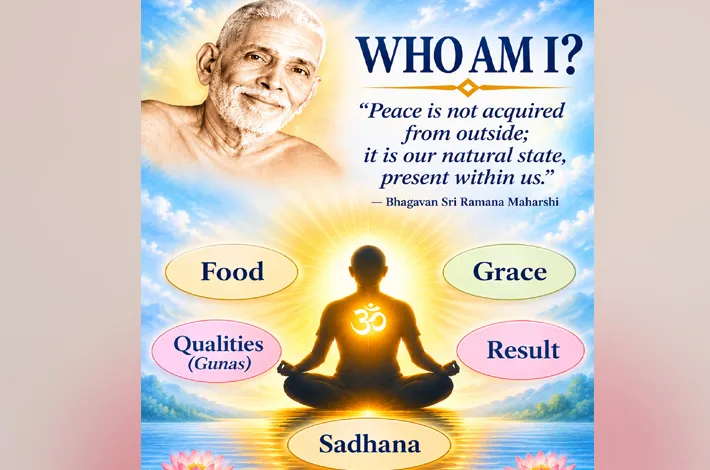
The central philosophy and spiritual essence of Sri Ramana Maharshi’s Vichara Marga, is to understand that Self-realisation is not something to be acquired but recognised. Every human being, irrespective of religion or belief, seeks something beyond everyday existence. Some seek God or Truth; others desire peace. Bhagawan Sri Ramana Maharshi teaches that peace is not acquired from outside: it is our natural state, present within us. Just as an elephant uses its trunk for breathing air and drinking water, the same mind leads both the worldly and the spiritual life. “Who am I?” invites us to turn inward and recognise this Truth.
This is the essence of Vichara Marga, the path of enquiry. It is not merely an hour of prayer, chanting or meditation. It is the practice of observing life as it unfolds. We need not renounce the world; our outlook towards it must change. Enquiry begins with attention.
Five aspects illuminate this teaching: Food, Qualities (Gunas), Spiritual Practise (Sadhana), Grace and Result.
Food (Satvik Ahaara) It is a known fact that the food we take influences the mind as well as the body. Satvik food—simple and moderate—calms the mind and supports clarity. Food that excites or dulls the mind can encourage restlessness or inertia. Mindful eating creates favourable conditions for inner enquiry.
The Three Gunas
The mind’s responses are described through Sattva, Rajas and Tamas. Rajas produces excessive reaction and agitation; Tamas brings dullness and confusion; Sattva enables balance and clarity. Peace is experienced when Sattva prevails. We may not identify Sattva, but the absence of it is easily known as the individual is restless and disturbed. (Asanti). Sattva is not manufactured; it is the mind’s natural condition in the absence of Rajas and Tamas. We need to recognise the moments of peace.
Sadhana
In self-enquiry or Vichara Marga, sadhana is not a struggle to achieve a distant goal. It is recognizing the peace present and creating conditions to remain established in it. Sattvik food, positive conduct and good company (satsang) support this process. Thoughts such as “I have done so much sadhana” or “When will I attain realisation?” can strengthen the ego. Sadhana is not about what you have gained but what you have lost (your ego). Sadhana drives our attention towards the Self.
Grace
Grace provides opportunities through which Sattva and peace become recognizable in the mind and in life. The guidance and presence of a Sadguru help us recognize what is within us. Satsang quietens negative tendencies. Just as our metabolic activities like hunger, digestion and respiration occur involuntarily, attainment of peace during Sattva guna is a part of grace. Grace enables recognition of Truth without the ego claiming achievement.
The Result – Absolute Peace
The result of Vichara Marga is not newly created; it is the recognition of peace that has always been present.
Bhagawan teaches that God, Self, love, silence, bliss and peace are one. Inner peace exists between thoughts and during the transition from sleep to waking, but worldly thoughts and distractions obscure it. Like a phone ringtone drowned by noise at an event, the ever-present inner Omkaram can be heard when distractions fade. Though God and Atma may be difficult to explain, love and peace are experienced. Selfless service, tolerance, reducing suffering, Satvik living, moderation, satsang, sadhana and pranayama steady the mind. Worldly duties need not hinder spiritual growth; mental attitude matters. These practices are supports, not ends.
The obstacle is the ego—the thought “I am this body” Bhagawan asks us to enquire into the source of this “I”. When attention rests on the simple feeling “I am”, without attaching it to identities or thoughts, the ego loses its hold. As thoughts subside, the Self shines as pure consciousness.
Thus, “Who am I?” is an invitation to recognise our natural state. We need not bring peace from elsewhere or become something new; we must see through the assumptions that conceal it. To abide in this awareness is our natural state-the Sahaja sthithi.
(Soujanya Kolachala is a writer & former principal)