14 September, 2026 | 6:05 PM


The Fall of Mamata
10-06-2026 12:00:00 AM
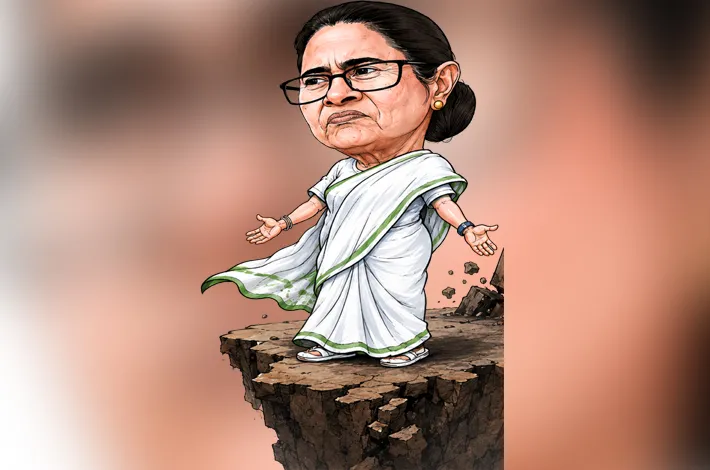
- After 15 years in power, Mamata Banerjee's party crashes from dominance to 80 seats.
- Teacher recruitment scam, chit fund scandals and "cut money" allegations trigger a massive voter backlash.
- Sandeshkhali and RG Kar incidents become defining symbols of public anger over safety and justice.
- Border security, anti-infiltration mess- aging and cultural outreach help the BJP reshape Bengal's electoral map.
- From 3 to 208: BJP completes a decade-long political march from fringe player to Bengal's dominant force.
- 58 MLAs revolt: Within weeks of defeat, a majority of TMC legislators rebel, exposing deep cracks in the party.
- MPs drift towards NDA: Nearly 20 TMC MPs signal support to the NDA, dealing a major blow to Mamata's national standing.
The dramatic defeat of Mamata Banerjee’s Trinamool Congress (TMC) in the 2026 West Bengal Legislative Assembly elections marks the end of an era. After 15 years in power, the TMC was reduced to just 80 seats from its previous dominance, while the Bharatiya Janata Party (BJP) secured a landslide with around 208 seats and approximately 45.9% of the vote share. Banerjee herself lost her prestigious Bhabanipur seat to BJP’s Suvendu Adhikari by a significant margin.
This outcome was not merely an electoral upset but the culmination of deep-seated anti-incumbency, governance failures, and a powerful counter-mobilization by the BJP. What began as murmurs of discontent in rural and urban pockets snowballed into a silent tsunami that swept away the TMC’s fortress. Post-poll developments have only intensified the crisis, with a full-blown revolt erupting within the TMC ranks, first among MLAs and now extending to MPs, threatening the party’s very survival.
Roots of Defeat
The TMC’s downfall stemmed from multiple interconnected failures. Rampant corruption, exemplified by the massive school jobs recruitment scam (involving the alleged sale of teaching positions and the cancellation of over 25,000 appointments), eroded public trust, particularly among the youth. Chit fund scams like Saradha and Rose Valley, along with “tolabazi” (extortion by local syndicates), painted a picture of systemic loot. Many voters expressed frustration over the lack of genuine development, industrial stagnation, and unemployment despite welfare schemes targeted at women.
Crimes against women became a flashpoint. The Sandeshkhali incidents, where TMC-linked strongmen were accused of land grabs and sexual exploitation, and the horrific 2024 rape and murder of a junior doctor at RG Kar Medical College and Hospital, galvanized public outrage. The government’s perceived defensive response and delays in justice alienated women voters, who played a decisive role in the verdict.
Minority appeasement policies, including alleged inaction on illegal immigration from Bangladesh, fueled Hindu consolidation. The BJP effectively campaigned on issues like “detect, delete, deport,” resonating in border areas and among communities seeking cultural security. Special Intensive Revision (SIR) of electoral rolls, which reportedly cleaned up fake or duplicate entries, further altered the dynamics, though TMC cried foul.
Unfolding Developments and Revolt
Banerjee initially refused to accept the results, alleging “immoral victory,” EVM tampering, and conspiracy by central forces. She declined to resign immediately, raising constitutional concerns. However, the ground reality shifted rapidly. Within weeks, a rebellion erupted in the assembly. Out of 80 TMC MLAs, 58 backed expelled leader Ritabrata Banerjee as Leader of Opposition, a move recognized by the Speaker. This factional split has triggered speculation of further defections and legal battles over party symbols.
The revolt has now spilled into Parliament, with nearly 20 of TMC’s Lok Sabha MPs reportedly extending support to the NDA or engaging with rebels, citing discontent with leadership, particularly nephew Abhishek Banerjee’s influence. Meetings involving figures like Kakoli Ghosh have heightened the sense of a party in freefall.
For the BJP, this victory represents the fruition of over a decade of groundwork since 2014—building organization, leveraging local leaders like Suvendu Adhikari, and shifting from a perceived “outsider” image to one attuned to Bengali aspirations. The party made deep inroads in North Bengal, urban seats, and SC/ST reserves.
Broader Implications
The fall of Mamata Banerjee reshapes eastern India’s politics, consolidating BJP influence and weakening the INDIA bloc. It highlights the limits of populist welfare and identity politics when confronted with governance deficits. For TMC, survival hinges on navigating the revolt, potential mergers, or a fierce opposition fight. Banerjee, once an indomitable force who rose from street protests, now faces an uncertain future amid factionalism.
As Bengal enters a new chapter under BJP rule, expectations are high for curbing corruption, improving law and order, generating jobs, and addressing women’s safety. The mandate was a clear rejection of the status quo. Whether the new dispensation delivers on “Bhorosha” (hope) will define the next political cycle. The developments from defeat to internal revolt underscore a profound shift: the “Ma, Mati, Manush” slogan that propelled TMC to power has given way to a demand for accountability and change.
After the Rout, the Revolt
In a stunning collapse just weeks after its crushing defeat in the 2026 West Bengal Assembly elections, the Trinamool Congress (TMC) is witnessing an unprecedented internal crisis that has shattered its organisational unity. Reduced to 80 seats from its earlier dominance, the party under Mamata Banerjee now faces open rebellion from its own legislators and parliamentarians, raising serious questions about its future as a coherent political force.
The revolt erupted first in the state Assembly. On June 3, 58 of the 80 TMC MLAs defied the high command and backed expelled MLA Ritabrata Banerjee as Leader of Opposition. West Bengal Assembly Speaker Rathindra Bose recognised the claim, handing the breakaway faction control of the legislative wing. This move, which crossed the two-thirds threshold under anti-defection provisions, came after Ritabrata and another MLA Sandipan Saha were expelled for anti-party activities.
The rebels accused the leadership, particularly Mamata's nephew Abhishek Banerjee, of authoritarianism, dynastic tendencies, and sidelining senior leaders. Many cited grievances over ticket distribution, post-poll violence management, and a lack of internal democracy.
The crisis quickly spilled over to Parliament. Nearly 20 of TMC's Lok Sabha MPs, led by seniors like Kakoli Ghosh Dastidar, signalled their intent to align with the BJP-led NDA. Reports indicate these MPs met Union Minister Bhupendra Yadav and even West Bengal CM Suvendu Adhikari, submitting a letter to Lok Sabha Speaker Om Birla seeking separate seating and support for the ruling alliance in the interest of "Bengal's development." Senior MP Sukhendu Shekhar Ray reportedly resigned, while others like Satabdi Roy have backed the dissidents. Discontent centers on the concentration of power, denied opportunities, and the party's failure to address ground-level issues that led to the electoral rout.
Mamata Banerjee has responded defiantly, accusing rebels of sabotage and conspiracy, while planning legal challenges in the Calcutta High Court against the Speaker's decision. The party dissolved frontal organisations and initiated reviews, but low attendance at meetings called by the high command, sometimes as few as 20 MLAs, underscores the depth of the rift. Loyalists have branded the rebels as opportunists eyeing ministerial berths or financial incentives.
Analysts describe this as TMC's gravest crisis in its 28-year history. What began as post-defeat discontent has morphed into a full-blown split, with the rebel faction pledging to act as a "constructive opposition." The developments have weakened the INDIA bloc nationally and strengthened the BJP's position in eastern India. For Mamata, who built the party from scratch after breaking away from Congress, the rapid unravelling tests her legendary political resilience. Whether she can stem the tide or if further defections follow will determine if TMC survives as a viable force or fragments into irrelevance.