12 October, 2026 | 9:07 AM


The Lokpal: ‘People’s’ agitation to BMW backlash – A legacy of promise and perplexity
13-11-2025 12:00:00 AM
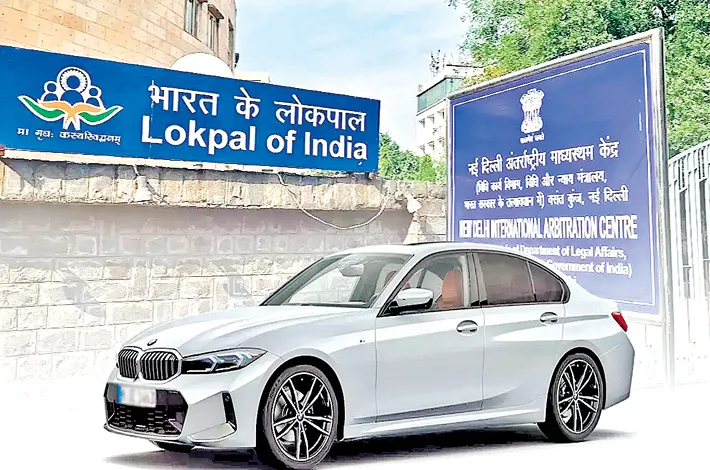
As India's anti-corruption watchdog, the Lokpal, issued a tender for seven BMW 3 Series 330Li luxury sedans—each priced at around Rs 70 lakh, totaling over Rs 5 crore—the nation was reminded of the institution's tortuous journey from revolutionary dream to bureaucratic enigma. The tender, floated on October 16 with a deadline of November 6, stipulated not just the vehicles but also a week-long training program for drivers on the cars' advanced electronic systems. It was a move that screamed extravagance from an entity born to combat it.
The roots of the Lokpal trace back to the early 1960s, a time when India's post-independence optimism was fraying under the weight of administrative excesses. The term "Lokpal," meaning "protector of the people," was coined in 1963 by jurist L.M. Singhvi during parliamentary debates on the Law Ministry's budget. Inspired by Sweden's Ombudsman—a neutral investigator of public grievances—Singhvi envisioned an independent body to shield citizens from bureaucratic overreach. This idea gained traction in 1966 when the first Administrative Reforms Commission, chaired by Morarji Desai, recommended a central Lokpal and state-level Lokayuktas to probe corruption among public officials, including MPs.
The Commission painted a grim picture: petty bribes and grand scams eroding public trust, with no impartial arbiter to hold the powerful accountable. By 1968, the first Lokpal Bill was introduced in the Lok Sabha by then-Law Minister Shanti Bhushan (father of Prashant), passing the lower house but stalling in the Rajya Sabha. Subsequent attempts in 1971, 1977 (under the Janata Party interlude), 1985 (revived by Ashoke Kumar Sen in Rajiv Gandhi's cabinet), and later in 1989, 1996, 1998, 2001, 2005, and 2008, all met similar fates—lapsing with parliamentary dissolutions or mired in partisan wrangling.
Critics from the left, like CPI(M) leaders, argued these bills were toothless, excluding the Prime Minister and judiciary while vesting too much power in government-appointed panels. Right-wing voices, including early BJP affiliates, decried them as threats to executive autonomy. Over four decades, nine failed iterations exposed a systemic allergy: politicians legislating watchdogs that might one day bite them.
Co-authored by Justice Santosh Hegde (former Karnataka Lokayukta), Prashant Bhushan, and Arvind Kejriwal, it proposed a Lokpal with prosecutorial powers, jurisdiction over the PM (with safeguards), lower bureaucracy, and even private entities receiving foreign funds above Rs 10 lakh. The movement, under the banner India Against Corruption (IAC), snowballed: candlelight vigils in Mumbai, marches in Kolkata, and global echoes from NRIs in the US and UK. Time magazine named it among 2011's top stories. Youth, urban middle-class, and celebrities like Aamir Khan amplified it via social media—Facebook groups swelled to millions.
Hazare's April fast ended after 96 hours when the UPA government conceded a 10-member Joint Drafting Committee, co-chaired by Pranab Mukherjee and Shanti Bhushan. But cracks emerged: Civil society wanted audio recordings of meetings; ministers resisted. By August, Hazare's second fast—preceded by his dramatic arrest under colonial-era laws—drew lakhs to Ramlila Maidan, forcing a parliamentary resolution. Supporters hailed it as "India's second independence," a non-violent uprising against the UPA's "autrocratic rule." Detractors, including RSS ideologues, suspected a "foreign hand" (falsely pinning it on the US), while feminists critiqued the male-dominated leadership.
The Jan Lokpal Bill itself was a radical blueprint, diverging sharply from government drafts. It mandated a nine-member Lokpal (chaired by a retired Chief Justice), selected by a committee including the CJI and CAG, with full autonomy to investigate, prosecute, and attach assets—no prior government sanction needed. It covered everyone from the PM to peons, with a two-year case disposal timeline and whistleblower protections. Hazare's team argued this would dismantle the "license-permit raj" remnants, empowering citizens via a dedicated grievance portal.
Yet, from the government's viewpoint—voiced by Kapil Sibal and Salman Khurshid—the bill risked "judicial overreach," potentially paralyzing governance with frivolous complaints. The Joint Committee dissolved amid acrimony: Team Anna boycotted after leaked drafts excluded lower officials. By 2013, under mounting pressure (and UPA's 2014 election woes), the Lokpal and Lokayuktas Bill passed both houses on December 18, assented by President Pranab Mukherjee. It was a compromise: PM included (but with national security carve-outs), no lower bureaucracy, and state Lokayuktas optional. Hazare called it a "partial victory," but activists decried it as "Jokepal"—a watchdog declawed.
The Lokpal's formal birth was delayed by the very inertia it sought to cure. The Act required rules for appointments, but the BJP-led NDA government which came to power in 2014 pointed out at a vacant Leader of Opposition slot post-2014 polls. Supreme Court deadlines in 2017 and 2018 were flouted; Justice J.S. Khehar thundered it was "mockery of law."
Finally, in March 2019, former SC judge Pinaki Chandra Ghose became the first Lokpal, heading a skeletal bench. By 2025, under Justice A.M. Khanwilkar (appointed 2022), the body comprises seven members: four judicial, three non-judicial, selected by a panel including the PM, Speaker, LoP, CJI, and an eminent jurist. It has probed high-profile cases—like the CBI's August 2025 report on TMC MP Mahua Moitra's "cash-for-query" scandal, sealed by Delhi HC for confidentiality
Challenges plague the Lokpal like shadows in a scam-ridden bureaucracy. Staffing shortages—only 40% posts filled—delay probes; a February 2025 Supreme Court stay on its January order claiming jurisdiction over High Court judges reaffirmed judicial immunity, clipping its wings. Funding is paltry: ₹50 crore annual budget barely covers operations, let alone nationwide outreach. Public disillusionment is stark—the 2025 complaint plunge signals eroding faith, exacerbated by the BMW row. As anti-graft activist Nikhil Dey noted in October 2025, "It's not just expenditure; it's missed opportunity for credibility."
Procedural hurdles abound: Complaints must be in writing, within seven years, and sans anonymity, deterring whistleblowers. The Act's 2016 amendments (rushed post-demonetization) weakened it further, exempting political parties and diluting asset disclosure rules. In states, Lokayuktas fare worse—many, like Uttar Pradesh's, are defunct or politicized. Broader ecosystem issues: Overlap with CBI/ED invites turf wars, while the Prevention of Corruption Act's 2018 tweaks (criminalizing bribe-giving) remain unimplemented.
Criticisms of the Lokpal span ideologies, revealing a fractured consensus. Left-leaning voices, from CPI(M) to AAP, decry it as "toothless"—Prashant Bhushan called the BMW tender proof of "servile" appointees blind to graft. In 2019, Hazare himself rued its exploitation by BJP for electoral gains, admitting, "They used me in 2014." Feminists and Dalit activists fault the 2011 movement's exclusionary urban focus, ignoring caste-gendered corruption.
The RSS-backed IAC origins draw barbs: Congress leaders linked the BMWs to that "RSS-designed" agitation to topple UPA. Centrists like Chidambaram question efficacy—8,703 complaints, 24 probes, zero convictions in a decade—labeling it a "futile institution" for post-retirement sinecures. Defenders, including government insiders, argue it's nascent and over-criticism risks paralyzing it. Former Attorney General Mukul Rohatgi insisted perks like BMWs ensure talent, not taint.
The Lokpal's tale—from Singhvi's vision, Hazare's fire, to Khanwilkar's garage—mirrors India's democracy: Aspirational, argumentative, eternally unfinished. Will it accelerate toward accountability, or stall in luxury's lane? Only time—and perhaps a taxpayer revolt—will tell. In a nation where Rs 5 crore buys seven sedans but not seven convictions, the real tender is for trust.