20 October, 2026 | 3:50 AM


The Shadows of Kurnool
10-08-2025 12:00:00 AM
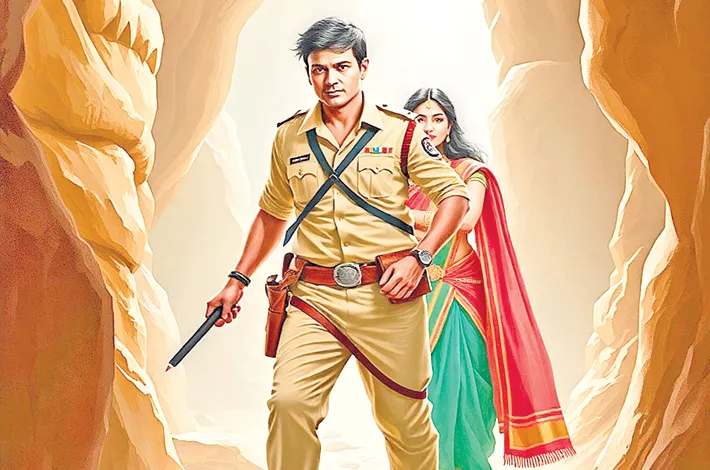
The city of Kurnool, nestled along the banks of the Tungabhadra River, was a place of contrasts. By day, it bustled with the chaos of markets and the hum of daily life; by night, it surrendered to an eerie quiet, broken only by the occasional bark of a stray dog or the distant rumble of a truck on the highway. It was in this stillness, under the cover of a moonless night, that the crime that would shake the city to its core unfolded.
Inspector Vikram Reddy, a seasoned officer with the Kurnool Police, was no stranger to the city’s underbelly. At 42, his sharp eyes and weathered face told stories of countless cases solved—and a few that still haunted him. That night, his phone buzzed at 2:17 AM, dragging him from a restless sleep. The voice on the other end was urgent: a body had been found near the ancient Belum Caves, just outside the city. “It’s bad, sir,” the constable said. “You need to see this.”
Vikram arrived at the scene under a sky heavy with stars. The Belum Caves, a labyrinth of subterranean passages, loomed in the distance, their dark mouths swallowing the light. The body lay sprawled on the rocky ground, illuminated by the harsh glare of police floodlights. It was a young woman, no older than 25, her throat slashed with surgical precision. Her eyes were wide open, frozen in terror, and clutched in her hand was a small, intricately carved stone idol—a relic that looked like it belonged in a museum, not a crime scene.
The victim was identified as Anjali Rao, a local journalist known for her fearless exposés on corruption in Kurnool’s mining industry. Her articles had made enemies, powerful ones, and Vikram’s gut told him this wasn’t a random killing. He crouched beside the body, noting the lack of defensive wounds. Whoever did this was quick, professional. The idol, though, was the real puzzle. It bore symbols Vikram didn’t recognize, but their age and craftsmanship suggested something ancient, perhaps tied to the region’s history.
Back at the station, Vikram’s team pieced together Anjali’s last hours. She’d been investigating illegal quarrying near the caves, a story that implicated local politicians and a shadowy syndicate known only as “The Order.” Whispers of The Order had circulated for years—rumors of a cult-like group with ties to Kurnool’s elite, protecting their interests with ruthless efficiency. Anjali’s editor, shaken but cooperative, handed over her notes: pages filled with names, dates, and references to a “sacred relic” hidden in the caves.
Vikram’s next stop was the home of Dr. Srinivas Iyer, a retired archaeologist who specialized in Andhra Pradesh’s ancient history. The old man’s eyes widened when Vikram showed him a photo of the idol. “This is a Nava Durga idol,” Srinivas whispered, tracing the symbols with a trembling finger. “It’s from the Chola period, tied to a secret sect that guarded the caves centuries ago. They believed it held power—cursed anyone who tried to take it.” When Vikram pressed him about The Order, Srinivas clammed up, fear clouding his face. “Some things are better left buried, Inspector.”
The investigation led Vikram to the city’s outskirts, where the quarrying operations were in full swing. The air was thick with dust, and the rumble of machinery drowned out conversation. Posing as a government inspector, Vikram infiltrated a site owned by Raghavendra Naidu, a powerful businessman with rumored ties to The Order. Naidu was charming, his smile practiced, but his eyes were cold. “Anjali was trouble,” he said casually, when Vikram mentioned her. “Always poking her nose where it didn’t belong.” The comment was too deliberate, a taunt, and Vikram knew he was being watched.
That night, Vikram’s instincts proved right. As he drove back to Kurnool, a black SUV tailed him on the deserted highway. When he pulled over, two masked men emerged, armed with knives. Vikram, trained in hand-to-hand combat, disarmed one and knocked the other out, but not before taking a blade to his arm. The attackers fled, leaving behind a chilling message scrawled on his windshield: “Leave the idol alone.”
Bloodied but undeterred, Vikram doubled down. He recruited Lakshmi, a young constable with a knack for hacking, to dig into Naidu’s financials. She uncovered a trail of payments to an offshore account labeled “Durga Trust.” The name clicked—Nava Durga, the idol. The Order wasn’t just a syndicate; it was a cult, and the idol was their obsession. Anjali had gotten too close, threatening to expose their operation.
Vikram decided to take the fight to the caves. Under the guise of a routine patrol, he and Lakshmi ventured into the labyrinth, guided by Anjali’s notes. The air grew colder as they descended, the walls etched with ancient carvings. At the heart of the caves, they found a hidden chamber, its walls lined with more idols, all identical to the one in Anjali’s hand. In the center stood Naidu, flanked by armed men, chanting in a language Vikram didn’t understand. The idol glowed faintly, casting shadows that seemed to move on their own.
“You should’ve listened,” Naidu said, his voice calm but deadly. He explained The Order’s mission: to protect the idol’s power, which they believed granted them control over Kurnool’s fate. Anjali had threatened to expose them, so they silenced her. Now, Vikram was next.
The confrontation was brutal. Lakshmi, quick and agile, took out one guard while Vikram tackled another. Naidu lunged with a dagger, but Vikram dodged, pinning him against the cave wall. The idol fell, shattering on the stone floor. A low rumble shook the chamber, dust raining from the ceiling. Naidu screamed, as if the idol’s destruction had torn something from him.
Backup arrived just in time, arresting Naidu and his men. The Order’s network unraveled in the days that followed, exposing politicians, businessmen, and even a few cops. The idols were confiscated, their true power—if any—left to speculation. Vikram, nursing his wounds, stood at Anjali’s grave, the city’s lights flickering in the distance. Kurnool was safe, for now, but its shadows ran deep, and Vikram knew this wouldn’t be the last time they called his name.