14 September, 2026 | 11:48 PM


Transparency key to Musi River overhaul
09-04-2026 12:00:00 AM
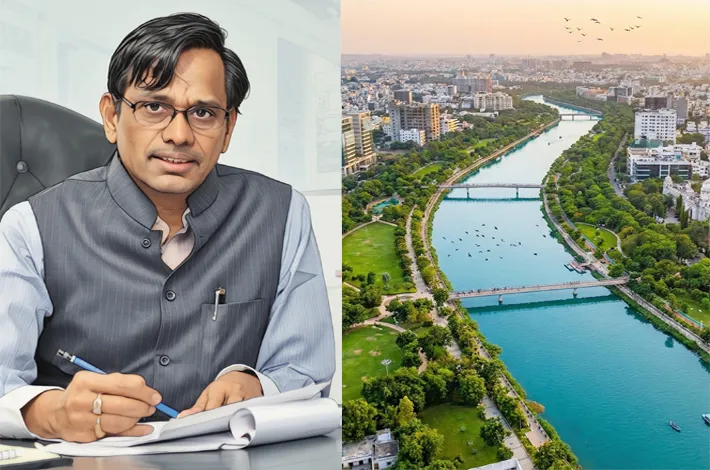
Prequalification criteria should be inclusive, aiming for at least five to ten bidders rather than restrictive clauses favoring a handful. Crucially, all tender documents, qualifications, estimates, bidder lists, and award results must remain in the public domain, alongside efforts to prioritize Telangana-based contractors
CL Rajam
In Telangana, Chief Minister A. Revanth Reddy's ambitious Musi Riverfront Development Project stands as a defining initiative for the Congress government. Unveiled in mid-March with a detailed project report (DPR) for its first phase, the scheme promises to rejuvenate the 55-km stretch of the Musi River flowing through Hyderabad—from the twin reservoirs of Osman Sagar and Himayat Sagar to Gandhi Sarovar at Bapu Ghat and beyond. Estimated at Rs 6,500-7,000 crore for Phase 1 alone, with the full vision potentially scaling to far higher figures, it envisions sewage treatment plants (STPs) handling thousands of million litres daily, protective embankments, parks, walkways, cycling tracks, and commercial zones to transform a polluted waterway into a global-standard urban riverfront.
Revanth Reddy has positioned the project as essential for Hyderabad's future—addressing chronic pollution from 1,800 MLD of sewage and effluents, mitigating floods, creating jobs, and attracting investments akin to riverfronts in London, Singapore, and Ahmedabad. He has repeatedly assured that no poor family will be displaced without fair rehabilitation in the same locality, dismissing opposition claims of mass evictions affecting over 10,000 families across 3,000-plus acres. The Congress leadership, including Deputy CM Mallu Bhatti Vikramarka, has called rehabilitation a "sacred mission," allocating Rs 1,500 crore in the 2026-27 budget as the state's 25% share, with funding eyed from the Asian Development Bank and other sources.
Still, as the government moves toward tendering post-March 31 estimates, the project—hailed by supporters as a potential "jewel in Telangana’s crown"—faces intense scrutiny. The Bharat Rashtra Samithi (BRS), led by former minister K.T. Rama Rao, has labeled it a "massive land grab" and Rs 1.5 lakh crore corruption scandal in the making, contrasting it with their own earlier Rs 16,000 crore plan that allegedly required no home demolitions. The BJP has echoed concerns over transparency. Environmentalists and activists, including Medha Patkar, have demanded prior public consultations and social impact assessments, warning that exemptions under recent government orders risk sidelining affected communities, particularly in downstream areas like Nalgonda district where the river originates and pollution has long plagued groundwater.
This is where a set of pragmatic, citizen-centric suggestions—circulated widely among engineers, urban planners, and concerned residents—gains relevance. Framed as a blueprint for success, they underscore that prestige alone cannot shield the project from the pitfalls that have sunk many grand infrastructure ventures in India: opacity, favoritism, and inadequate resettlement. Implementing them could not only neutralize opposition attacks but also cement the Congress government's credibility ahead of future polls, especially in Nalgonda, where voters keenly await tangible benefits like cleaner water and flood control.
At the heart of these recommendations is the call for an overall master plan for the entire Musi corridor, followed by phase-wise designs, estimates, specifications, drawings, and quantified item lists placed firmly in the public domain. The current DPR, prepared at a consultancy cost of around Rs 160 crore by an international consortium including Singapore-based firms, covers Phase 1 in detail but leaves broader financial and land-use planning opaque. Public scrutiny—inviting comments from independent experts, NGOs, and citizens before finalizing the DPR—would foster ownership and preempt controversies, much like successful models in Ahmedabad's Sabarmati Riverfront or Pune's river rejuvenation efforts.
Rehabilitation emerges as a critical flashpoint
The suggestions advocate an attractive package for the ousters aligned with National Highways Authority of India (NHAI) norms: four times the government-registered value of properties, with estimates revised accordingly. This goes beyond the CM's assurances of in-situ apartments, addressing fears of undervalued compensation and distant relocation. With over 10,000 families potentially affected, a generous, transparent policy—publicly detailed and monitored—could convert potential adversaries into stakeholders, minimizing legal hurdles and protests that have delayed similar projects elsewhere.
Tendering strategy is another safeguard against cronyism. The proposal urges dividing contracts into multiple packages, none exceeding Rs 500 crore, to encourage broad participation. Prequalification criteria should be inclusive, aiming for at least five to ten bidders rather than restrictive clauses favoring a handful. Crucially, all tender documents, qualifications, estimates, bidder lists, and award results must remain in the public domain, alongside efforts to prioritize Telangana-based contractors. Such measures mirror global best practices in infrastructure, reducing single-bidder risks and enabling real-time oversight via portals—echoing the transparency mandates under the Right to Information Act that have exposed irregularities in past Telangana projects.
Priority sequencing further bolsters the case: initial focus on STPs, nalla (drain) clearances, and beautification before flashy elements like grand statues or commercial hubs. This pragmatic order—tackling pollution at source first—aligns with ecological imperatives and delivers quick, visible wins to build public trust. High transparency throughout, including third-party audits, would leave "no room for misdeeds," as proponents argue, insulating Revanth Reddy from the very charges his government leveled against predecessors.
Politically, the stakes are enormous. For the Congress, fresh in power since 2023, the Musi project is more than infrastructure; it is a narrative of transformative governance. Success could yield "major public support," particularly in Nalgonda and Hyderabad's riverine belts, positioning Revanth Reddy as a visionary leader who delivered.
Failure—or even the perception of it—risks a boomerang. BRS and BJP are already primed to weaponize any whiff of corruption, echoing past scandals that cost governments dearly. As one analyst noted amid the March Assembly walkouts and dharna threats, "Projects mired in controversy become tools in the opposition's hands."
Critics rightly point out that without these safeguards, the project's real-estate angle—commercial zones funding part of the cost—could invite accusations of favoritism, especially given the scale. Still proponents counter that a clean, consultative rollout would make Musi a model for sustainable urban revival, generating employment, tourism revenue, and ecological restoration across districts.
In the final analysis, Revanth Reddy's government faces a pivotal choice. Embracing these suggestions—preparing a comprehensive master plan, enforcing phased transparency, ensuring equitable rehabilitation, and prioritizing execution integrity—would elevate the Musi project beyond partisan politics. It could silence detractors, honour the aspirations of lakhs living along the river's banks, and etch the Congress administration's name in Telangana's development history. As the CM himself has invited suggestions in the Assembly, the path forward is clear: transparency is not a hurdle but the very foundation that turns ambitious dreams into enduring public triumphs. With polls on the horizon, the Musi River may well test whether this government prioritizes legacy over expediency.