18 October, 2026 | 12:58 PM


Trust online health advice at your own risk
25-06-2026 12:00:00 AM
HEMA SINGULURI I hyderabad
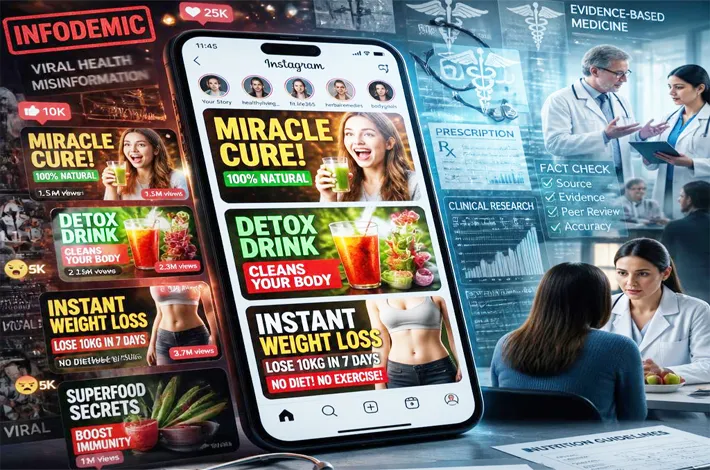
The growing problem of health misinformation, often described as an “infodemic,” is increasingly being flagged by experts and global health organizations for its harmful impact on public health. It creates confusion, promotes unproven treatments, and erodes trust in evidence-based medical advice. Research suggests that a majority of people worldwide believe at least one of six common medical myths, highlighting the scale of the challenge.
Nutrition expert Prof. Dr. Saibaba Ayyagari stresses the importance of verifying health information before accepting or sharing it. He advises people to check whether information comes from qualified doctors, hospitals, universities, or recognized public health organizations and whether it is backed by scientific studies.
According to him, claims such as “miracle cure,”
“instant weight loss,” or “100% guaranteed results” should immediately raise suspicion. He warns that health misinformation can have serious consequences, including delayed medical treatment, discontinuation of prescribed medicines, and unnecessary spending on ineffective or potentially harmful remedies.
Dr. Ayyagari points to several myths that continue to circulate online, including claims that detox drinks eliminate toxins, cancer can be cured entirely through herbal remedies, diabetes medication can be stopped once blood sugar levels normalize, vaccines cause infertility or autism, lemon water or alkaline diets can cure serious diseases, certain foods rapidly burn fat, mega doses of vitamins prevent infections, and intermittent fasting is suitable for everyone.
“A healthy dietary pattern is far more important than chasing the latest food trend. Pause before you share or act. Verify before you trust,” he says.
Beware of sensational and emotion-driven content
Dr. Aarathi Bellary, an internal medicine specialist at KIMS, says health misinformation has become rampant online, with much of the content designed to be sensational and emotionally appealing rather than scientifically accurate.
“People are constantly looking for quick fixes, but the consequences can sometimes be very serious,” she says.
Dr. Bellary raises concerns about the growing popularity of online Ayurvedic treatments, noting that hospitals often see patients with worsening health conditions after relying solely on such remedies. She adds that the ongoing “infodemic” has also contributed to vaccine hesitancy at a time when immunization remains critical.
She cautions that AI tools such as ChatGPT can provide general information but cannot replace a doctor's diagnosis, prescription, or treatment plan. She also points to the increasing promotion of protein powders, gummies, and supplements by influencers and even some healthcare professionals, often based on limited evidence.
Hospitals regularly treat patients with diabetic foot infections and other complications linked to delayed or improper treatment. Dr. Bellary further warns that many health influencers rely on small studies, while medical recommendations are typically based on large-scale scientific research.
Experts also warn that marketing can blur the line between science and advertising. A commonly cited example is toothpaste marketing, where salt has been promoted as a “natural” ingredient despite fluoride remaining the key component for preventing cavities.
Nutritionist and wellness expert Rujuta Diwekar advises people to be wary of transformation photos, content disguised as concern, and posts that fail to disclose paid partnerships. She emphasizes that dietary advice should reflect an individual's lifestyle, culture, age, and budget rather than social media trends.